
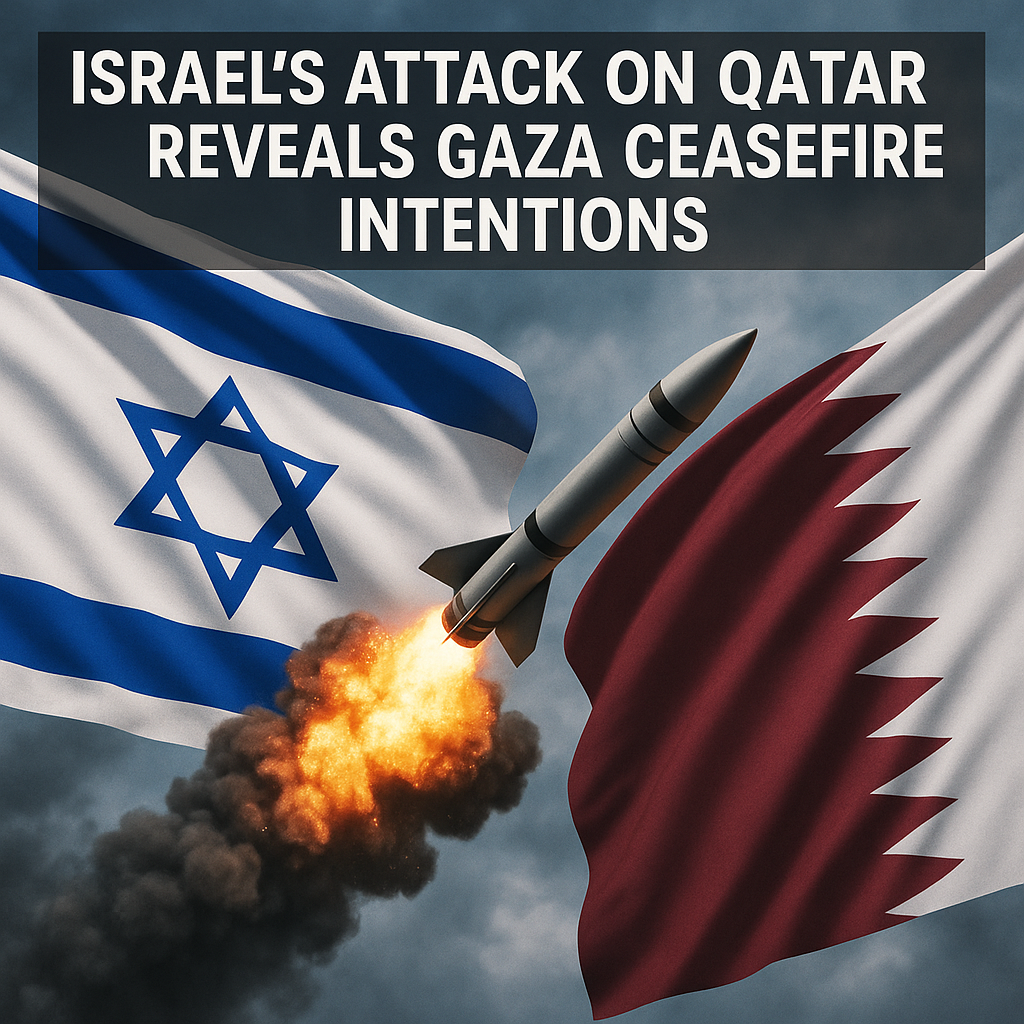
Israel’s Attack on Qatar Reveals Gaza Ceasefire Intentions

Israel’s Attack on Qatar Reveals Gaza Ceasefire Intentions
In a complex geopolitical landscape, Israel’s recent attacks on Qatar have left many questioning the feasibility of a ceasefire in Gaza. This incident not only escalates tensions in the Middle East but also reveals much about the underlying dynamics that shape ongoing conflicts in the region. As various perspectives emerge, it’s crucial to examine the implications of Israel’s actions and the broader context surrounding the Gaza situation.

The Nature of Israel’s Escalation
Initial reports indicate that the Israeli government’s military operations targeting Qatar are framed within a larger strategic objective. Analysts suggest that these actions may be aimed at demonstrating strength in a region often characterized by what they perceive as leniency toward Hamas. As noted by Al Jazeera, “Attacking Qatar only shows Israel doesn’t want a Gaza ceasefire.” This line of thought presents the attack not merely as a spontaneous act but as a calculated measure to signal Israel’s discontent with other nations supporting Hamas.


Contrastingly, Russian media commentators argue that such aggressive tactics risk alienating potential allies in the region and may lead to a backlash. According to sources from RT, “Israel’s actions may further isolate it as allies reconsider their diplomatic relationships.” This divergence in perspectives indicates a broader debate about Israel’s long-term strategy, suggesting that short-term military objectives could undermine longer-term diplomatic goals.


The Regional Implications of the Attack
Diplomatic Fallout
The targeting of Qatar complicates the already intricate web of alliances in the Middle East. Qatar has positioned itself as a key mediator in various conflicts, often acting as a backchannel for communication between Hamas and other international actors. Experts warn that by attacking Qatar, Israel may inadvertently destabilize this delicate balance, jeopardizing potential peace initiatives that rely on Qatari mediation.
Furthermore, regional observers express concern that this attack could embolden anti-Israel sentiments across the Arab world. As mentioned in Sky News, the decision to strike a nation known for its diplomatic engagements is perceived as a heavy-handed approach that may aggravate tensions rather than facilitate dialogue. This could result in unified opposition against Israel, making it increasingly difficult for the nation to navigate future peace negotiations.
Humanitarian Considerations
The humanitarian dimension is critical in analyzing Israel’s assaults, especially concerning the civilian impact in Gaza. With ongoing airstrikes leading to civilian casualties, the case for a ceasefire becomes compelling not only from a political but also a moral standpoint. Many human rights organizations have condemned the violence and called for immediate de-escalation.
Reports indicate that the humanitarian situation in Gaza is dire, with many civilians living in constant fear of renewed bombing. A multifaceted approach to the crisis is essential; as highlighted by humanitarian agencies, the continued military activity without regard for civilian life contradicts any claims of seeking peace.
A Complex Road Ahead
Given the contrasting viewpoints on Israel’s actions and the broader implications for Gaza, it becomes evident that the path forward is fraught with complexities. While Israel may see its military tactics as justifiable self-defense, the implications of these actions extend far beyond immediate security concerns. Regional stability, humanitarian rights, and international relations are all caught in the crossfire.
The uncertainties surrounding the feasibility of a ceasefire are palpable. Amid conflicting reports and analyses, it remains to be seen whether Israel’s recent military actions will lead to a hardening of positions that preclude diplomatic solutions or if there is room for mediation through nations like Qatar. As tensions escalate further, the international community must remain vigilant, advocating for a return to dialogue.
Conclusion: Navigating a New Normal
Israel’s attack on Qatar raises significant questions about the future of the Gaza conflict, particularly regarding the potential for a ceasefire. With growing tensions and contrasting viewpoints from both sympathetic and critical observers, the international landscape is shifting. As this situation evolves, it becomes paramount for all involved parties to consider not only their immediate goals but also the long-term consequences of their actions.
Challenging as it may be, the pursuit of peace necessitates patience and a commitment to dialogue—not through aggression but through mutual understanding. As this complex situation unfolds, the hope remains that cooler heads will prevail, leading to constructive solutions that prioritize human dignity and regional stability.















