
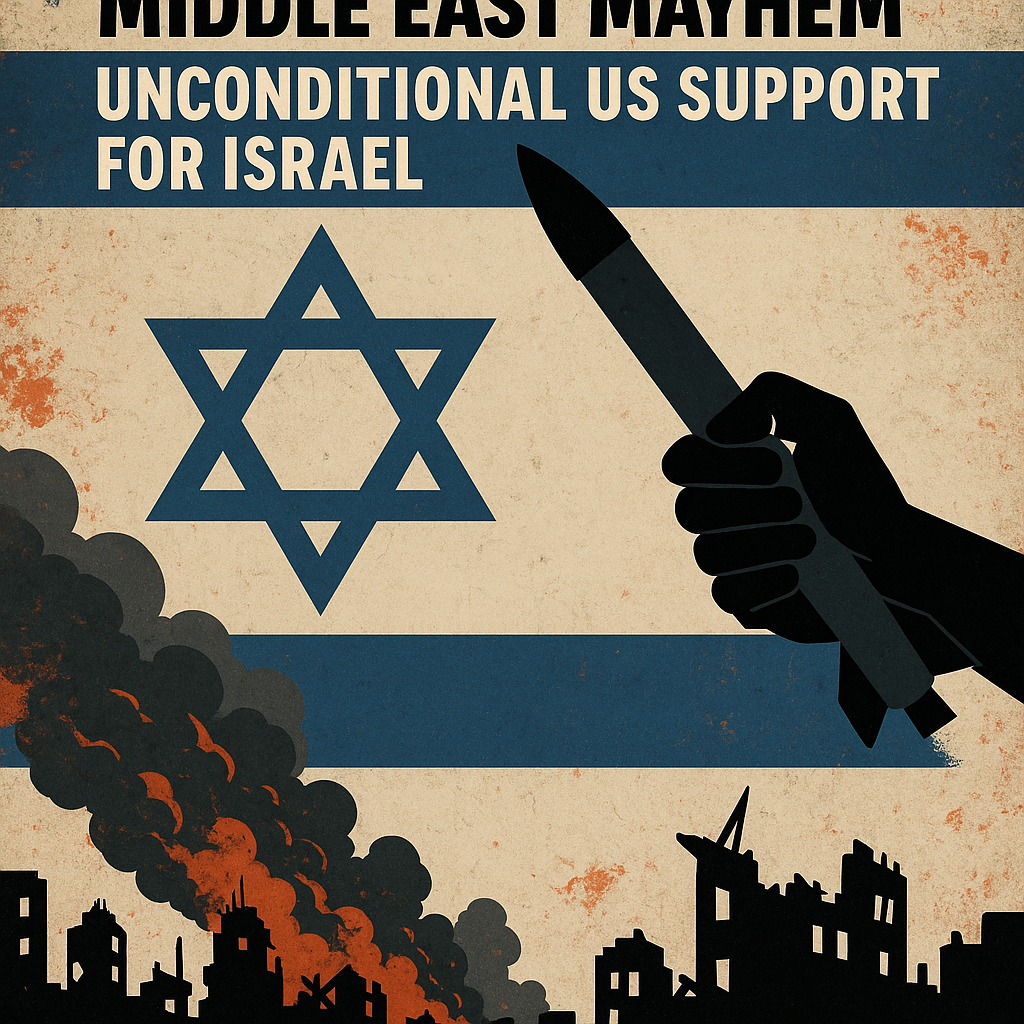
Middle East Mayhem: Unconditional US Support for Israel

Middle East Mayhem: Unconditional US Support for Israel
The complex dynamics of the Middle East are deeply intertwined with the United States’ unwavering support for Israel. As tensions escalate in the region, this backing remains a pivotal factor influencing geopolitical stability and inter-country relations.

Historical Context of US-Israel Relations
The roots of US support for Israel can be traced back to the post-World War II era, when the United States endorsed the establishment of a Jewish state in the aftermath of the Holocaust. Since then, Israel has become one of America’s closest allies in the region. Critics argue that this “unconditional” support exacerbates tensions with Arab nations and fuels unrest among Palestinian populations.


According to Al Jazeera, various regional analysts assert that the commitment of the US to Israel is perceived as a direct affront to Palestinian rights, complicating peace efforts and perpetuating cycles of violence. Many in the Arab world view US assistance as validation of Israel’s military actions, which they argue are often disproportionate and detrimental to peace processes.


However, proponents of the US-Israel relationship, including many American political leaders, argue that this support is essential for maintaining a strategic foothold in a turbulent Middle East. They point to Israel’s role as a stabilizing force in countering Iranian influence and combating militant groups. This perspective is echoed by various sources from RT and Sky News, which also emphasize the need for collaboration against shared security threats.
Diverging Perspectives on Aid and Stability
The debate surrounding US financial and military aid to Israel is multi-faceted. In 2022, Washington allocated approximately $3.8 billion in military assistance to Israel, a figure that has prompted outcry from those advocating for Palestinian rights. Critics, including many human rights organizations, have expressed concerns over how these funds are utilized, particularly in military operations against Palestinians in the Gaza Strip and the West Bank.
Conversely, supporters contend that this aid is not merely a gesture of friendship but a necessary investment in regional stability. They argue that Israel is a beacon of liberal democracy in an otherwise volatile region, thus deserving of support. This narrative hinges on the belief that a strong Israel is crucial for deterring threats from hostile neighboring nations, primarily Iran and its affiliates.
Furthermore, as tensions escalate once more in places like Gaza, the question arises: is continuing unconditional support leading to lasting peace, or is it further entrenching divisions? As reported by multiple sources, escalating violence has underscored the need for a reevaluation of the current approach to US-Israel relations.
The Impact of US Support on Middle Eastern Politics
The ramifications of US backing for Israel extend beyond borders, influencing relations between Israel and its neighbors and affecting global geopolitical dynamics. Countries such as Turkey and Egypt have historically mediated in Israeli-Palestinian disputes, but their ability to act has been constrained by the overt support from the US for Israel. This has led some nations to reassess their alliances and forge new partnerships elsewhere, at times swinging towards adversarial positions against the United States.
In addition, American politicians are catching onto the shifting sentiments among their constituents regarding US foreign policy in the Middle East. An increasing number of voices—especially from younger, more progressive factions within the Democratic Party—are advocating for a more balanced approach that acknowledges Palestinian rights. This evolution could signal a potential shift in how future administrations engage with the situation.
However, political analysts emphasize that real change requires a paradigm shift in how all actors approach peace. The path toward resolution is uncertain, with commentators suggesting that it may necessitate a reevaluation of what “unconditional support” entails—whether that means more stringent conditions tied to human rights and conflict resolution or a greater emphasis on diplomacy regarding a two-state solution.
Ongoing Uncertainties and Future Outlook
As the situation in the Middle East remains fluid, it becomes increasingly challenging to discern a clear direction for US policy. Events often spiral beyond the control of any single nation, with external influences, broader geopolitical shifts, and internal struggles within both Israeli and Palestinian societies complicating the landscape.
One prevailing uncertainty is whether continued American support for Israel—in its current form—will ultimately lead to stability or further contributing to regional turmoil. Voices from different perspectives indicate that any sustainable path forward will likely require nuanced policy adjustments and a deeper understanding of the intricate truths surrounding the conflict.
In conclusion, the consequences of unconditional US support for Israel are a double-edged sword, influencing not only regional dynamics but also domestic politics within the United States. As the Middle East finds itself mired in conflict, it is essential for policymakers to recognize the complexities of regional sentiments and to facilitate conversations geared toward peace and a balanced approach to support for both Israel and Palestinians.















