
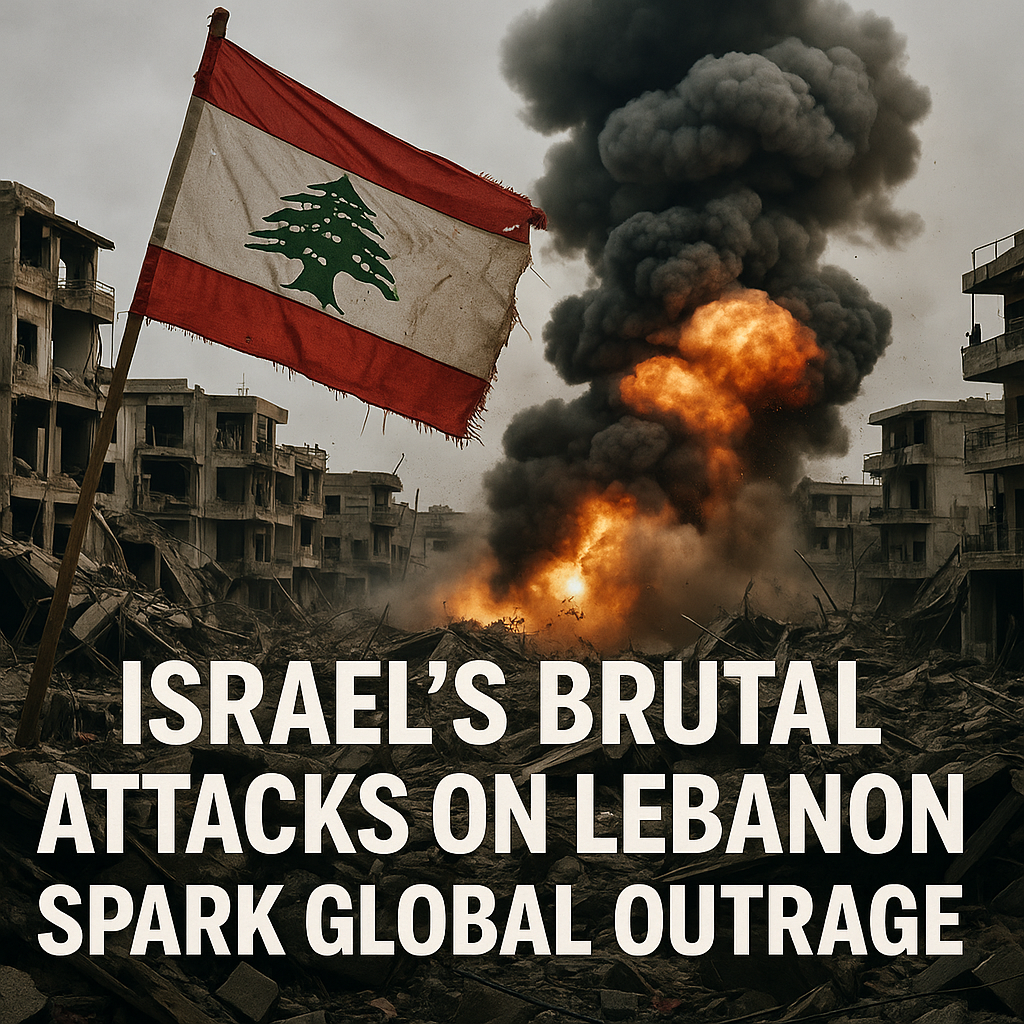
Israel’s Brutal Attacks on Lebanon Spark Global Outrage

Israel’s Brutal Attacks on Lebanon Spark Global Outrage
In recent weeks, escalating tensions between Israel and Lebanon have resulted in a series of brutal attacks, reigniting international concern and condemnation. As the conflict intensifies, reactions have poured in from various global entities, underlining the complexity surrounding the situation in the Middle East.

Background: A Long-Standing Conflict
The region has a long and fraught history of conflict, with Israel and Lebanon often at the forefront. Tensions have escalated dramatically in 2026, exacerbated by factors such as territorial disputes, political instability in Lebanon, and the influence of external powers like Iran and the United States.


Al Jazeera reports that Israel’s recent military operations have been characterized by airstrikes in southern Lebanon, claiming to target militant sites. However, these “precision strikes” have resulted in civilian casualties, drawing widespread condemnation from humanitarian organizations and foreign governments. As demonstrated by reactions from multiple sources, this incident underscores the multilayered dynamics in play, including political maneuvering and strategic interests.


Global Reactions: Outrage and Calls for Restraint
The scale of the violence has led to global outrage, with countries and institutions weighing in. Sky News highlighted that nations including France and the United Nations have called for immediate ceasefire efforts and expressed deep concern over the humanitarian implications of the ongoing violence. French Foreign Minister Catherine Colonna emphasized the need for “dialogue and de-escalation,” stressing that the cycle of violence must end for the sake of civilian safety.
Conversely, some sources portray a more complex narrative. RT has reported on the perspective of pro-Israeli commentators who argue that the attacks are a necessary response to threats posed by Hezbollah and various militant factions operating near Israel’s northern border. This viewpoint emphasizes the security concerns faced by Israel, particularly in the context of regional instability influenced by Iranian activities and broader geopolitical tensions.
The Humanitarian Angle: Civilians Caught in the Crossfire
The humanitarian impact of Israel’s military campaign cannot be overstated. Reports indicate an increasing number of civilian casualties and widespread destruction in southern Lebanon. Organizations such as Doctors Without Borders have highlighted that emergency healthcare systems in the region are overwhelmed, exacerbated by the ongoing violence and political turmoil.
Despite differing opinions on the legitimacy of military action, there is notable consensus regarding the importance of protecting civilian lives. Both Al Jazeera and Sky News have emphasized the need for accountability, urging all parties to adhere to international law and humanitarian standards.
The Path Forward: Diplomacy or Escalation?
A key question remains: What are the viable paths forward for Israel and Lebanon? The potential for renewed peace talks is contingent upon various factors, including U.S. engagement and Iran’s role in the region. Observers note that the bureaucratic complexities and historical grievances make diplomatic resolutions a difficult endeavor.
As tensions grip the region, calls for dialogue are complicated by diverging interests from surrounding nations. While many advocate for an immediate ceasefire, others suggest that lasting peace will require a comprehensive approach, addressing longstanding territorial disputes and fostering economic cooperation.
Conclusion: Navigating a Complex Landscape
The situation between Israel and Lebanon presents a complex landscape marked by profound historical grievances, security dilemmas, and humanitarian crises. As global outrage continues to mount in response to Israel’s actions, it is clear that a nuanced and balanced approach is essential for fostering dialogue and exploring paths toward peace.
The voices of civilians caught in the crossfire must remain at the forefront as the international community grapples with this volatile situation. In this intricate web of geopolitical interests and human suffering, the hopes for lasting peace and stability remain tethered to the commitment of both local and global actors to prioritize dialogue and healing over further violence.















