
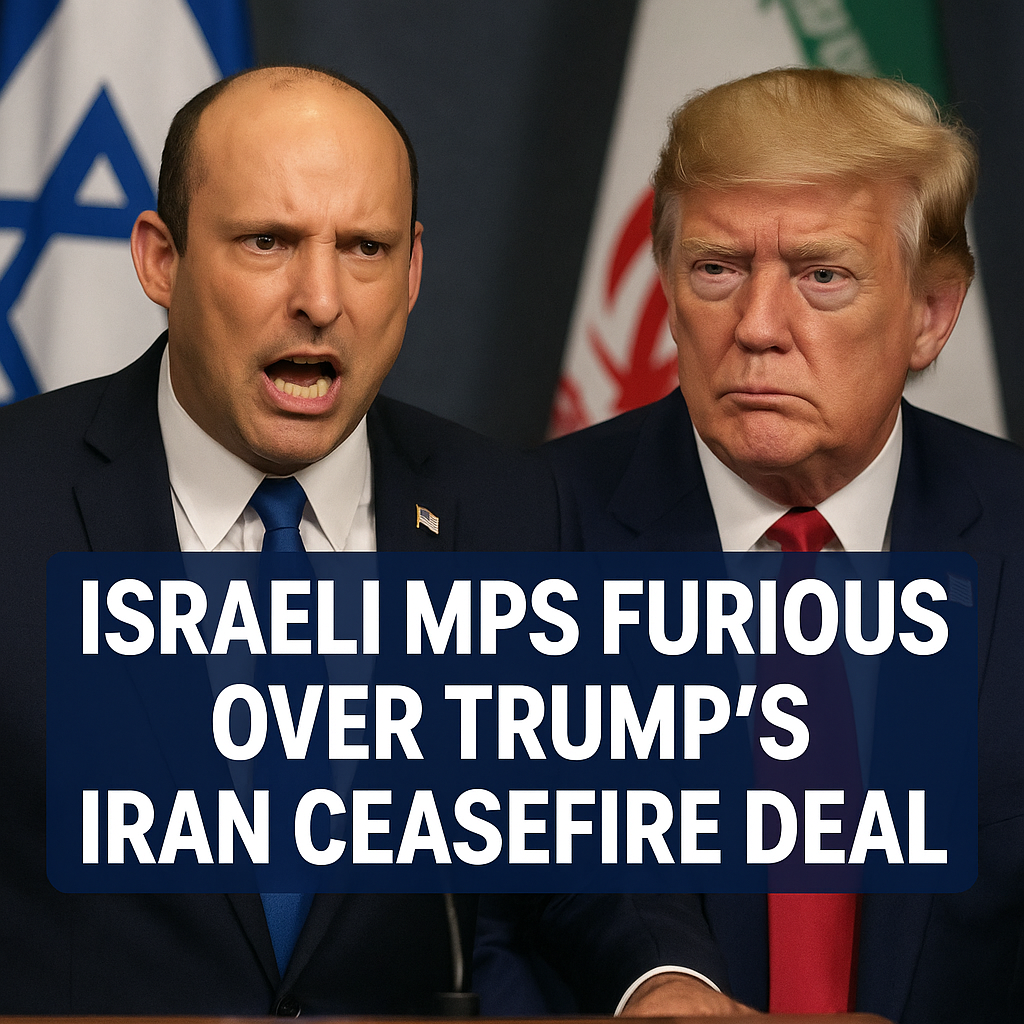
Israeli MPs Furious Over Trump’s Iran Ceasefire Deal

Israeli MPs Furious Over Trump’s Iran Ceasefire Deal
Tensions are escalating in the Israeli political landscape following the announcement of a ceasefire deal between former President Donald Trump and Iran. This development has sparked vehement reactions from various Israeli lawmakers who view the agreement as a significant compromise on national security.

Rising Tensions in Israeli Politics
The recent ceasefire deal, which aims to address escalating conflicts in the Middle East, has been met with harsh criticism from prominent Israeli political figures. Many of these leaders argue that the deal undermines Israel’s security and raises concerns about Iran’s intentions in the region.


Israeli MPs from both right-wing and centrist parties have expressed outrage, fearing that the cessation of hostilities could enable Iran to further its nuclear ambitions. As noted in multiple sources, the situation is exacerbated by long-standing historical grievances and deep-seated mistrust between Israel and Iran. Some MPs were quoted as saying that the ceasefire could be interpreted as appeasement, a stance that resonates with many factions within Israel’s political spectrum.


However, there are voices within Israel who argue for a more cautious approach. These proponents believe that diplomatic conversations may pave the way for a more stable and peaceful region. They contend that outright rejection of all diplomatic efforts could isolate Israel further on the global stage.
The Nuanced Diplomatic Context
While many Israeli lawmakers are vehemently opposed to the deal, it’s essential to consider the broader diplomatic context. Trump’s administration had previously taken a hardline stance against Iran, withdrawing from the Joint Comprehensive Plan of Action (JCPOA) in 2018, which many Israeli leaders welcomed at the time.
Just a few years later, however, the developing narrative around ceasefires and negotiations suggests a complex landscape. Critics argue that the latest deal may inadvertently strengthen Iran-backed militias in neighboring regions, such as Syria and Lebanon, posing a continued threat to Israel’s borders.
On the other hand, some analysts suggest that engagement with Iran could lead to tangible benefits. They argue that a stable Iran might mitigate conflict in the region, allowing Israel to focus on other pressing issues, including relationships with its Arab neighbors. The nuanced perspectives underline the challenge facing Israeli leadership—how to navigate a potentially shifting geopolitical landscape while ensuring the country’s security.
Diverse Perspectives and Uncertainties
The outrage from Israeli lawmakers is palpable, yet this leaves room for a spectrum of opinions on the political ramifications back home. Right-leaning commentators have declared the deal a “disaster” and an existential threat, while some centrist voices advocate for measured engagement rather than outright hostility.
Moreover, uncertainties loom over the international community’s response. If the ceasefire gains traction, it could lead to a recalibration of alliances and influence in the Middle East. However, if tensions escalate anew, Israel’s isolation may deepen, complicating its geopolitical standing further.
Given the divergent opinions, it is essential to remain vigilant about the structural dynamics at play. While some Israeli leaders may call for robust action against Iran, others propose capitalizing on diplomatic avenues that offer room for maneuvering.
A Call for Unified Strategy
Amidst these polarized views, a unified strategy emerges as crucial for Israel’s long-term security. Navigating complex relations with not only Iran but also neighboring Arab nations calls for dialogue, informed by the lessons of history. A ceaseless commitment to security is fundamental, yet this must be balanced against the potential for peace.
As Israel continues to grapple with its regional conflicts, the rage spurred by Trump’s ceasefire deal might serve as a critical juncture—one that could push Israeli politics towards a reevaluation of its longstanding policies regarding Iran. The stakes are indeed high: a balance of power, the quest for peace, and an unwavering focus on national security must coexist in this intricate dynamic.
In conclusion, the fallout from this ceasefire deal documents a critical episode in Israeli-Iranian relations. It serves as a reminder that while diplomatic efforts can often be mired in controversy, they also present an opportunity for reshaping narratives and reimagining peace in the region—if approached with wisdom and responsibility.















