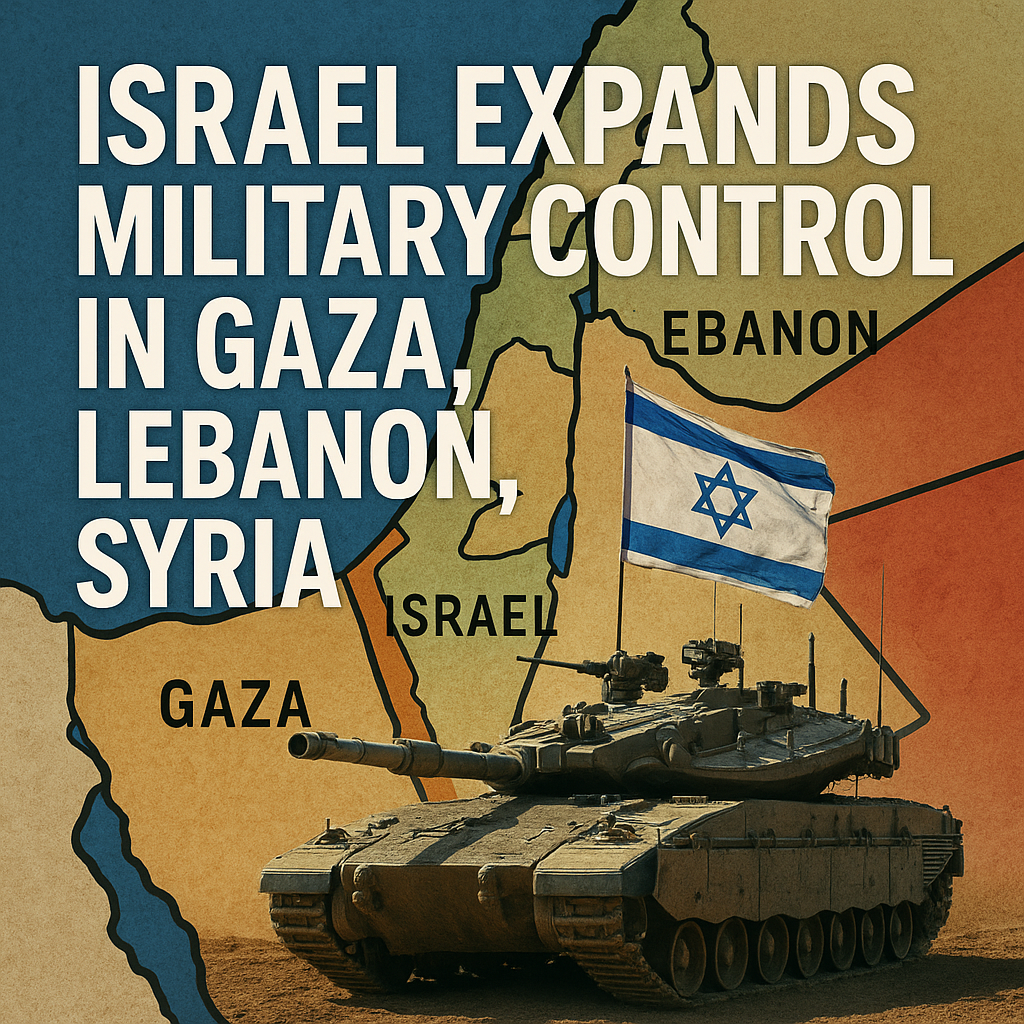
Israel Expands Military Control in Gaza, Lebanon, Syria

Israel’s Military Expansion: The Complexities of Control in Gaza, Lebanon, and Syria
In recent developments, Israel has significantly expanded its military control across Gaza, Lebanon, and Syria. This strategic move comes amid rising tensions in the region, igniting debates surrounding security, sovereignty, and humanitarian crises.

The Strategic Landscape
Israel’s expansion reportedly spans an additional 1,000 square kilometers, as outlined in various reports. This military consolidation is aimed at addressing perceived threats posed by armed groups in these territories, primarily Hezbollah in Lebanon and various factions in Gaza and Syria. Israel has framed this expansion as a necessary action to safeguard its borders and maintain regional stability.


However, critics argue that such military actions exacerbate existing conflicts and deepen humanitarian issues. Al Jazeera notes that this expansion could further complicate the delicate balance of power in the region, as it raises the stakes for retaliatory actions by militant groups. There is a palpable concern among observers that as Israel continues to assert its military presence, the potential for conflict may escalate, leading to increased civilian casualties and displacements.


Contrasting Perspectives on Military Control
While proponents of the Israeli intervention emphasize its necessity for national security, dissenting voices highlight the ethical implications of military occupation and control. On one hand, Israeli officials claim that the expansion is vital for countering threats from groups like Hamas and Hezbollah. This rationale is supported by Israel’s defense doctrine, which prioritizes preemptive action in response to immediate threats. A spokesperson for the Israeli Defense Forces (IDF) stated that “the operations are designed to neutralize imminent risks to Israeli lives.”
Conversely, organizations such as Human Rights Watch and local Palestinian authorities criticize the military control as a breach of international law and a violation of Palestinian self-determination. These organizations argue that the enduring military presence perpetuates cycles of violence, seen not only as a method of control but also as a source of ongoing suffering for the civilian population. They contend that military actions lead to collateral damage, further entrenching hostilities and resentment among affected communities.
The Humanitarian Crisis
Underlying both military strategy and political rhetoric is a burgeoning humanitarian crisis. Reports from the ground detail the struggles faced by civilians in Gaza, Lebanon, and northern Syria, where military expansions have led to widespread displacement and instability. Sky News has pointed out that civilian casualties and widespread destruction of infrastructure have rendered many areas uninhabitable, complicating recovery efforts and exacerbating poverty and instability.
Organizations on the ground are grappling with the fallout of escalated tensions. With resources already stretched thin, humanitarian aid groups are warning that increased Israeli military presence complicates their ability to deliver aid effectively. The continued military operations not only jeopardize peace talks but also threaten the lives of those who are caught in the crossfire.
Navigating Forward: What Lies Ahead?
As tensions simmer, potential pathways for resolution seem increasingly challenging to navigate. The Israeli government maintains that heightened military control is essential for national security. However, this approach leaves many unresolved questions about the long-term implications for Palestinian sovereignty and the broader regional dynamics.
Historically, military strategies in the region have led to cycles of retaliation—each side entrenched deeper within its own narratives of victimhood and necessity. Balancing the imperative for security with the ethical obligations to human rights will require a concerted effort from both Israeli and Palestinian leaders, as well as international stakeholders.
While the rhetoric around conflict and security continues to dominate the discourse, it remains crucial to remember the human lives affected by these policies. Conceding space for humanitarian consideration may provide avenues for building trust and fostering dialogue. As discerning voices on both sides call for a reevaluation of military tactics in favor of diplomatic engagement, the future of military control in these regions remains uncertain—fraught with complexities that demand holistic solutions rather than unilateral military responses.
In summary, Israel’s expansion of military control in Gaza, Lebanon, and Syria highlights the intricate dance between security, sovereignty, and humanitarian need. The solutions may not be clear-cut, but the dialogue surrounding them must continue, striving for a balanced approach that prioritizes peace and respect for human rights above all.