
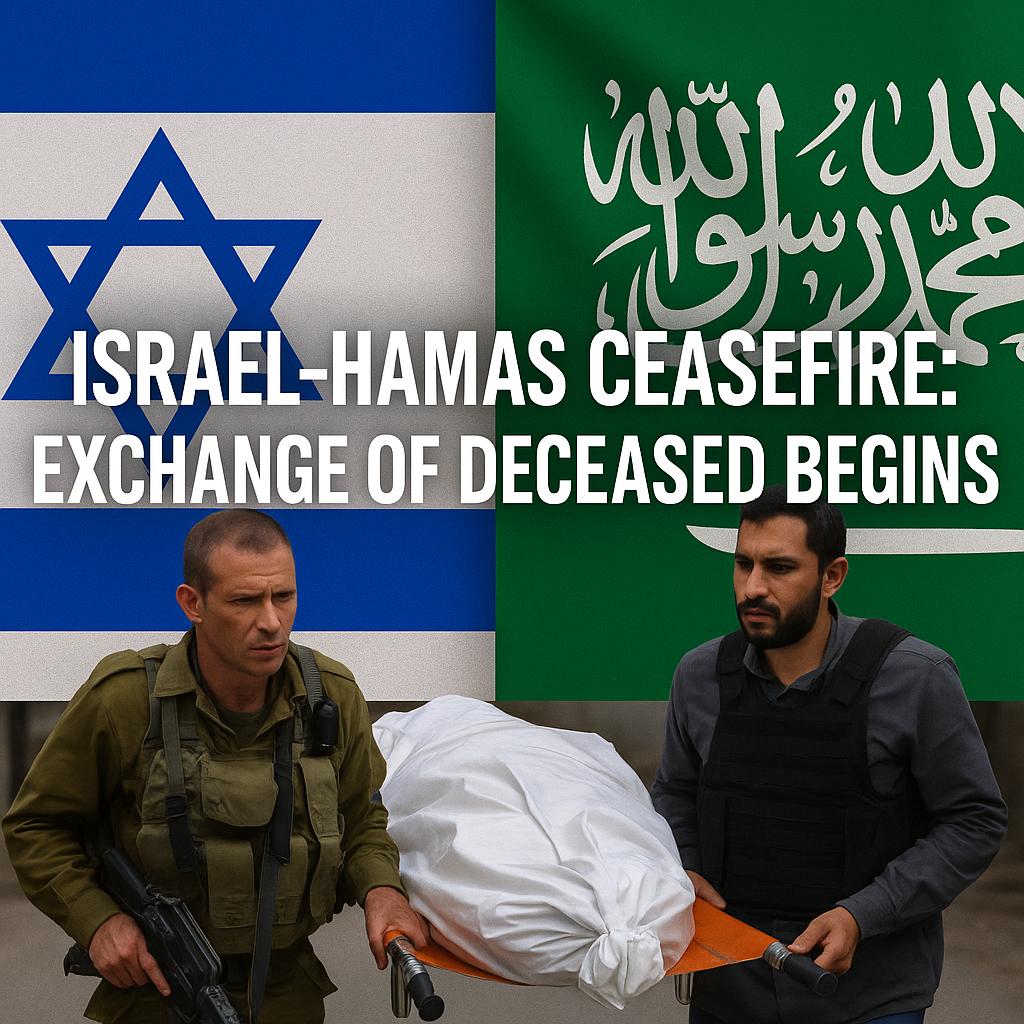
Israel, Hamas Ceasefire: Exchange of Deceased Begins

Israel-Hamas Ceasefire: Exchange of Deceased Begins
The ongoing conflict between Israel and Hamas has once again captured global attention, especially with the recent implementation of a ceasefire that has allowed for the exchange of deceased individuals. This latest development is seen as a significant step, albeit one filled with complex emotions and implications on both sides.

A Fragile Peace: Context of the Ceasefire
The ceasefire, established on October 18, 2025, has permitted the return of deceased individuals from both sides, a poignant gesture that reflects on the human cost of war. The exchange underscores a temporary pause in hostilities, aiming to provide some relief for families mourning their lost loved ones. Reports indicate that families in both Israel and Gaza are eagerly awaiting the return of their deceased, showcasing the profound emotional toll of the conflict.


However, this fragile peace comes in a volatile environment. As Al Jazeera pointed out, while the exchange might seem like a step toward reconciliation, skepticism remains. Many analysts argue that such gestures can be seen as merely cosmetic, failing to address the underlying issues that fuel the cycle of violence. The long-standing grievances over land, security concerns, and political aspirations continue to divide these two groups, casting doubt on the durability of any ceasefire.


Diverse Reactions and Contrasts
Reactions to the ceasefire and the associated exchange of deceased have been mixed. Some families feel a sense of closure, finally able to mourn and honor their loved ones. For example, the emotional toll that families endure was emphasized in reports from both sides, with many considering it a crucial first step toward a more meaningful dialogue about peace.
On the flip side, detractors argue that focusing on the remains distracts from the broader context of suffering and loss that continues on both sides. A piece from RT highlighted how the exchange, while symbolically important, does little to address the socioeconomic and political realities confronting Palestinians in Gaza and Israelis living under the constant threat of rocket attacks.
Moreover, some commentators suggest that while the exchange may serve as a temporary reprieve from violence, it could potentially embolden extreme factions on both sides. The utilization of human suffering as a bargaining chip in negotiations carries its own dangers.
The Road Ahead: Questions Unanswered
As both communities grapple with the ramifications of the ceasefire, important questions remain. Will the exchange create a pathway for broader discussions that tackle the root causes of the conflict? Or will it simply reaffirm existing divisions while allowing the cycle of violence to persist?
Despite various viewpoints on the effectiveness of the ceasefire, there is a consensus that dialogue is necessary. The complexities of the Israel-Palestine conflict cannot be resolved through superficial gestures alone. As articulated by several analysts, a sustainable peace will require addressing multiple layers of grievances, including political representation, borders, and security guarantees for all involved.
In emphasizing this concluding point, it’s essential to recognize that no easy solutions exist. As both sides navigate the immediate emotional landscape of loss and mourning, the hope for a longer-lasting peace hangs precariously on the balance.
Final Thoughts
The recent exchange of remains between Israel and Hamas, while a deeply emotional move, represents but a small step in a much larger journey toward peace. The high-stakes environment continues to challenge any sense of stability. Families on both sides have emerged from the shadows of grief, yet the path to healing and understanding remains fraught with obstacles.
As the world watches these unfolding events, the call for a comprehensive approach to peace that respects the dignity and humanity of all individuals remains ever poignant. Without addressing the foundational issues that have perpetuated this long-standing conflict, similar cycles of loss and mourning are likely to continue.
In summation, while the current ceasefire presents a moment of respite, it should ideally lead to a deeper examination of a path forward that prioritizes sustained dialogue and substantive solutions. Only then can the tragic history of loss give way to a hopeful future of coexistence.















