
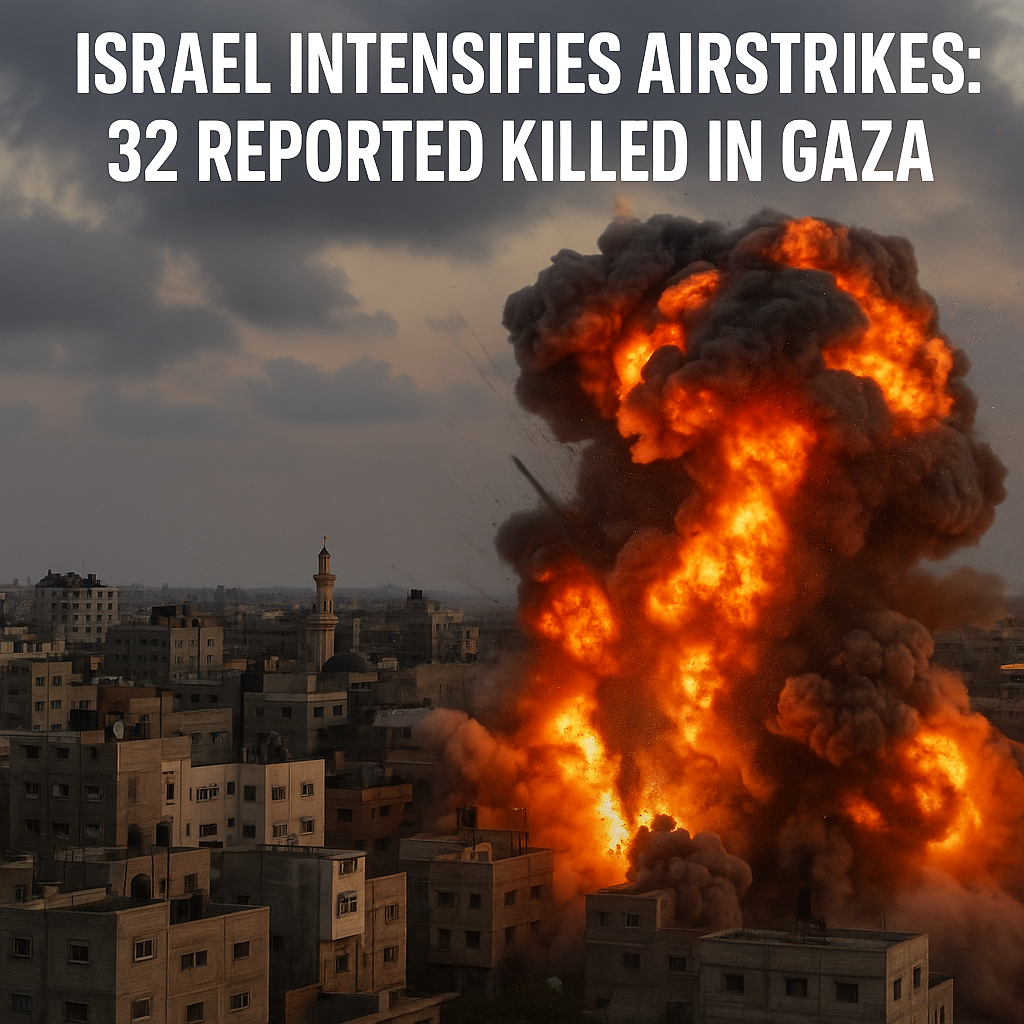
Israel Intensifies Airstrikes: 32 Reported Killed in Gaza

Israel Intensifies Airstrikes: 32 Reported Killed in Gaza
As tensions escalate in the Middle East, recent reports indicate that Israel has intensified its airstrikes in Gaza, leading to the tragic loss of at least 32 lives according to medical staff on the ground. This surge in military action underscores a complex and contentious backdrop of conflict, reflecting both longstanding political grievances and the precarious humanitarian situation in the region.

A Closer Look at the Escalation
Recent Developments


Over the past few days, the frequency and intensity of strikes on Gaza have increased, with both military and civilian areas reportedly affected. According to sources from Al Jazeera and Sky News, the situation in Gaza is dire, with medical facilities overwhelmed and civilian casualties rising. Eyewitness accounts describe scenes of chaos, as families seek shelter amid the bombings. The airstrikes, part of Israel’s military response to perceived threats, have drawn condemnation from various global actors, emphasizing the urgent need for a ceasefire.


Differing Perspectives
While Israeli officials argue that the airstrikes are a necessary measure for national security, aimed at dismantling militant operations, critics assert that the scale of the response is disproportionate. A statement from an Israeli Defense Forces (IDF) spokesperson indicated that the operations are targeted at sites used for military purposes, emphasizing that civilian safety is a priority. However, this narrative is challenged by reports from Gazan health officials who indicate that many of the fatalities are civilians, raising questions about the efficacy and ethics of such military tactics.
Humanitarian Implications
The Human Cost of Conflict
The airstrikes have resulted in catastrophic humanitarian conditions. Hospitals are reportedly inundated with casualties, leading to shortages of medical supplies and personnel. Al Jazeera highlighted how the situation has exacerbated existing issues within Gaza, such as limited access to clean water and electricity. The destruction of infrastructure threatens not only immediate care but also long-term health outcomes for the civilian population.
International Reactions
Global responses to the ongoing conflict have been varied. Some nations have voiced support for Israel’s right to defend itself, while others have called for restraint and a ceasefire. The United Nations has expressed deep concern regarding the humanitarian impact, urging all parties to prioritize civilian safety. An international rights organization noted that the escalation could lead to further destabilization in an already volatile region.
The Road Ahead: What Happens Next?
As airstrikes continue and death tolls rise, the international community grapples with the complexities of the situation. Potential resolutions may require a multifaceted approach that considers the security concerns of Israel along with the humanitarian needs of the Gazan population.
There are voices advocating for renewed peace talks, emphasizing that dialogue is crucial to addressing the underlying issues that have historically fueled the conflict. The lack of a clear consensus on how to pivot from military confrontation to diplomatic resolution reflects the broader difficulties in achieving lasting peace in the region.
Conclusion
The current crisis in Gaza, marked by intensified Israeli airstrikes and significant civilian casualties, underscores a tragic dynamic of conflict and humanitarian distress. As details continue to emerge, the need for informed dialogue and concerted international intervention becomes increasingly important. Onlookers and stakeholders alike must navigate a landscape marked by complexity and emotion, striving for solutions that acknowledge both the rights of a nation to secure its sovereignty and the inalienable rights of individuals caught in the crossfire.















