
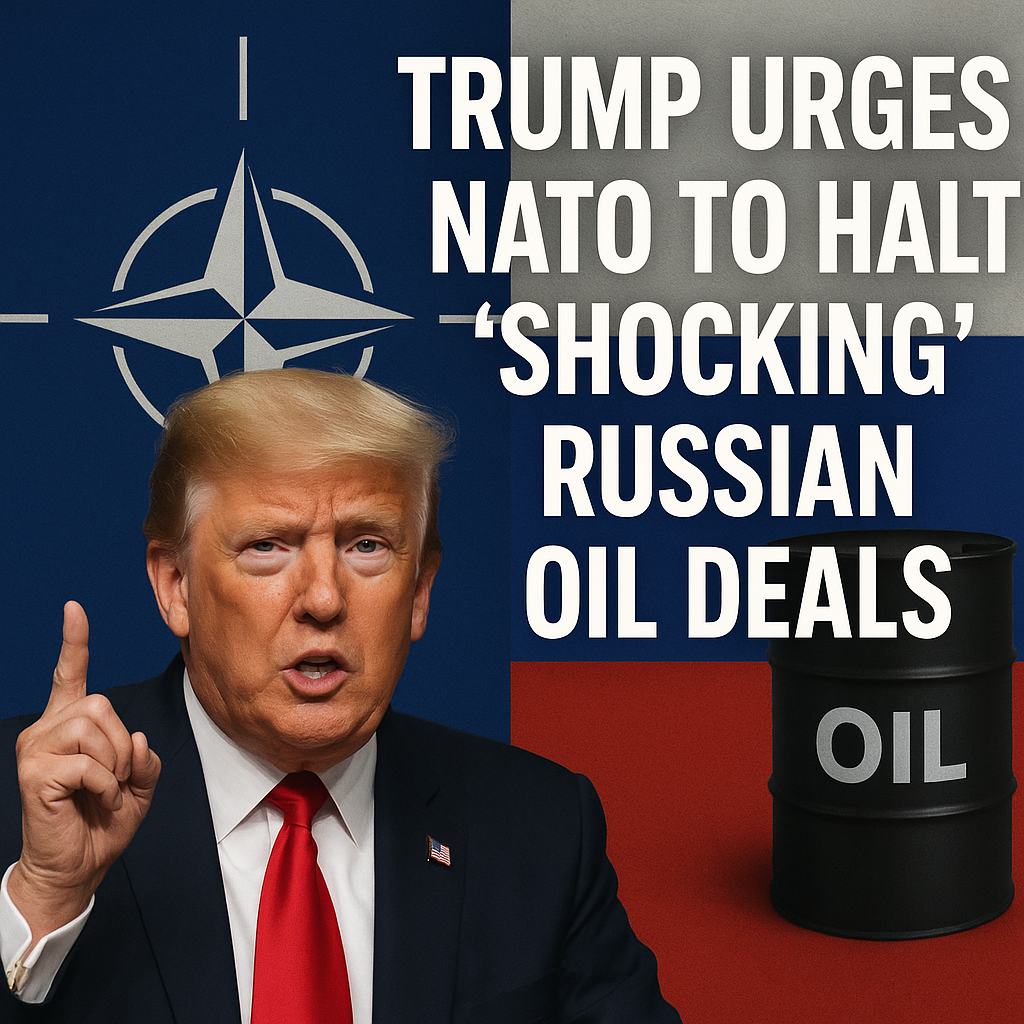
Trump Urges NATO to Halt ‘Shocking’ Russian Oil Deals

Trump Urges NATO to Halt ‘Shocking’ Russian Oil Deals
In a bold move that has sparked widespread discussion, Donald Trump recently called on NATO member countries to cease what he termed “shocking” oil deals with Russia. This statement has reignited debates surrounding the geopolitical implications of energy dependence amidst the ongoing conflict in Ukraine. Understanding the complexities of this narrative involves examining differing opinions and the multifaceted nature of global energy politics.

The Context of Trump’s Call
Trump’s statement comes at a time when the war in Ukraine has led to escalating tensions between Russia and Western nations. Many criticize NATO countries for continuing to purchase Russian oil, which some view as undermining efforts to support Ukraine. Trump argues that these purchases not only fund Russia’s military endeavors but also weaken the collective stance of NATO against Moscow.


Several prominent figures echoed Trump’s sentiments, asserting that halting Russian oil imports would send a stronger message of unity and resolve. According to reports, this position echoes broader concerns about Europe’s reliance on Russian energy resources, which exceeds 30% in many nations. The dependency complicates Europe’s ability to impose significant sanctions that could pressure the Kremlin.


Divergent Perspectives on Energy Independence
Opposing viewpoints also emerge in the discussion of energy independence and the complexities of halting Russian oil imports. While leaders like Trump advocate for an immediate cessation of these deals, others stress the practical challenges involved. For instance, European leaders highlight that a complete and rapid halt could lead to energy shortages, increased prices, and economic instability.
Germany, which had strong ties to Russian energy supplies, is navigating a delicate path. While Chancellor Olaf Scholz has committed to reducing dependency, an abrupt halt may not be feasible. In a recent statement, Scholz mentioned a phased approach that considers the ramifications of sudden disruptions in supply, emphasizing the need for a balance between geopolitical integrity and economic reality.
Economic Impacts and Energy Transition
The dialogue surrounding Russian oil deals also touches upon a larger narrative about the global energy transition. Many advocates for climate change actions argue that this is an opportune moment to accelerate the shift towards renewable energy sources. They contend that continuing to purchase Russian oil may hinder movements toward sustainable energy practices.
Moreover, countries like the U.S. are eyeing energy self-sufficiency. By increasing domestic production and exploring alternative energy sources, the U.S. could serve as a counterbalance to Russian influence. However, the process of transitioning to renewable energy is fraught with its own set of challenges, including infrastructure, technology costs, and public sentiment.
The Role of NATO in Energy Policy
In asking NATO to address the issue, Trump is positioning energy policy as a collective security concern. Supporters of his stance argue that collective action is critical for a unified front against aggression. However, critics contend that energy sanctions can often lead to counterproductive outcomes, including pushing nations closer to alternative alliances.
In navigating these dynamics, NATO’s role could shift toward facilitating a comprehensive energy strategy across member nations. This could involve exploring alternatives such as increased cooperation in renewable technology, joint investments in energy infrastructure, and strategies for managing the transition away from reliance on fossil fuels.
Weighing the Evidence
The complexity of the issue suggests that a singular solution may not exist. While halting Russian oil transactions could strengthen NATO’s political stance, the implications on global markets and individual economies raise significant concerns. Both sides have valid arguments: Trump’s call to action reflects a desire for immediate change in light of humanitarian crises, while the caution expressed by European leaders incorporates practical realities that demand careful consideration.
Ultimately, the pathway forward will require a nuanced approach that balances security interests and economic stability. The interplay between energy policy and geopolitical strategy will likely continue to evolve as the situation in Ukraine progresses and global energy needs transform.
In conclusion, the dialogue surrounding Trump’s call for NATO to stop Russian oil deals is situated within a broader narrative of economic dependency, international security, and the imperative for a transition towards sustainable energy solutions. How NATO and its member states choose to navigate these waters will significantly shape not only the ongoing conflict in Ukraine but also the future of global energy politics.















