
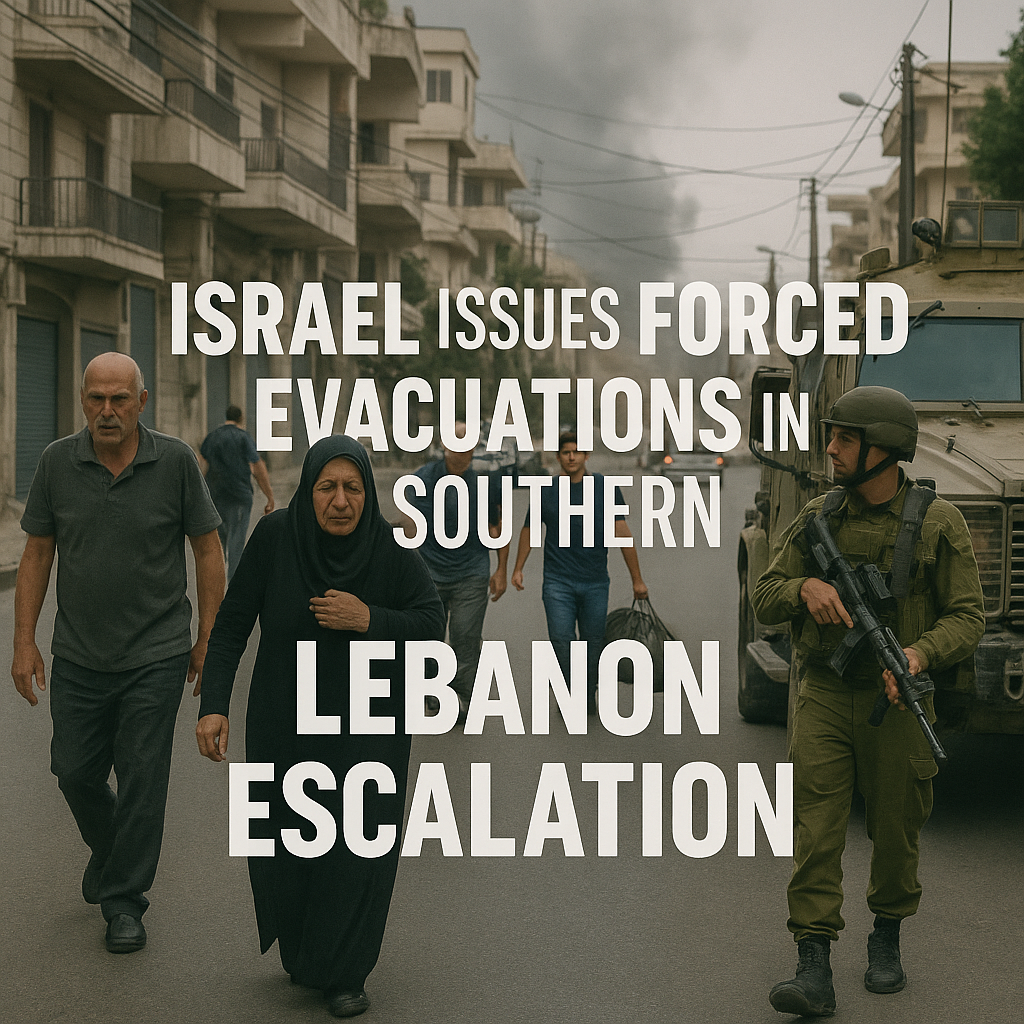
Israel Issues Forced Evacuations in Southern Lebanon Escalation

Israel Issues Forced Evacuations in Southern Lebanon Escalation
As tensions heighten in the region, Israel has recently ordered forced evacuations in southern Lebanon, a move that reflects the complexities and myriad viewpoints surrounding the long-standing conflict. This development has stirred various responses internationally, revealing the intricate layers of geopolitical dynamics at play.

Historical Context of the Conflict
The current situation must be viewed against the backdrop of a protracted history of conflict in the region. Israel and Lebanon have a tumultuous relationship, deeply influenced by decades of territorial disputes, sectarian tensions, and military skirmishes involving groups such as Hezbollah. Scholars point to the 2006 Lebanon War as a pivotal moment, where Israeli military operations led to significant casualties and displacement, the repercussions of which continue to affect both nations.


In recent months, however, reports suggest that hostility has escalated, prompting Israeli officials to issue evacuation orders for areas in southern Lebanon. According to Al Jazeera, these orders aim to secure Israeli civilians from potential attacks but have raised alarm for humanitarian concerns regarding the Lebanese population. In contrast, RT News frames the move as a necessary precaution amidst rising threats from militant groups, arguing that Israel must prioritize its national security.


Diverging Perspectives on the Evacuations
The forced evacuations have sparked diverse perspectives, particularly among analysts and political commentators. On one hand, proponents of Israel’s actions argue that the evacuations are a legitimate response to escalating tensions and rocket attacks from Lebanese territory. This view emphasizes Israel’s right to protect its citizens as paramount, with some noting that such measures have precedent in prior military conflicts.
Conversely, critics decry the humanitarian implications of these evacuations. Reports from various NGOs indicate that this move exacerbates the already dire conditions facing displaced populations in Lebanon. Human Rights Watch has emphasized the need for accountability in military actions, asserting that forced evacuations often lead to further instability and suffering among civilians—an opinion echoed by many within the international community advocating for diplomatic solutions rather than militarized responses.
The Broader Geopolitical Implications
The escalation in southern Lebanon and Israel’s forced evacuations come at a time of increasing tensions in the Middle East, involving not only Israel and Lebanon but also neighboring countries. Analysts suggest that these developments might have implications beyond the immediate region. The ongoing conflict intersects with global power dynamics, particularly concerning U.S. foreign policy and Iran’s influence in Lebanon through Hezbollah.
Sky News reports that Western nations are closely monitoring the situation, aware that a full-scale conflict could destabilize an already volatile region. The nuanced positions from various countries highlight differing priorities: while some Western nations rally around Israel’s right to defend itself, others express concern for the humanitarian impact of military actions on Lebanese civilians. The concern remains whether the evacuation orders might set a precedent for future military engagement, leading to further escalations.
A Path Forward?
Given the multifaceted nature of this crisis, where military, humanitarian, and diplomatic considerations intertwine, finding a path forward remains fraught with challenges. The absence of a clear consensus among international actors points to the complexities of negotiating peace in a region marked by historical grievances and mistrust.
It is crucial that humanitarian considerations are made central in discussions about military actions, with calls for dialogue gaining urgency. As the situation unfolds, analysts underscore the significance of maintaining open lines of communication and exploring diplomatic avenues.
In conclusion, while Israel’s forced evacuations in southern Lebanon address immediate security threats, they also raise substantial ethical and humanitarian questions. The opinions surrounding this issue reveal a deep divide in approaches to conflict resolution, highlighting the urgent need for comprehensive dialogue and a renewed commitment to addressing the underlying issues that continue to fuel tensions in the region. With the global community’s eyes on this unfolding situation, the hope is to navigate toward a more peace-oriented future.















