
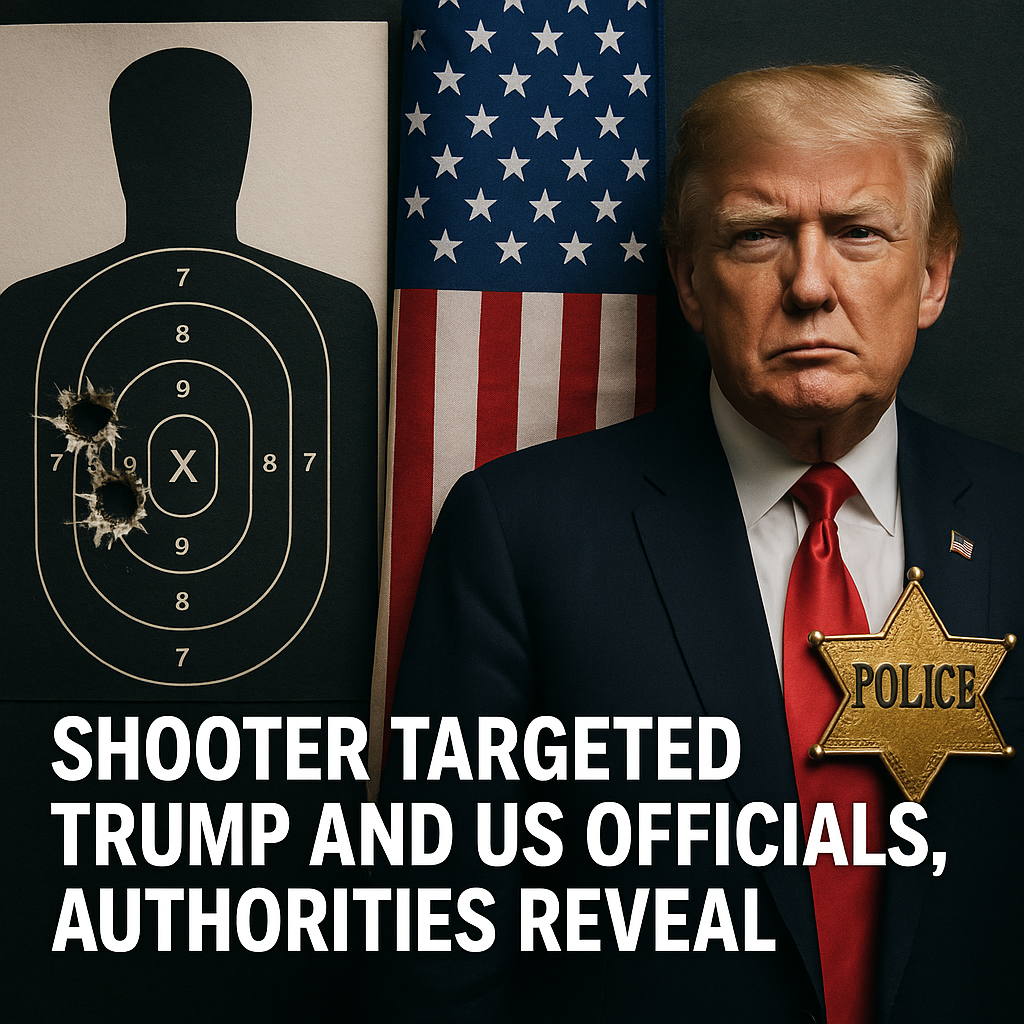
Shooter Targeted Trump and US Officials, Authorities Reveal

Shooter Targeted Trump and US Officials, Authorities Reveal
In a shocking revelation, authorities have confirmed that a shooter was specifically targeting former President Donald Trump and high-ranking officials within his administration. This disturbing incident not only raises serious questions about security protocols for public figures but also reflects the heightened tensions in today’s political environment.

The Incident: Details and Implications
The shooter, whose identity has yet to be disclosed, reportedly opened fire while Trump attended a public event in a location that had been previously deemed secure. According to reports from Al Jazeera and RT, the incident unfolded amidst a nationwide discussion about the increasing threats against political figures, particularly those who have been at the forefront of controversial policies or statements.


Security teams reacted swiftly, leading to the apprehension of the suspect. Fortunately, no one was injured during this chaotic situation. However, the implications of this event are far-reaching. Authorities have indicated that they will conduct a thorough investigation to determine whether the shooter acted independently or had affiliations with extremist groups.


Heightened Security Measures
In response to the incident, many officials are advocating for heightened security measures at public events. A spokesperson from Trump’s team emphasized the need for an “immediate review of security protocols to safeguard not just the former president but all officials who might find themselves in similar situations.” This sentiment aligns with the broader concerns echoed by experts across both left and right-leaning media platforms.
Sky News reports that following several similar incidents in recent years, there has been a significant increase in funding for security details surrounding public figures. Some officials argue that while it’s essential to protect political leaders, such measures only serve as a temporary fix to a more profound societal issue—polarization and violence in the political discourse.
The Climate of Political Polarization
The motivations behind such violent acts are complex and often rooted in the current climate of political polarization. A report from Al Jazeera highlights how violent rhetoric, particularly on social media platforms, can incite individuals who may be struggling with mental health issues or who are already predisposed to extremist views.
Conversely, RT emphasizes a concerning trend where political figures have publicly downplayed the seriousness of threats against their opponents, thereby setting a tone that some interpret as permissive or even encouraging of extreme actions. Both perspectives illuminate a dangerous intersection where rhetoric and real-world consequences collide.
Personalizing the Threat
The chilling reality is that the shooter allegedly viewed Donald Trump not just as a political figure but as a symbolic enemy representing all that he opposed. Such a mindset can distort reality, leading individuals to believe that violent actions are justified. This phenomenon is particularly emphasized in today’s world of hyper-partisanship, where discussions often devolve into vitriolic exchanges instead of constructive dialogue.
Experts suggest that to mitigate these issues, a collective effort is needed—not just from politicians but from society as a whole. Encouraging open dialogues about political differences without the demonization of opposing viewpoints could be a step towards reducing the animosity that fuels such violent acts.
Conclusion: A Call for Reflection
The recent targeting of Trump and his officials serves as a poignant reminder of the fragility of civility in political discourse today. While discussions around enhancing security are crucial, they must be coupled with broader societal changes aimed at healing the political divide.
As authorities continue their investigation and as the public reflects on the implications of this incident, it is essential to recognize the interconnected nature of political rhetoric and public safety. Only through a concerted effort to address both the symptoms and the root causes can we hope to foster a safer and more respectful political environment.















