
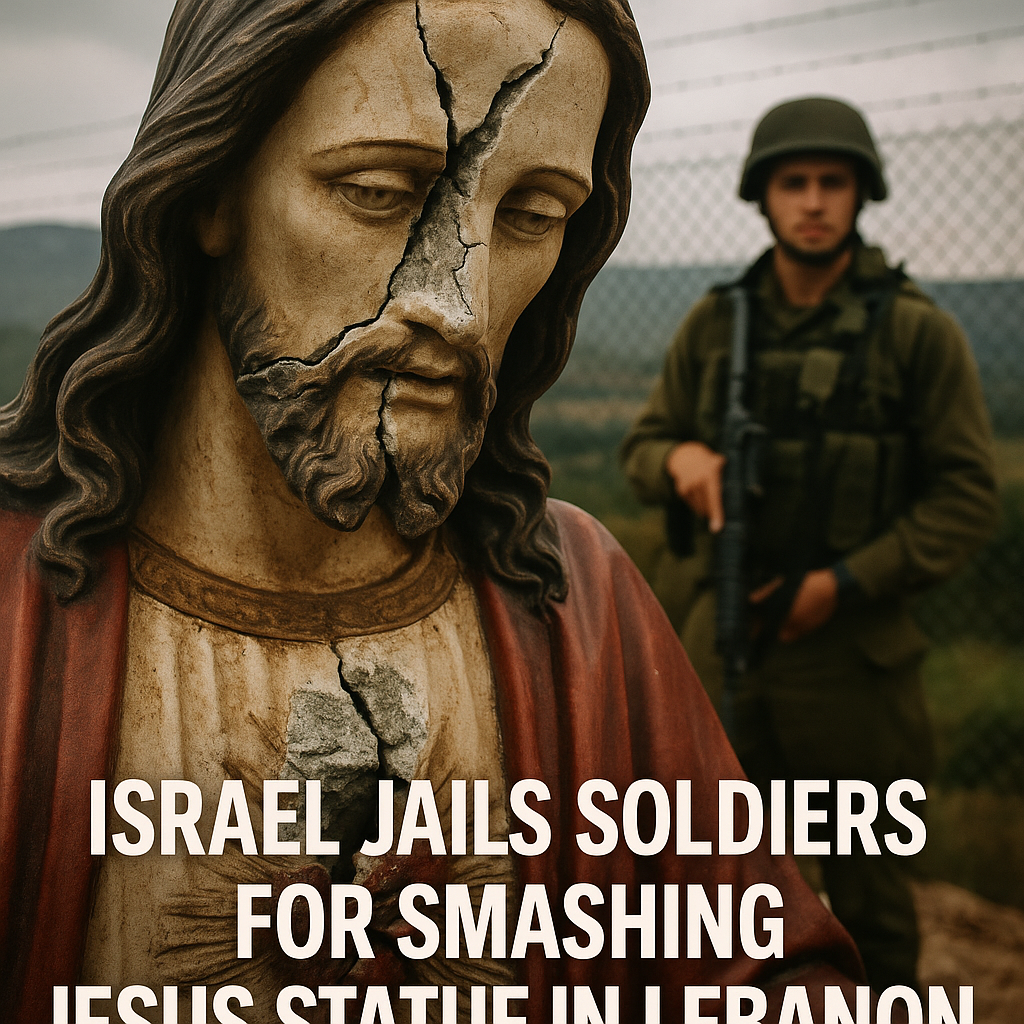
Israel Jails Soldiers for Smashing Jesus Statue in Lebanon

Israel Jails Soldiers for Smashing Jesus Statue in Lebanon: An Examination of Consequences
The recent jailing of Israeli soldiers for their involvement in vandalizing a statue of Jesus in Lebanon has sparked significant outrage and drawn international attention. This complicated situation reflects the underlying tensions in the region, raising questions about cultural sensitivity, military accountability, and the moral responsibilities of soldiers.

The Incident and Immediate Repercussions
The statue, located in southern Lebanon, was reportedly damaged during what has been described as celebratory behaviors by the Israeli troops. Footage of the soldiers vandalizing the statue quickly circulated on social media, leading to immediate condemnation from various sectors within both Lebanon and Israel.


The Israeli Defense Forces (IDF) were swift to act, administering punishment to those involved. As Al Jazeera noted, the decision to jail the soldiers aims to send a message about the importance of respecting religious symbols, especially in regions charged with conflict. This punitive action aligns with the IDF’s public relations strategy to mitigate backlash and reinforce a sense of moral responsibility among its ranks.


Despite this disciplinary measure, reactions have differed substantially between communities. In Lebanon, the incident has reignited feelings of animosity toward Israel, while some in Israel view the imprisonment of the soldiers as an overreaction that undermines military morale.
Diverging Perspectives on Accountability
Reactions to the soldiers’ actions and subsequent punishment highlight the stark contrast between how different communities view military accountability and respect for religious beliefs.
1. Lebanese Perspectives: For many in Lebanon, the vandalism of the Jesus statue symbolizes broader disrespect and aggression from Israel. The Lebanese have long dealt with historical grievances against Israeli actions within their borders, and incidents such as these exacerbate tensions. Local religious leaders called for stronger responses from their government, emphasizing the need to protect cultural heritage sites.
2. Israeli Perspectives: In Israel, opinions are mixed. Some applaud the IDF’s decisive action as a necessary step towards accountability, arguing that even in a conflict zone, ethical conduct should be prioritized. Conversely, others criticize the punishment as excessive and counterproductive, suggesting it may undermine the soldiers’ spirit during challenging assignments. This viewpoint reflects a belief in a need for camaraderie and unity among troops in a militarized environment.
Broader Implications for Military Conduct and Cultural Sensitivity
The incident serves as a microcosm of the larger issues surrounding military conduct in conflict areas, especially when interactions with local cultures come into play.
– Cultural Respect: Vandalism of religious symbols can serve as a flashpoint in already volatile regions. The destruction of the statue has been interpreted not merely as an isolated event, but as a manifestation of a larger inability to respect diversity in a multi-religious environment. Military personnel operating in foreign lands must be acutely aware of the cultural significance of their actions.
– Military Discipline and Public Perception: The IDF’s quick response underscores an ongoing struggle between military discipline and public perception. By jailing soldiers, the military seeks to demonstrate accountability. However, such actions can also lead to internal dissent, particularly among soldiers in high-stress situations. Balancing responsibilities towards both local communities and military unity is a significant challenge.
The Path Forward: A Call for Dialogue
While the jailing of Israeli soldiers serves as a stern message about accountability, it also highlights the need for ongoing dialogue surrounding cultural respect and military ethics. The question remains: how can military forces find common ground with local populations in regions marked by historical tensions?
– Education and Training: Constructive measures could include enhanced cultural sensitivity training for soldiers deployed in foreign territories. Understanding the historical and cultural contexts in which they operate can help prevent future incidents.
– Engagement with Local Communities: Another avenue is fostering relationships with local communities. Engagement can help bridge divides and establish a mutual respect that transcends conflict ideologies.
– Open Discourse on Moral and Ethical Responsibilities: Finally, maintaining an open discourse about the moral duties of soldiers can encourage deeper understanding and accountability. Military institutions must strive to reaffirm their commitment to ethical conduct, not just through punitive measures but through education and proactive engagement.
Conclusion: A Complex Tapestry of Responses
The jailing of Israeli soldiers for vandalizing a Jesus statue in Lebanon has revealed a layered tapestry of emotions and beliefs. It accentuates the necessity for cultural sensitivity and mutual understanding in a region fraught with historical grievances. As discussions continue, it is crucial to acknowledge diverse perspectives and work toward a future where respect supersedes conflict.
While the immediate incident may be resolved, the broader conversation about military conduct and cultural respect is just beginning. As both Israel and Lebanon navigate their complex histories, it is essential for dialogue to remain inclusive, informative, and constructive.















