
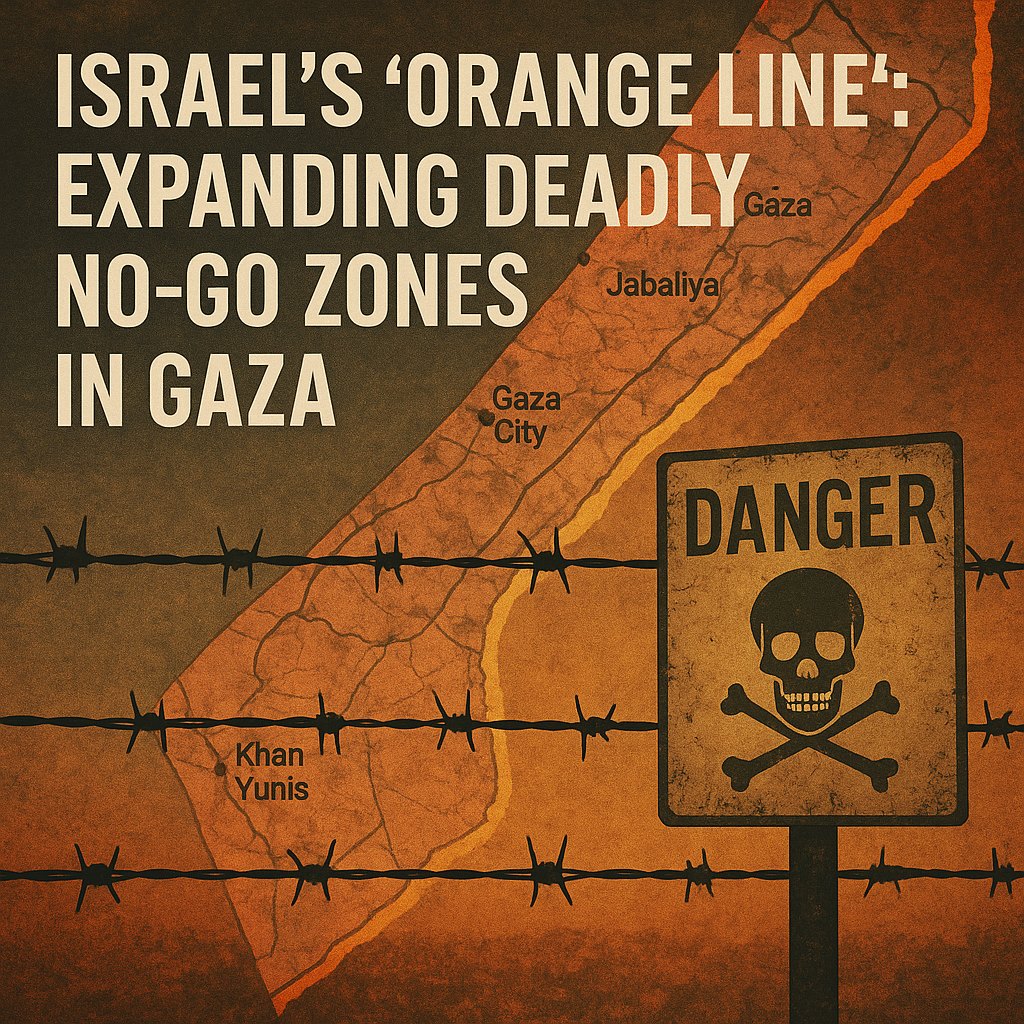
Israel’s ‘Orange Line’: Expanding Deadly No-Go Zones in Gaza

Israel’s ‘Orange Line’: Expanding Deadly No-Go Zones in Gaza
The ongoing tensions between Israel and Palestine have led to changes in territorial management and the implementation of measures like the ‘Orange Line’, which marks expanding no-go zones in Gaza. Understanding the implications of this designation requires a comprehensive look at both the historical context and the current humanitarian situation.

The Context of the Orange Line
The ‘Orange Line’ refers to a newly designated boundary set by Israel along its border with Gaza. According to reports from various sources, this line has been established as part of Israel’s broader security strategy in response to escalating conflict and tensions in the region. The Israeli government claims that the line is crucial for national security, aimed at preventing infiltration and maintaining a buffer zone against potential threats from militant groups.


The Israeli Perspective
Government representatives argue that the Orange Line is necessary to safeguard the lives of civilians in Southern Israel. A spokesperson noted, “We cannot compromise on the safety of our citizens.” This sentiment resonates in the Israeli public, particularly in areas close to Gaza, where rocket-fire incidents have galvanized support for stringent border policies. The adoption of the Orange Line, they argue, is a preventative measure designed to limit risks associated with militants and cross-border attacks.


Israeli officials also maintain that this security framework is not just about territorial control. They assert that it is part of a comprehensive approach to stabilize the region and enable the eventual resumption of peace processes, contingent upon security assurances.
Humanitarian Concerns in Gaza
Conversely, the situation on the ground in Gaza paints a markedly different picture. Local and international humanitarian agencies have raised alarm over the implications of the Orange Line for residents in these no-go zones. Reports highlight that the demarcation curtails vital access to agricultural land, exacerbating already dire economic conditions in the territory.
Many families find themselves isolated, unable to access basic resources such as food and clean water. A representative from a humanitarian organization stated, “The expansion of no-go zones is pushing more people into poverty and desperation. This is not just an issue of land but of survival for many families.”
Additionally, this expansion is perceived as compounding the already dire humanitarian crisis in Gaza, where shortages of medical supplies and infrastructure decay are prevalent. The result is a deepening cycle of hardship, where the risk of violence and retaliatory strikes stifles any potential for constructive dialogue.
The Impact of Escalation
The dual perspectives on the Orange Line reflect a complex interplay between security apprehensions and humanitarian imperatives. While Israel emphasizes the importance of protection, the narrative in Gaza underscores the repercussions of such policies on civilian life.
The stark contrast in viewpoints raises essential questions about the feasibility and ethics of expanding no-go zones—a move that can be seen as exacerbating tensions rather than alleviating them. It highlights the critical need for dialogue that accounts for both security considerations and the humanitarian needs of those affected by these decisions.
Looking Ahead: A Call for Balance
Navigating the complexities surrounding the Orange Line and no-go zones necessitates a balanced approach that recognizes the multifaceted nature of conflict. The Israeli perspective focuses on security and protection, while the Palestinian narrative emphasizes human rights and access to basic needs. As the situation evolves, a commitment to open dialogue and compassion can help mitigate the devastating effects felt by civilians in both areas.
To foster meaningful change, both Israeli officials and Palestinian representatives must engage in discussions that prioritize mutual understanding and respect. Humanitarian organizations can play a fundamental role in this process by amplifying voices from the ground and advocating for policies that consider the humanitarian impact of military decisions.
In conclusion, the Orange Line serves as a potent symbol of the challenges faced in Israel and Gaza. With its implications echoing through the communities impacted, it presents an urgent call to revisit existing frameworks, seeking solutions that address both security concerns and humanitarian rights. Only through collaborative efforts can the cycle of violence and suffering be broken, paving the way for a more viable peace in the region.















