
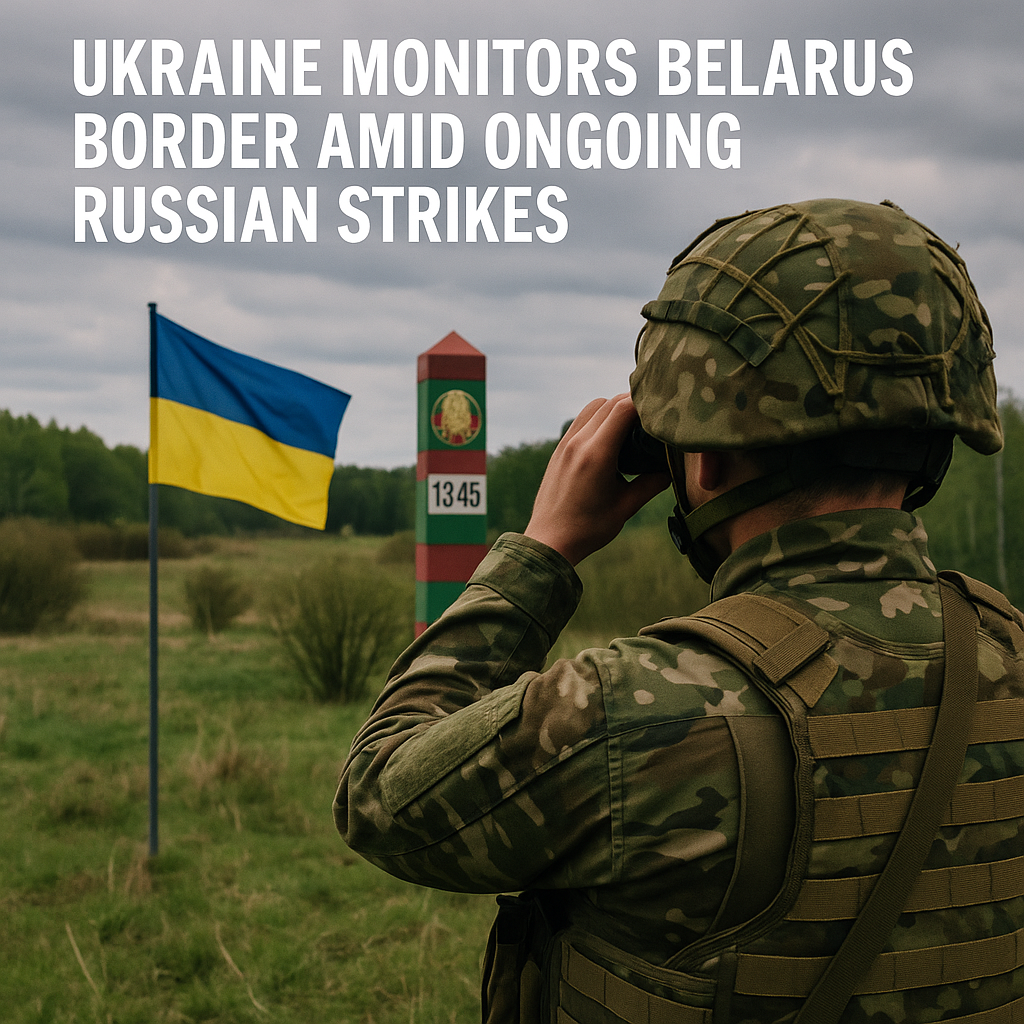
Ukraine Monitors Belarus Border Amid Ongoing Russian Strikes

Ukraine Monitors Belarus Border Amid Ongoing Russian Strikes
As tensions rise in Eastern Europe, Ukraine is increasingly focused on monitoring its border with Belarus in light of persistent Russian strikes. The complexities of this situation require careful analysis, as multiple factors interplay within the geopolitical landscape.

Border Security Concerns
Recent developments in the region have triggered heightened vigilance from Ukrainian authorities. According to a report from Al Jazeera, Ukrainian intelligence has ramped up surveillance along the Belarus border, citing increased military activities from Russia and its ally, Belarus. Analysts suggest that the presence of Russian troops and equipment in Belarus poses a potential threat not only to Ukraine but also to neighboring countries in the region.


Military Movements and Strategic Implications
The ongoing military rhetoric and exercises conducted by Russia and Belarus have not gone unnoticed. The Ukrainian Ministry of Defense expressed concerns about the capabilities being amassed just across its border. Reports highlight that Belarus serves as a strategic launch point for Russian operations, allowing for a quicker cross-border assault if tensions escalate.


The situation is made more complex by the historical alliances and defense postures in the region. Ukrainian officials have indicated that they are not only preparing for possible incursions but are also coordinating with NATO allies for additional support. This dimension adds a layer of international security concerns, as neighboring countries are equally invested in stability in the face of possible aggression.
Diverse Perspectives on Regional Stability
The narratives surrounding the Ukraine-Belarus border situation highlight both the immediate and long-term implications of Russian military activities. While some sources emphasize the immediacy of the threat posed by the increased military presence, others caution against hasty conclusions.
Cautious Optimism
On one side, commentators from RT provide a perspective that suggests Western media often exaggerates the threats posed by Russia and Belarus. They argue that military exercises have historically been used as a tool for deterrence, stating that they do not always indicate imminent aggression. This viewpoint advocates for a more restrained interpretation of military movements, suggesting that regional forces seek a balance rather than outright hostility.
Conversely, many analysts counter that the accumulation of forces near Ukraine should indeed be taken seriously. With various officials and military experts echoing the sentiment that any form of military posturing could lead to miscalculation, the stakes are impossibly high. The catastrophe of a misstep or misunderstanding looms over the current political climate.
The Human Dimension
The impacts of these military strategies extend beyond government alliances and into the lives of everyday citizens. With ongoing strikes and the consequent instability in the region, civilians in Ukraine face the harsh reality of conflict while also needing to cope with the mental toll of uncertainty. The prioritization of citizen safety remains a focal point for Ukrainian leadership while navigating military strategies and international diplomacy.
Humanitarian groups have also raised alarms regarding the potential displacement of populations as tensions escalate. The situation demands a comprehensive approach that encompasses both military readiness and a robust humanitarian response.
Conclusion: Navigating Complexity
The situation along the Ukraine-Belarus border, against a backdrop of ongoing Russian strikes, reflects a complex interplay of military strategy, international relations, and significant human consequences. While the immediate threat of aggression persists, there remains a spectrum of perspectives regarding the magnitude and nature of these developments. As Ukraine continues to monitor the evolving situation, the international community must remain vigilant and responsive to ensure that diplomatic avenues for resolution are actively pursued.
In navigating this landscape, it is essential to strike a balance between readiness for conflict and a commitment to dialogue, as the stakes involve not just geopolitical balance but the very lives of those caught in the crossfire.















