
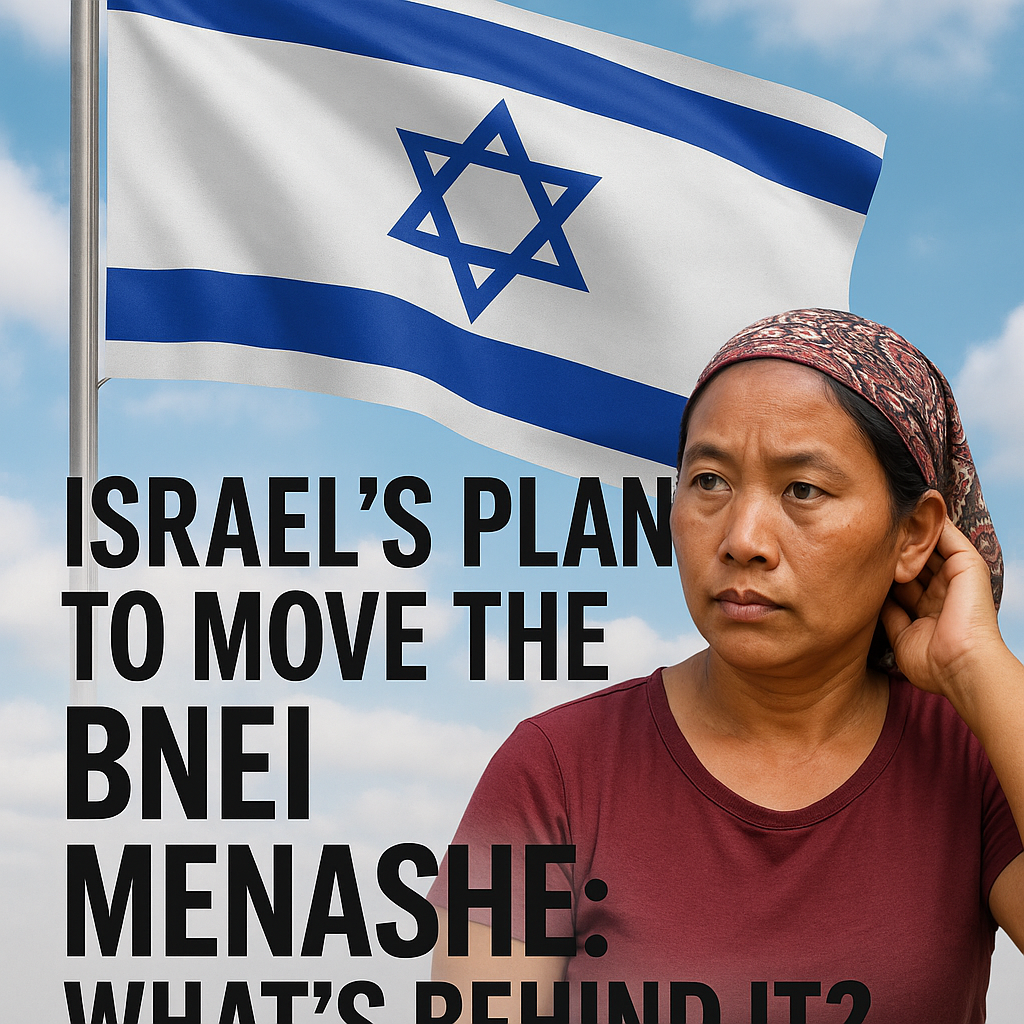
Israel’s Plan to Move the Bnei Menashe: What’s Behind It?

Israel’s Plan to Move the Bnei Menashe: What’s Behind It?
Israel’s plan to relocate the Bnei Menashe, a group claiming descent from one of the lost tribes of Israel, has ignited a significant discourse around cultural identity, national policy, and historical connection. This initiative underscores the complexities surrounding immigration and the dynamics of belonging in a society that is both ancient and modern.

Understanding the Bnei Menashe’s Claim
The Bnei Menashe community hails from Manipur and Mizoram in northeastern India, asserting that they are descendants of the Menashe tribe, sent into exile over 2,000 years ago. Israel has, for years, shown interest in this community, with many members having immigrated in recent decades under the auspices of the Law of Return, which grants Jews the right to settle in Israel.


However, recent plans to facilitate a mass relocation of the Bnei Menashe have attracted attention and controversy. Proponents of the move argue it is a fulfillment of a biblical promise, reclaiming a part of the Jewish diaspora that has long been forgotten. In a society that places a high value on historical ties, this perspective resonates with many in Israel.


On the other hand, critics caution against oversimplifying the narrative. Some scholars and community leaders emphasize that not all Bnei Menashe individuals identify as Jewish, and the community’s views on immigration can be diverse. This complicates the perception of the Bnei Menashe’s identity and raises ethical questions about the nature of their relocation.
Divided Opinions: The Community’s Views
Reports indicate that while some members of the Bnei Menashe enthusiastically support the move, viewing it as a chance to connect with their roots and embrace a Jewish identity, others harbor reservations. A segment of the community has expressed concerns over the push for mass immigration, questioning the readiness of the Israeli society to integrate their unique cultural practices.
In interviews, community leaders have voiced the sentiment that while the relocation is tempting, it must be done thoughtfully, respecting the community’s cultural heritage and individual choices. This nuance highlights the complexities inherent in the discussion, showing that the narrative is not simply one of jubilant return but also one of careful consideration.
Broader Implications for Israeli Society
The planned relocation of the Bnei Menashe brings to light larger issues within Israeli society, particularly concerning national identity. As Israel grapples with its multifaceted nature—comprising secular and religious groups, immigrants from various backgrounds, and a historical claim to the land—the case of the Bnei Menashe exemplifies the balancing act the nation must navigate.
Supporters of the move argue that welcoming the Bnei Menashe would enrich Israel’s cultural tapestry, further embracing the diversity that defines the country. The integration of a group tied to ancient Israelite lineage could foster a sense of unity and belonging among Jewish communities worldwide.
Conversely, critics argue that this move could exacerbate tensions within Israel, where other marginalized groups may feel sidelined. The relocation could be perceived as prioritizing one narrative at the expense of others, raising questions about whose identity is valued in the ongoing construction of modern Israel.
Conclusion: A Complex Path Forward
Israel’s initiative to relocate the Bnei Menashe raises profound questions about identity, belonging, and the ethical implications of national policy. While many view the move as a positive step toward historical reconciliation, others argue for a more nuanced approach that considers the community’s diverse opinions and the implications for Israeli society as a whole.
As the debate continues, it is vital for policymakers to engage with the voices of the Bnei Menashe themselves, ensuring that their perspectives and aspirations shape the conversation. The path forward must be one that fosters understanding and integration while respecting cultural identities—an ongoing saga that reflects the complexities of a nation striving to reconcile its past with its present.















