
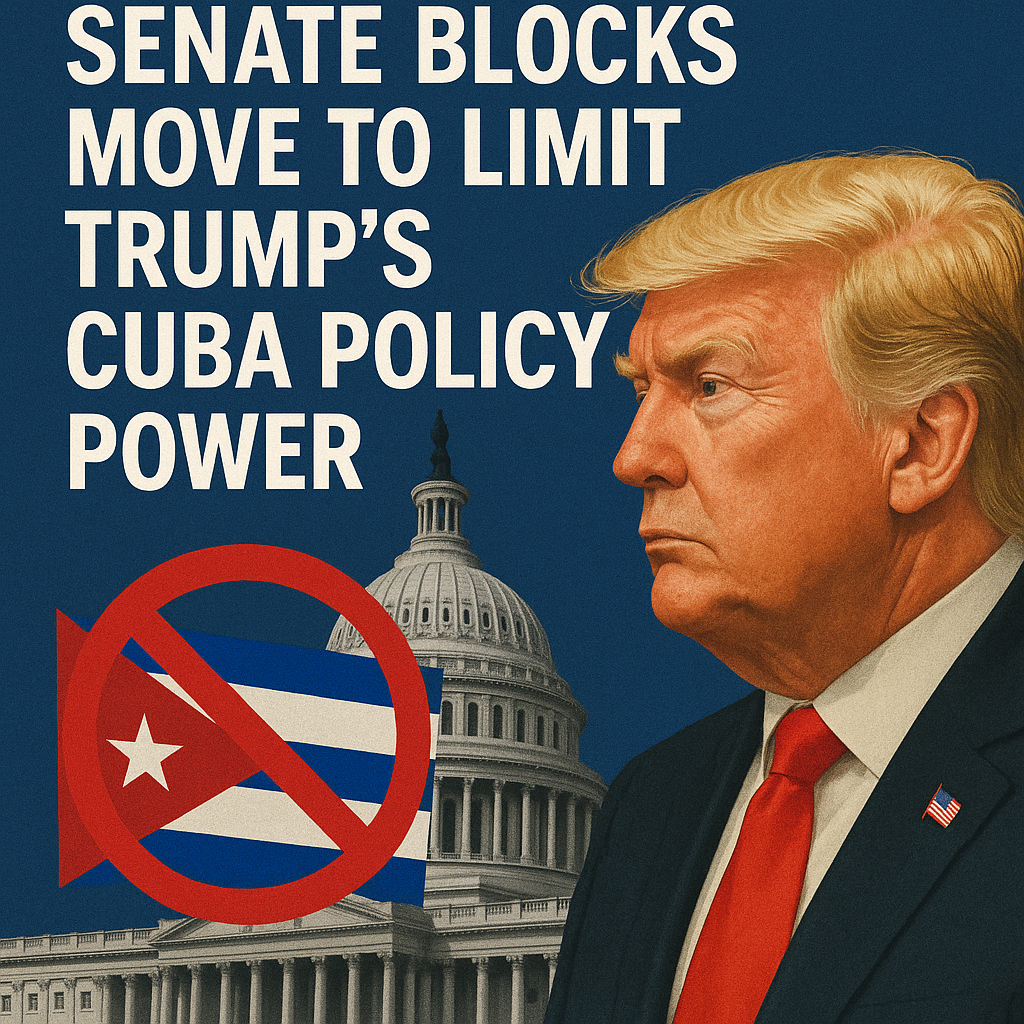
Senate Blocks Move to Limit Trump’s Cuba Policy Power

Senate Blocks Move to Limit Trump’s Cuba Policy Power
In a significant decision, the Senate has blocked an initiative aimed at limiting the executive branch’s power regarding Cuba policy, a matter that continues to evoke passionate debate across the political spectrum.

The Political Landscape
The measures introduced in the Senate aimed to curb what some legislators and policymakers consider President Trump’s overly aggressive stance on Cuba that could escalate tensions between the U.S. and the communist nation. The Senate’s decision reflects a fractious internal debate within Congress about how to engage with nations deemed hostile, particularly in a rapidly changing geopolitical landscape.


Supporters of the proposal argued that the current administration’s approach could push Cuba closer to adversarial allies like Russia and China. This sentiment echoes sentiments expressed by political analysts who believe that unilateral actions may not serve U.S. interests. According to Al Jazeera, Senate proponents of the measure advocated for a more diplomatic approach, potentially reopening channels that had begun to thaw during the Obama administration.


Conversely, critics of the proposed limitations viewed them as an infringement on presidential authority, arguing that the executive branch must retain the flexibility to respond swiftly to international crises. This became a focal point for Republican senators who stood in opposition, framing their argument around the need for a strong stance against regimes that they perceive as threats to democracy and regional stability.
Divergent Views on Cuba Relations
Debate surrounding U.S.-Cuba relations has often been emblematic of broader ideological rifts. As noted in coverage from RT, there exists a faction within Congress that favors maintaining stricter sanctions as a means of demanding change within Cuba. They argue that historical engagement has not yielded results in terms of democratization or human rights improvements on the island.
On the other side, there are those who advocate for a nuanced approach that combines elements of engagement and pressure, suggesting that diplomacy can coexist with vigilance. This perspective aligns with voices from various diplomatic circles that underscore the importance of dialogue in conflict resolution.
The blocked measure could also have implications for domestic policy. Many Cuban Americans and allies have voiced frustration regarding the impact of strict sanctions on everyday citizens in Cuba, highlighting a humanitarian concern that often gets overshadowed in these discussions. An editorial from Sky News emphasized that a more moderate stance could promote beneficial exchanges and deeper cultural connections, which may ultimately lead to incremental change.
Uncertainties Ahead
Despite the blocked initiative, it remains unclear what the future holds for U.S.-Cuba relations. The Senate’s decision indicates a continuing stalemate, where neither party appears poised to dramatically shift the trajectory of policy. With the complexities of international relations at play, the Congress’ division reflects deeper issues of strategy, ideology, and national interest.
Additionally, experts point out the necessity for a comprehensive review of Cuba policy that considers the voices of those directly affected, both in Cuba and the U.S. A strategic framework that integrates diplomatic engagement with accountability could be an optimal path forward, yet it seems politically challenging given the entrenched positions of both parties.
In summary, the Senate’s action—or lack thereof—highlights the complexity surrounding U.S.-Cuba policy and the challenges of navigating international relations in an increasingly polarized political environment. As discussions continue, the balance between national security and diplomacy will remain a pivotal theme in shaping future policy decisions. The resilience and adaptability of American diplomacy, in tandem with insights from a diverse array of stakeholders, will be crucial as the country seeks to define its stance on Cuba moving forward.















