
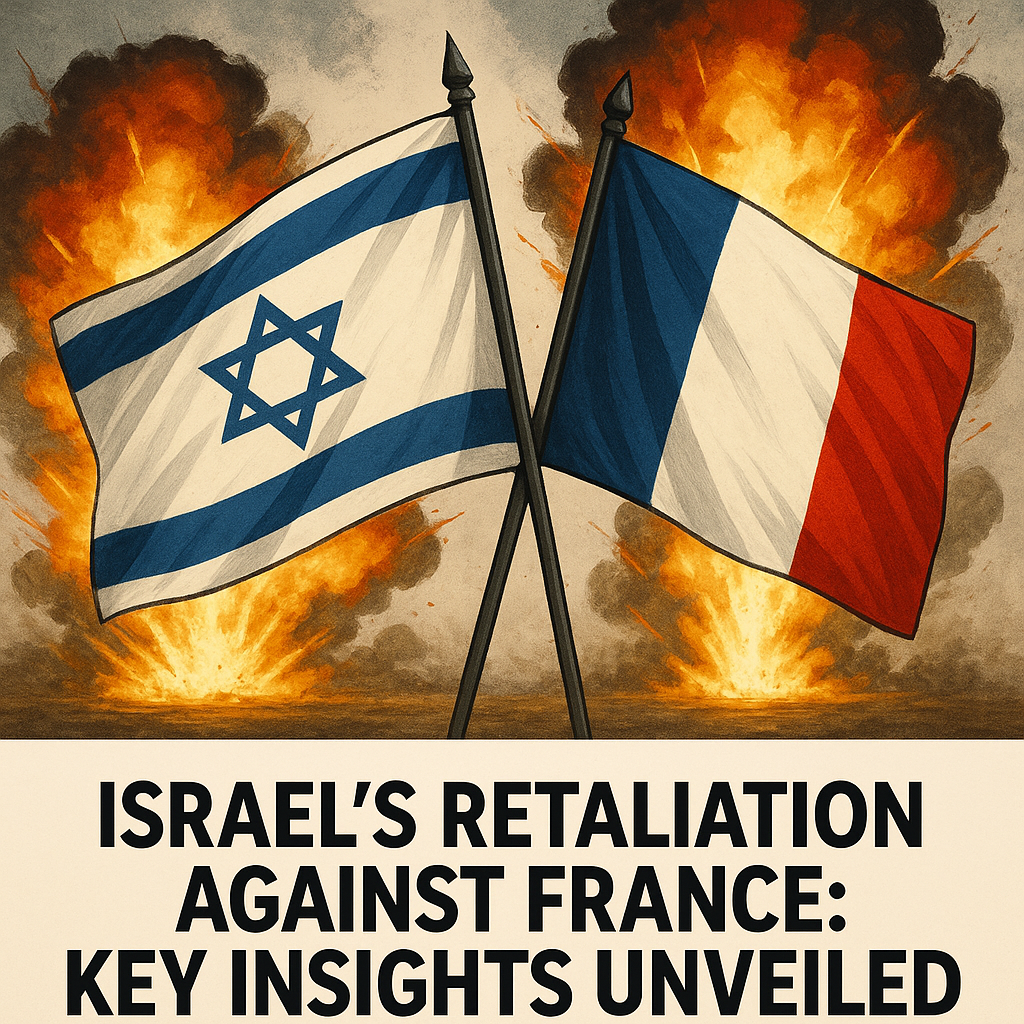
Israel’s Retaliation Against France: Key Insights Unveiled

Israel’s Retaliation Against France: Key Insights Unveiled
In recent months, Israel’s response to France following a controversial arms deal and intensified rhetoric has stirred significant discourse among international relations analysts and media pundits alike. The situation encapsulates a complex web of diplomatic nuance and geopolitical strategy that merits a thorough examination.

The Context of Tensions
The backdrop of this tension involves a friction-filled arms shipment from France to Lebanon, which Israeli officials view as a potential threat to their national security. Reports from RT highlight that the shipment includes precision-guided munitions, which Israel perceives as elevating the military capabilities of groups it considers hostile, particularly Hezbollah. The Israeli government has issued stern warnings, asserting that such arms deals undermine regional stability and bolster adversary forces.


Al Jazeera notes that the escalation in rhetoric is not without merit. France’s recent military support for Lebanon has drawn ire from Israel, especially as the historical context of French-Lebanese relations allows for a complex dynamic in the Middle Eastern power structure. Analysts suggest that France, by arming Lebanon, is perceived not merely as a supportive ally but as a potential adversary in a volatile region, heightening the stakes for Israeli defense posture.


A Balance of Perspectives
While Israel’s perspective leans heavily toward viewing this arms deal as a direct threat, there is also a counter-narrative to consider. French officials argue that their military support for Lebanon aims to foster stability and counter extremism, not to escalate tensions with Israel. As reported by Sky News, France has emphasized its commitment to Lebanon’s sovereignty, seeking to support local forces against the backdrop of mounting insecurity.
The contrasting views reveal a key point: Israel operates from a historical framework that prioritizes its survival amid a multitude of threats, while France approaches the situation from a diplomatic lens, focused on regional alliances and stability. This divergence illuminates the complexity of international relations, where actions can be interpreted through different ideological prisms.
The Diplomatic Fallout
Israel’s anticipated retaliation includes not just military preparedness but also potential diplomatic countermeasures. Israeli diplomats are reportedly engaging in outreach to convince other European nations to reconsider similar defense commitments to Lebanon. Sources from RT indicate that discussions at international forums may commence, aimed at rallying support for stricter regulations on arms sales to nations perceived as hostile to peace in the region.
However, the effectiveness of such diplomatic efforts remains uncertain. France’s reaffirmation of its arms contract, which it insists is in alignment with international law and the need for regional stability, sets the stage for prolonged negotiations. Critics argue that this situation could breed further animosity, as lost trust may lead both nations to reassess their alliances and military strategies.
The Path Forward: Uncertainty Ahead
As tensions simmer, uncertainty reigns supreme. The situation serves as a reminder of the intricate dance of diplomacy, military readiness, and regional stability in the Middle East. While Israel’s motivations are rooted in defense and historical grievances, France continues to navigate the delicate balance of regional relations and its broader role in international politics.
As this discourse evolves, the implications for peace and security in the region could become even more convoluted. Different geopolitical interests clash, sometimes leading to wider repercussions. Military engagement and arms sales are not merely transactional; they are also potent symbols of political support or opposition.
In conclusion, the fallout from Israel’s retaliation against France for the arms shipment to Lebanon encapsulates multiple layers of complexity. The two nations are entrenched in a dialogue characterized by both assertive posturing and diplomatic niceties. As the world watches this unfolding drama, the discourse surrounding arms deals, international collaborations, and national security will continue to shape the future of Middle Eastern geopolitics. The nuanced nature of this interaction reminds us that in global narratives, actions often speak louder than words—and the implications are profound.















