
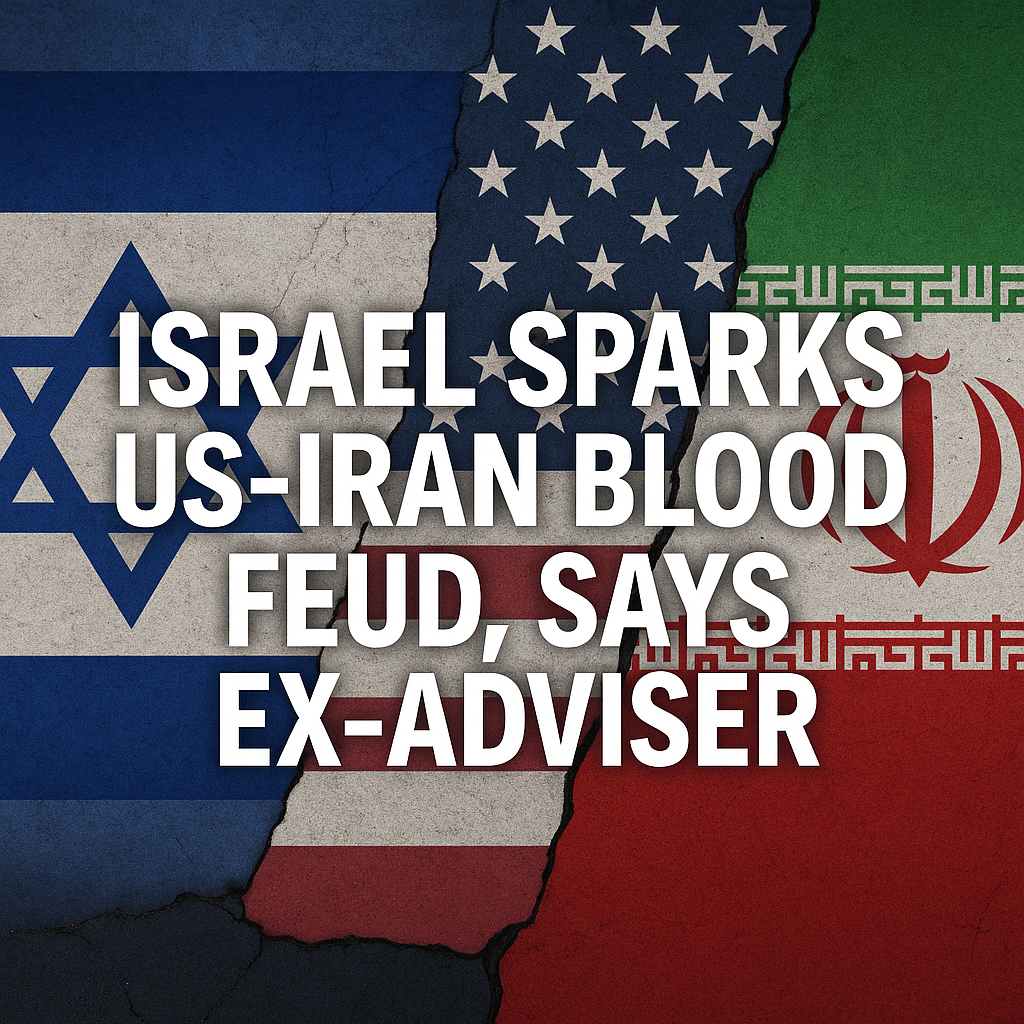
Israel Sparks US-Iran Blood Feud, Says Ex-Adviser

Israel Sparks US-Iran Blood Feud, Says Ex-Adviser
In recent developments, tensions between Israel, the U.S., and Iran have escalated sharply, igniting discussions about the geopolitical implications of ongoing conflicts in the region. The phrase “blood feud” has been used by experts to describe the potential ramifications of these hostilities, particularly as they involve powerful nations and their respective interests.

The Context of Rising Tensions
The backdrop for this conflict is multifaceted, originating from historical animosities, territorial disputes, and evolving alliances. An ex-adviser remarked on the precarious situation, claiming that Israel’s aggressive posturing, particularly its military actions against Iranian targets, could spiral into a much larger conflict involving the United States. This perspective is now resonating within diplomatic circles as the possibility of a “blood feud” takes center stage.


Recent military incursions by Israel into Iranian-related sites underline these tensions. Reports from Al Jazeera highlight that such operations could provoke direct retaliation from Iran, raising the stakes not just for Israel but also for American interests in the region. Historically, the U.S. has positioned itself as a protective ally of Israel, complicating its relationship with Iran, which views these actions as an infringement on its sovereignty.


On the flip side, Russia Today echoes sentiments from various analysts suggesting that U.S. involvement—in military support or political endorsement—would escalate the situation significantly. Several debates suggest that the interior conflicts within Iran may lead it to retaliate against American interests, thereby dragging the U.S. into an unwanted confrontation.
Diverging Perspectives on U.S. Involvement
The opinions on whether the U.S. should act as a mediator, supporter, or isolator in this conflict are varied and deeply polarized:
Arguments for Restraint
1. Risk of Escalation: Many foreign policy experts advocate for restraint from the U.S., warning that any intervention could lead to a wider Middle Eastern conflict. As noted in various outlets, including analysis from Sky News, the historical evidence shows that similar scenarios often lead to prolonged military engagements, costing lives and resources.
2. Focus on Diplomacy: Moreover, there is a growing advocacy for renewed diplomatic efforts. Negotiations over Iran’s nuclear program and regional activities are seen as pivotal pathways to achieving stability. The Al Jazeera piece emphasizes that dialogue could help prevent further militarized responses, potentially diffusing a tense atmosphere.
Arguments for Stronger U.S. Posture
Conversely, advocates for a more assertive U.S. stance argue that failing to support Israel could embolden Iran. They posit that a robust military presence and unambiguous backing for Israel’s right to self-defense are necessary to deter Iranian aggression. Reports from RT highlight that this perspective aligns with broader U.S. policies historically, suggesting that maintaining strong alliances and commitments is fundamental to U.S. interests.
The Unknowns Ahead
With rising tensions and a litany of mixed signals from all parties involved, uncertainties loom large. The idea of a “blood feud” is not overly simplistic—it’s a sober reminder of history replaying itself in foreign relations. Each side has its allies, grievances, and goals, which complicates any potential resolution. Analysts emphasize that any miscalculation could lead to catastrophic consequences, drawing not just regional but global players into the fray.
The stakes are high; with Iran reportedly accelerating its military capabilities, the question remains whether the U.S. will uphold its commitments or seek a more measured approach. The varying viewpoints further highlight the dynamics of international relations, where alliances and enmities are frequently in flux.
Conclusion: Navigating the Complexity
Navigating through the intricacies of this situation requires not just an understanding of historical grievances but also a nuanced appreciation for the current geopolitical landscape. The U.S.’s relationship with Iran and Israel is fraught with challenges, and the potential for conflict is palpable. As expert opinions converge on the idea that restraint may be wise, the counterarguments advocating for commitment can’t be overlooked.
The concept of a “blood feud” encapsulates the energy of this debate, reminding us of the potential for longstanding conflicts to engulf entire regions if left unchecked. Policymakers must consider these perspectives carefully as they prepare for the uncertain days ahead, balancing strategy and morality in a tumultuous world.















