
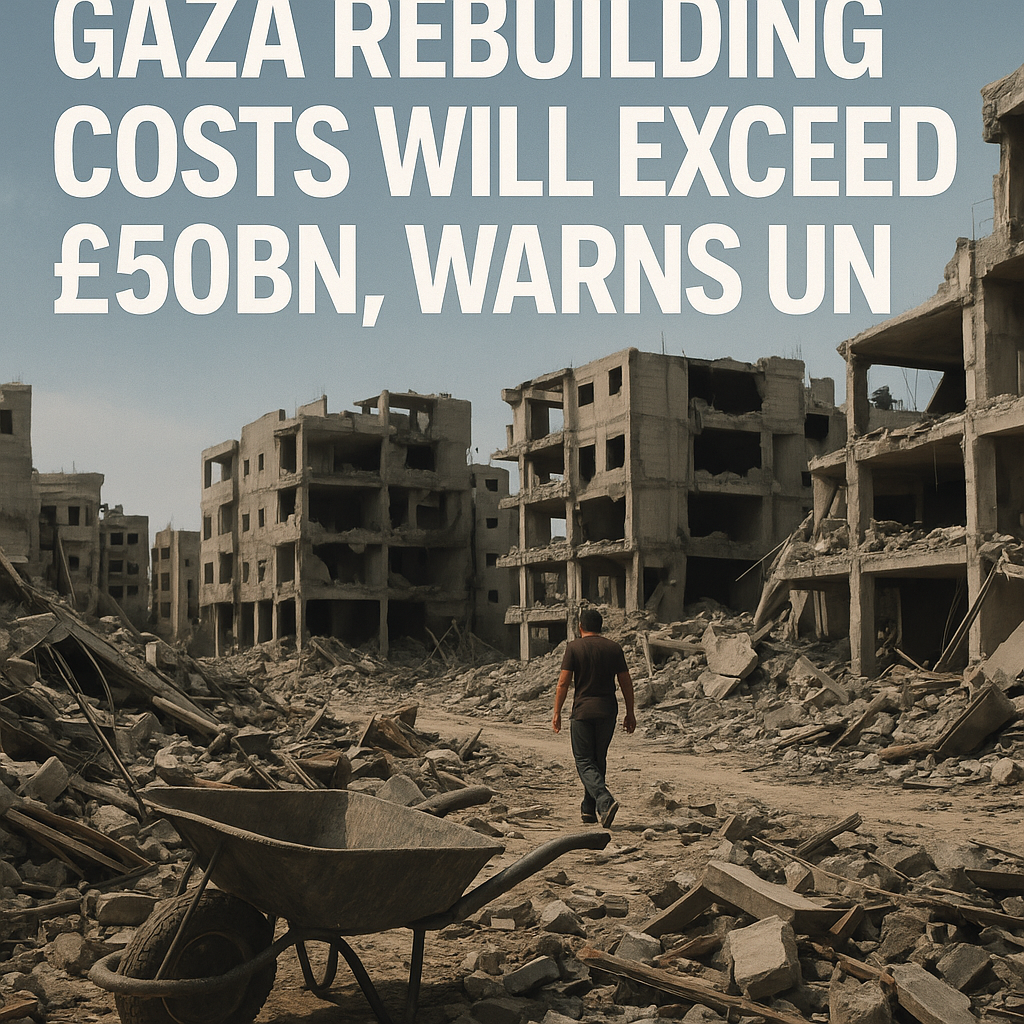
Gaza Rebuilding Costs Will Exceed £50bn, Warns UN

Gaza Reconstruction: The Rising Costs and Challenges Ahead
The ongoing crisis in Gaza has reached a critical point, with rebuilding costs now expected to exceed £50 billion, according to warnings from the United Nations and the European Union. This staggering figure highlights not only the scale of destruction but also the immense challenges that lie ahead for reconstruction efforts in the region.

The Scale of Destruction
Recent reports indicate that the violence in Gaza has led to widespread devastation, leaving many neighborhoods in ruins. Infrastructure, homes, and essential services have been severely impacted, making the task of rebuilding more complex than ever. The UN estimates that around 100,000 homes have been destroyed or severely damaged, leaving thousands with nowhere to go.


The humanitarian crisis is exacerbated by limited resources and ongoing tensions. Al Jazeera reports that Gaza’s economy has already suffered for years due to blockades, and now the costs associated with reconstruction compound these existing challenges. Local authorities struggle with resource allocation while international aid is often insufficient to meet the staggering financial needs.


Funding Challenges: International Aid and Local Efforts
Funding is a crucial aspect of the reconstruction process. The EU has indicated its intention to provide financial support, but questions linger about the actual delivery of these funds and the effectiveness of past investments in the region. According to Sky News, previous reconstruction efforts have often been hampered by political issues and corruption, causing many to question whether this time will be different.
– Potential Sources of Funding:
– International Donations: Many governments are likely to step up their aid efforts, but concerns about accountability remain.
– Private Sector Involvement: Engaging private companies may boost funding but risks prioritizing profit over humanitarian needs.
– UN Initiatives: The UN has proposed its own framework for managing reconstruction funds to ensure transparency and efficacy.
Despite these efforts, skepticism persists among experts about whether the necessary capital will materialize, or whether it will be sufficient.
The Human Aspect: Lives Shattered and Futures Uncertain
While financial figures dominate discussions about reconstruction, the human cost is staggering and often overlooked. According to RT News, countless families have been displaced, and children, in particular, face educational disruptions that can have long-lasting effects on their future prospects.
The social fabric of Gaza is under strain as families not only mourn their losses but also grapple with the trauma of displacement and uncertainty. Emotional well-being becomes a critical component in the recovery process—one that requires attention alongside the physical reconstruction of homes and infrastructure.
The Path Forward: A Call for Unity and Sustainable Solutions
To navigate the complex landscape of Gaza’s reconstruction, all stakeholders—including local governments, international bodies, and civil society—must come together for common goals. This may involve:
1. Transparency and Accountability: Establishing clear guidelines on how funds will be allocated can foster trust among the local population and international donors.
2. Sustainable Development Initiatives: Creating plans that not only focus on rebuilding but also on long-term development can ensure that the region becomes self-sufficient in the future.
3. Inclusive Decision-Making: Engaging local populations in the planning and rebuilding efforts can lead to more culturally sensitive and effective solutions.
In conclusion, while the sheer scale of the rebuilding costs for Gaza is alarming, it also offers an opportunity for collective action and reform. The international community must learn from past mistakes, ensuring that any aid directed towards Gaza is delivered responsibly and effectively. The focus should not solely be on numbers, but on the lives behind those numbers—ensuring a holistic approach to rebuilding not just the structures, but the very spirit of the community.















