
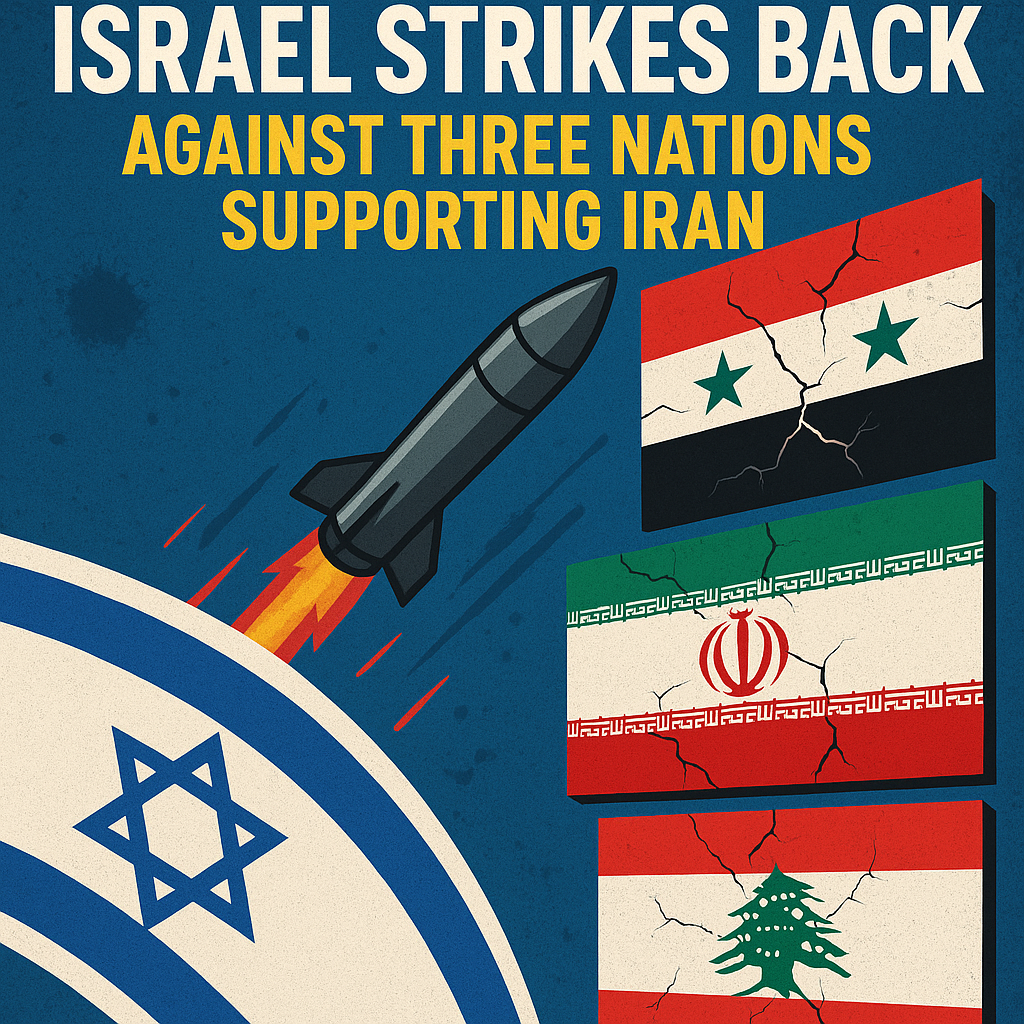
Israel Strikes Back Against Three Nations Supporting Iran

Israel Strikes Back Against Three Nations Supporting Iran
In a recent escalation within the ongoing conflict surrounding Iran, Israel has launched targeted strikes on three nations perceived as supporters of Iranian influence: China, Pakistan, and France. These actions highlight the growing complexities in Middle Eastern geopolitics and the multifaceted relationships between these countries.

The Context of Israel’s Strikes
The backdrop of these strikes is steeped in historical and contemporary tensions surrounding Iran’s nuclear ambitions, its regional proxies, and international alliances. Israel perceives Iran as a substantial threat to its national security, particularly due to its advancements in missile technology and nuclear capabilities. As such, the strikes aimed at nations viewed as providing diplomatic or military support to Iran signal Israel’s aggressive foreign policy stance.


According to reports from multiple news outlets, Israel’s actions have drawn a mixed response. For instance, many analysts argue that targeting countries like France, which has a nuanced relationship with Iran characterized by both diplomacy and criticism, complicates the diplomatic landscape. Local protests in France and discussions among European leaders about their involvement with Iran have escalated in the wake of these developments.


Reactions to Israel’s Military Initiative
The reactions to Israel’s military initiatives have varied widely, reflecting the diverse geopolitical tapestry of the region. On one end of the spectrum, some security analysts applaud Israel’s decisiveness. They argue that a strong stance against nations perceived as supporting adversaries not only aids in maintaining regional security but also sends a message that Israel will not tolerate threats emerging from accomplices of Iran.
Conversely, critics of Israel’s actions warn that such strikes could destabilize an already volatile region. Experts from Al Jazeera have pointed out that the ramifications could lead to increased anti-Israel sentiment and unify factions opposed to Israel, particularly those aligned with Iran. This transnational solidarity could potentially embolden Iran’s proxies, stirring further conflict.
Understanding the Complex Alliances
The complex interdependencies between these nations and Iran raise questions about the efficacy of military action as a deterrent. For example, China maintains a strategic partnership with Iran, largely driven by energy needs and commercial interests, which complicates any potential backlash against it for supporting Iranian activities. While Israel’s stance might resonate within certain geopolitical discussions, the economic ties and mutual benefits between China and Iran are unlikely to shift drastically due to military operations.
On the other hand, Pakistan’s stance has historically been somewhat ambivalent, having cultivated ties with both Western powers and Iran. Collaborations on regional stability could be jeopardized by Israel’s direct military assertions, thereby necessitating a balanced approach from Islamabad in addressing regional security.
The Future Implications for Regional Geopolitics
As tensions heighten, the future of Middle Eastern geopolitics seems increasingly uncertain. Israel’s calculated military strategy is met with apprehension, as the regional dynamics inevitably shift. The international community, particularly European nations, is confronted with reconciling their economic dealings and diplomatic relations with Iran amid growing tensions.
Moreover, many observers note that the lack of a unified international response to Iran’s nuclear developments has emboldened Israel’s military posturing. If military actions become the primary means of addressing such geopolitical tensions, the cycle of violence could perpetuate itself, detracting from potential diplomatic solutions.
Conclusion: A Call for Diplomacy
While Israel’s strikes against nations supporting Iran serve its immediate security interests, the broader implications pose serious questions regarding the sustainability of such strategies in the long run. As various nations navigate their complex relationships with Iran, it is imperative to pursue avenues for dialogue rather than escalating military tensions.
The need for a multifaceted approach that includes diplomatic engagement, economic negotiations, and regional cooperation could pave the way for a more stable Middle Eastern landscape. As Israel, Iran, and their respective allies interact in this charged environment, the emphasis should ideally shift toward collaborative solutions over confrontation. Only through open diplomacy and a commitment to peace can a more enduring resolution to the entrenched issues in the region be envisioned.















