
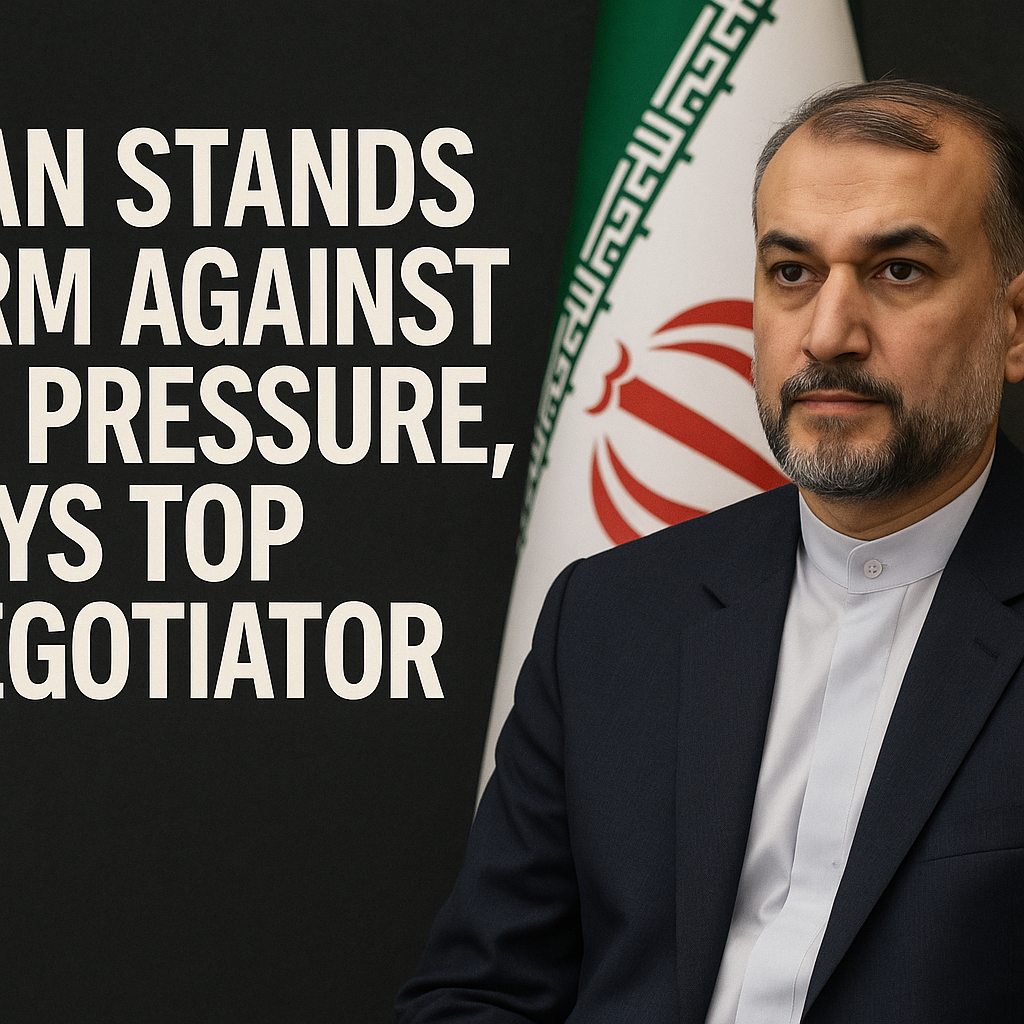
Iran Stands Firm Against US Pressure, Says Top Negotiator

Iran Stands Firm Against US Pressure, Says Top Negotiator
Iran’s determination to resist external pressures, particularly from the United States, has become a focal point of international discourse. As top Iranian negotiators reinforce their stance against perceived US aggression, the broader implications for geopolitics and regional stability are significant.

Context: A Standoff Built on History
The relationship between Iran and the United States is laden with historical complexities, shaped by decades of tension, differing ideologies, and geopolitical maneuvering. The recent assertions by Iran’s officials underscore a continued commitment to defy what they perceive as oppressive pressure from the US, particularly regarding their nuclear program and military initiatives.


According to reports from RT, Iran’s chief negotiator emphasized that “The US will not be able to achieve any of its goals through threats or sanctions.” This statement reflects the longstanding Iranian sentiment that their sovereignty is non-negotiable, especially in the face of external threats.


Contrasting Perspectives on Diplomacy
Iran’s position has sparked varied reactions across the geopolitical spectrum. Some analysts argue that the Iranian leadership’s hard stance could escalate tensions further, especially as nuclear negotiations continue to stall. For instance, many in the West view Iran’s resistance as a potential flashpoint for future conflict, with the possibility of renewed sanctions being floated if diplomatic talks fail to yield results.
However, other sources like Al Jazeera highlight the sentiments among Iranian officials that their self-sufficiency in defense and technology has bolstered their negotiating power. They argue that a united front against US pressure not only strengthens their domestic political position but also serves as a rallying point for other nations facing Western scrutiny.
The Role of Regional Alliances
A significant aspect of Iran’s strategy involves solidifying ties with other nations that share a common stance on resisting US influence. The landscape of regional alliances is ever-shifting, and Iran’s firm resistance may encourage greater collaboration among nations opposed to US policies.
Reports indicate that Iran has been seeking closer ties with Russia and China, states that have also navigated complex relationships with the West. This alignment could potentially create a counterbalance to US efforts in the region, complicating the already intricate geopolitical chessboard.
Economic Implications and Sanctions
The economic fallout from ongoing tensions is another area of concern. The US sanctions imposed on Iran have had dire effects on its economy, yet recent statements from Iranian officials contend that the nation has found ways to adapt. Despite the sanctions’ intent to cripple Iranian economic capability, reports suggest that Tehran has been working diligently to enhance its economic resilience, focusing on domestic production and exploring new partnerships.
Conversely, experts are divided on the efficacy of such strategies. Some believe that long-term resilience is achievable, while others doubt whether Iran can fully circumvent the repercussions of extensive sanctions.
Conclusion: A Complex Future Ahead
As Iran’s top negotiators reiterate their commitment to standing firm against US pressure, the international community remains watchful. The intricate interplay between assertive diplomacy, regional alliances, and economic resilience will continue to shape the discourse surrounding Iran for the foreseeable future.
While consensus is lacking on the best path forward—whether through diplomacy or continued pressure—the nuances of this geopolitical standoff reveal a complex tapestry where national pride, historical grievances, and geopolitical interests intersect.
In essence, the future of US-Iran relations remains uncertain, driven by both sides’ strategic choices. The Iranian leadership’s unwavering stance serves as a reminder that dialogues in diplomacy are often layered and multifaceted, requiring careful navigation to avoid escalating tensions into outright conflict. As the situation evolves, monitoring both Iranian and US responses will be crucial for understanding the broader implications for the Middle East and the world.















