
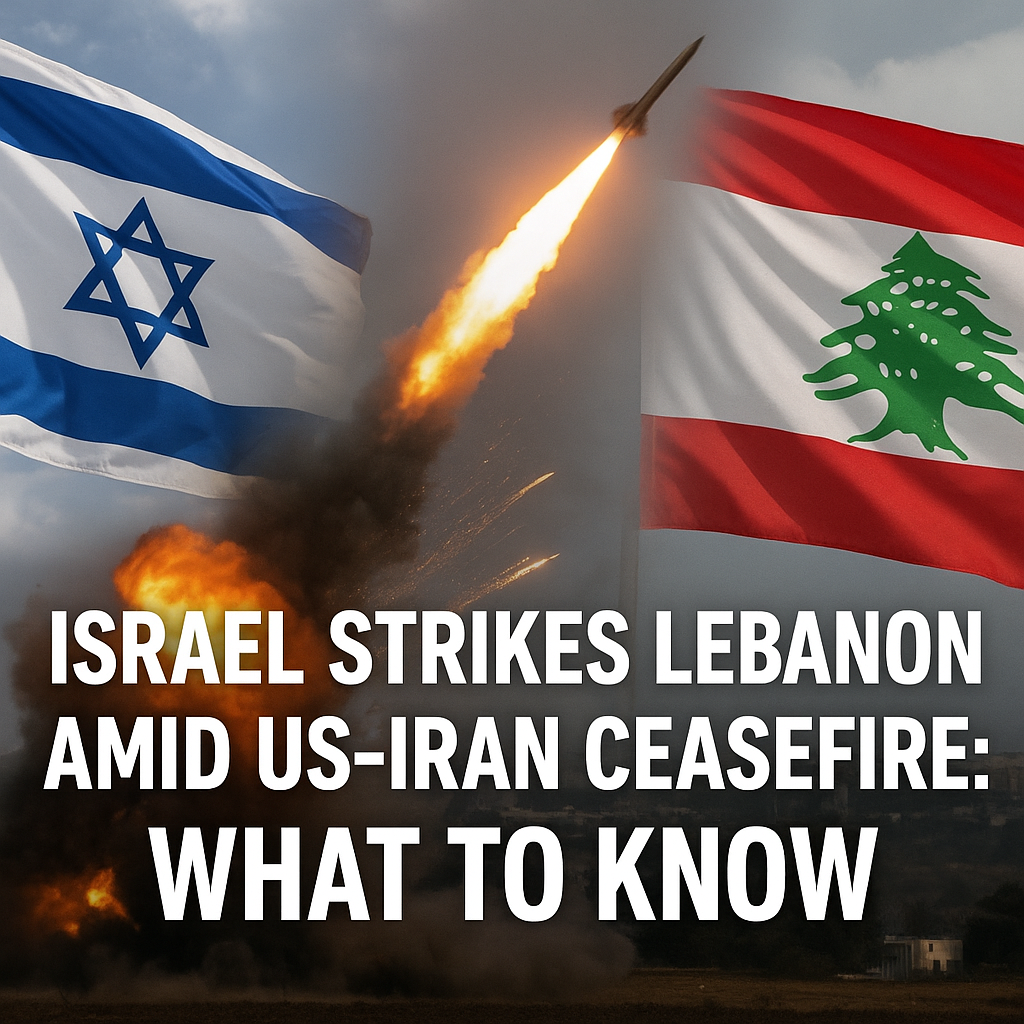
Israel Strikes Lebanon Amid US-Iran Ceasefire: What to Know

Israel Strikes Lebanon Amid US-Iran Ceasefire: What to Know
Israel’s recent strikes on Lebanon are raising significant questions regarding the stability of the region, particularly in the context of an intricate web of ceasefire agreements involving the U.S. and Iran. The situation underlines the volatile interplay between various geopolitical interests, and how these shifts can escalate tensions overnight.

Understanding the Context of the Strikes
The backdrop to Israel’s military actions against targets in Lebanon is a complex narrative intertwining longstanding regional conflicts, recent ceasefire agreements, and shifting alliances. Reports indicate that these strikes were primarily aimed at military positions linked to Hezbollah, a powerful group in Lebanon that has both political and military influence. This escalation occurs despite a U.S.-brokered ceasefire aimed at reducing tensions in the region.


Al Jazeera highlighted that the strikes were justified by Israeli officials as necessary preemptive measures against perceived threats from Hezbollah. Their reasoning stems from a history of cross-border skirmishes and retaliatory actions that have long characterized the Israel-Lebanon relationship.


Conversely, RT News presents a contrasting viewpoint, emphasizing that Israel’s military actions undermine the fragile ceasefire agreements and the potential for dialogue. Critics argue that such aggressive military campaigns could provoke further escalations, risking the fragile balance of power in the region and exacerbating human suffering.
The U.S.-Iran Ceasefire: A Fragile Pause in Tensions
The U.S.-Iran ceasefire is another layer of complexity overlaying this situation. Achieved through considerable diplomatic efforts, this agreement aims to alleviate tensions over contentious issues, including Iran’s nuclear program. However, while the ceasefire has reduced some hostilities, the environment remains fraught with risk.
Sky News points out that Israel’s strikes can be interpreted as a direct challenge to both Iran’s influence in Lebanon and U.S. diplomatic efforts to stabilize the region. Israeli Defense Minister Yoav Gallant stated, “We will not allow any Iranian entrenchment in Lebanon,” showcasing Israel’s commitment to countering Iranian influence, regardless of larger diplomatic efforts.
This sentiment is an indication of Israel’s long-standing policy that prioritizes immediate security concerns over broader diplomatic agreements. The necessity of security measures raises a significant question: When does preemptive action escalate into disproportionate aggression? This question remains hotly debated among international observers.
Potential Consequences and Reactions
The ramifications of Israel’s actions are multifaceted and could have long-lasting impacts on regional dynamics. Domestic pressures on Israel, potential retaliatory responses from Hezbollah, and the response of the U.S. and Iran will be crucial to watch.
Regional Reactions
Countries in the region and international observers have expressed concerns regarding the implications of these actions. Many worry that further military actions could incite retaliation not only from Hezbollah but may also draw in other regional actors aligned with Iran.
Furthermore, the Lebanese population is already grappling with severe economic challenges. Any escalated military engagement could deepen the humanitarian crisis, placing immense pressure on an already vulnerable civilian population.
Looking Ahead
As the situation unfolds, it’s evident that the interplay between military action and diplomatic efforts is critical. While Israel’s strikes may be aimed at ensuring immediate national security, they also pose a significant risk of destabilizing the fragile ceasefire brokered by the U.S. and Iran.
In summary, the current developments raise urgent questions about the future of peace negotiations and the safety of civilians in Lebanon. The choices made by key players, especially within Israel, the U.S., and Iran, will undeniably shape the region’s trajectory in the coming weeks and months. Addressing these complex dynamics will require not just military vigilance but also a sustained commitment to dialogue and conflict resolution.
In evaluating this delicate balance between security and diplomacy, the challenge remains: can lasting peace be achieved amid ongoing military tensions, or are we witnessing the beginning of a wider conflict? As events continue to unfold, only time will tell.















