
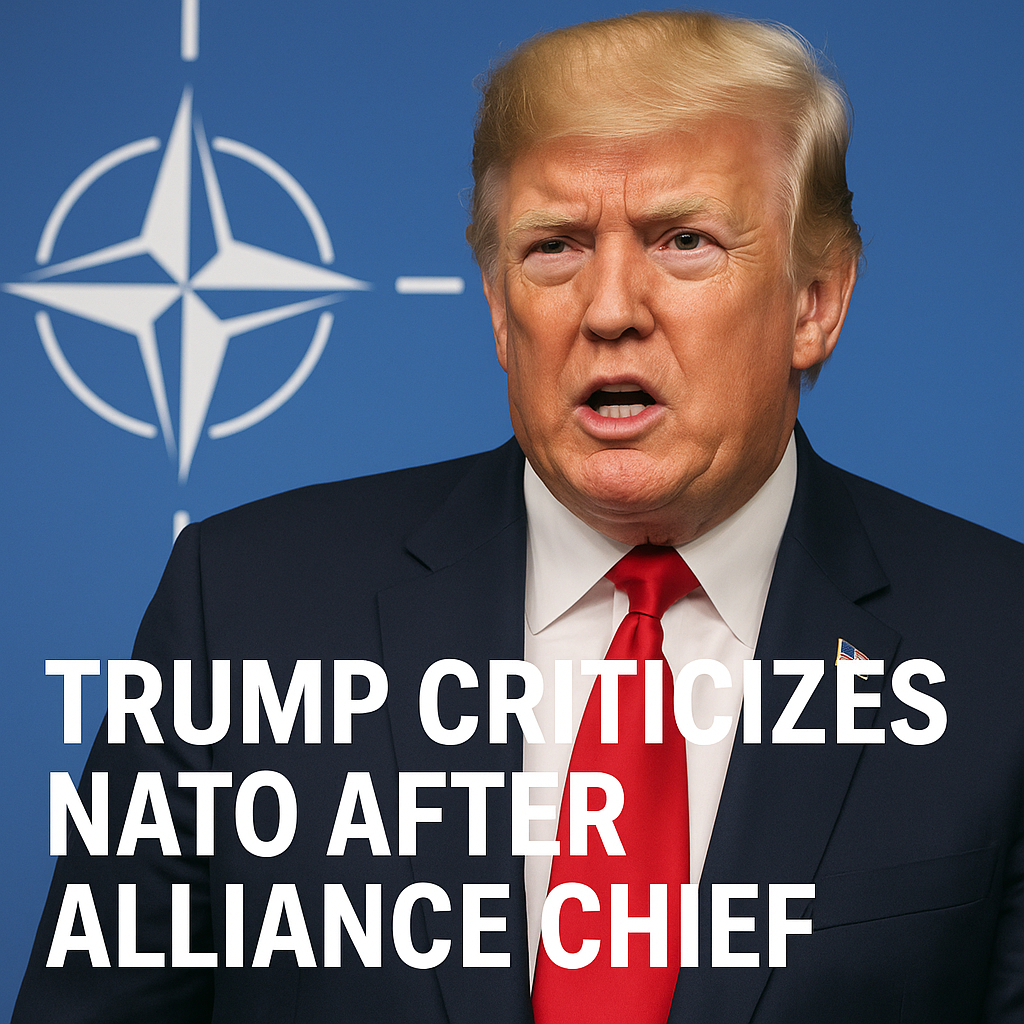
Trump Criticizes NATO After Meeting Alliance Chief

Trump Criticizes NATO After Meeting Alliance Chief
In the complex landscape of international relations, few alliances have been as pivotal as NATO. Recently, former President Donald Trump brought renewed attention to this alliance during his meeting with NATO Secretary-General Jens Stoltenberg, where he voiced contentious opinions that underlie longstanding debates regarding NATO’s relevance and its funding strategies.

Discontent with NATO’s Structure
Trump’s criticism of NATO post-meeting was clear: he expressed dissatisfaction with the financial contributions of member states, emphasizing that many countries do not meet the alliance’s defense spending target of 2% of their GDP. His comments echo sentiments he raised during his presidency, where he often lambasted what he termed “bad deals” that the U.S. was making with its allies. According to Trump, this financial inequity places an undue burden on the United States, which shoulders a substantial portion of NATO’s budget.


The former president’s statements ignited discussions across various media platforms, drawing responses from both supporters and critics. Supporters argue that Trump’s remarks highlight a critical issue: that European nations need to contribute their fair share to collective defense efforts. They see his stance as a necessary push for fairness within the alliance.


Conversely, critics argue that Trump’s comments could undermine NATO’s unity and relevance. Many analysts warn that such criticism may embolden adversaries and jeopardize the very principles of collective security that the alliance stands for. According to a report from Al Jazeera, NATO’s strength lies not solely in its financial commitments but in the shared democratic values and goals of its member nations. Critics suggest that casting the alliance in a transactional light can weaken mutual trust and cooperation.
The Consequences of Criticism
While Trump’s critics underscore the potential ramifications of his statements on NATO’s solidarity, supporters of his approach argue that reform within the alliance is overdue. They point to the need for transparency and accountability in defense spending, especially as global threats evolve and the geopolitical landscape shifts.
However, weighing in with a more cautious appraisal, experts note that Trump’s comments can inadvertently fuel existing divisions among member countries. For example, a report from Sky News captures statements from NATO officials asserting that while there is an acknowledgment of the varying defense budgets, the unity of purpose among nations is what strengthens the alliance. They contend that persistently public criticisms can create an atmosphere of mistrust, potentially compromising NATO’s mission to provide collective defense.
Trump’s assertions, particularly around the fairness of financial contributions, also come at a time when discussions about NATO’s future take center stage. As various member states reevaluate their own security postures amidst rising international tensions—especially concerning Russia and other global threats—the question of financing becomes increasingly pertinent.
A Divided Perspective
The varying perspectives on Trump’s NATO comments reflect the polarized views present in contemporary politics. On one hand, advocates for a stronger, more equitable NATO argue that Trump’s approach could lead to necessary reforms. On the other hand, there are fears that his rhetoric could disrupt diplomatic relations and embolden adversaries, contrary to the historical cohesion that has long characterized NATO.
While Trump’s influence remains potent within the Republican Party, the broader implications of his stances are complex and uncertain. Many analysts suggest that a balance needs to be struck between encouraging fair contributions and ensuring that NATO remains a united front against emerging global threats.
In conclusion, Trump’s criticisms of NATO after his meeting with Jens Stoltenberg serve to reignite an essential discussion on defense spending and international alliances. The reaction to his statements underscores the intricate dynamics at play—where financial equity, unity, and strategic interests must all be balanced to navigate an increasingly complex global landscape. Whether Trump’s approach will lead to constructive changes or sow deeper divisions within NATO remains to be seen, but it undoubtedly highlights the alliance’s enduring significance in contemporary geopolitics.















