
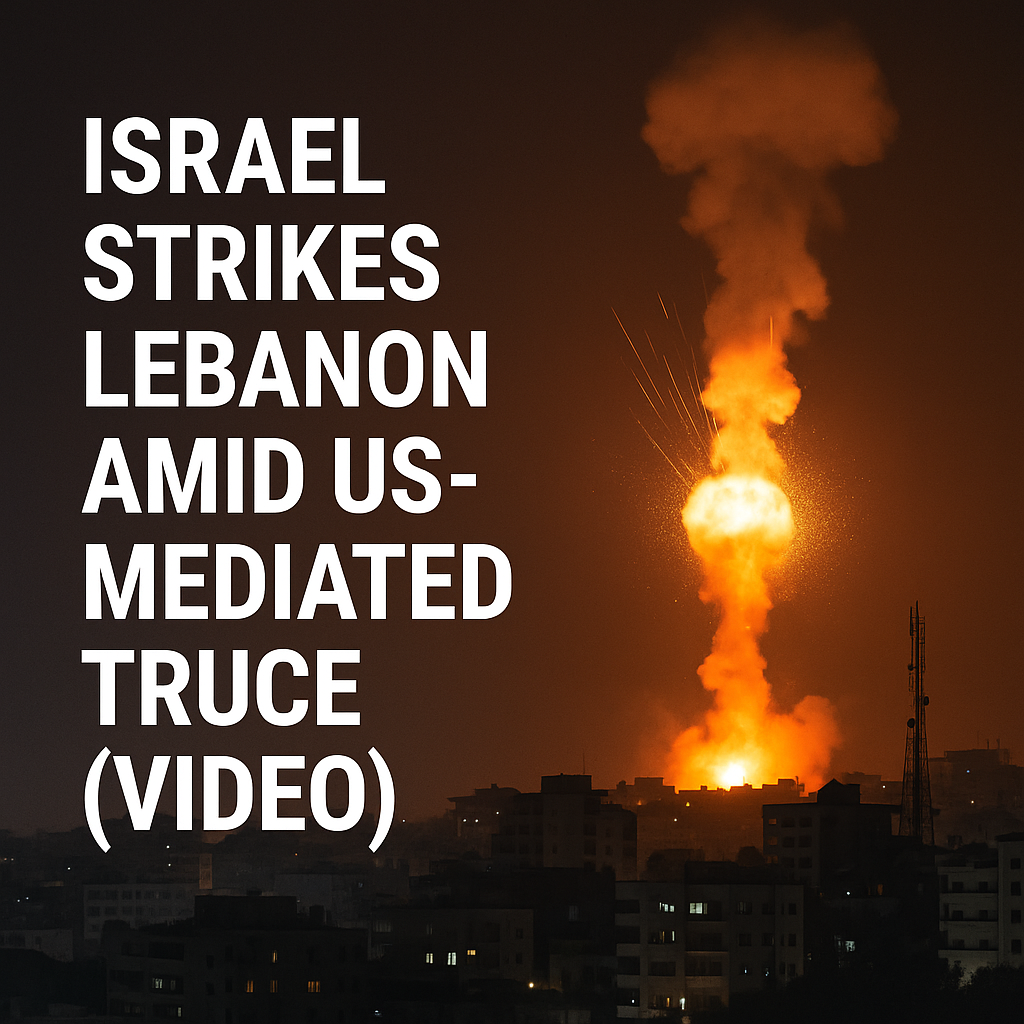
Israel Strikes Lebanon Amid US-Mediated Truce (VIDEO)

Israel Strikes Lebanon Amid US-Mediated Truce
In a complex and evolving geopolitical situation, Israel’s military recently conducted airstrikes in southern Lebanon, raising questions about the viability of a US-mediated truce in the region. The conflict, rooted in longstanding tensions, underscores the fragility of diplomatic efforts in a landscape marred by violence and mutual distrust.

Escalating Tensions: A Fragile Truce
The latest hostilities stem from a series of skirmishes that have intensified between Israel and Hezbollah, the Lebanese militant group supported by Iran. These developments come several days after a ceasefire agreement mediated by the United States aimed to calm escalating tensions along the Israel-Lebanon border. According to reports from various news outlets, including Al Jazeera and RT, the airstrikes were aimed at “terror infrastructure” associated with Hezbollah, a claim supported by the Israeli government. Yet, the truth is far more complex.


Reports indicate that the Israeli airstrikes targeted areas in southern Lebanon that were suspected of harboring Hezbollah positions. This would suggest a strategic move by Israel to deter any potential threats from the north as it remains vigilant about security. However, these military actions have provoked widespread condemnation and concern, particularly about their implications for the fragile peace previously brokered by the US.


Diverging Perspectives on Military Action
While Israel maintains that its strikes were necessary for national security, critics argue that such actions undermine efforts for a sustained truce. A viewpoint presented by Al Jazeera emphasizes the precarious nature of the ceasefire, warning that attacks like these could provoke further retaliatory measures from Hezbollah. “A military response seems inevitable if strikes continue,” noted a regional analyst, illustrating the deep cycle of vengeance that has persisted in this conflict.
Conversely, Israeli officials highlight their right to defend themselves against perceived threats, asserting that they remain committed to a peaceful resolution while simultaneously being prepared to respond robustly to any aggression. This duality raises significant questions about the effectiveness of US mediation. While there is hope for diplomatic solutions, military actions complicate this narrative, leading to a potentially escalated cycle of violence.
The Broader Context of U.S. Mediation
The US has long positioned itself as a mediator in Middle Eastern conflicts, often attempting to broker peace between Israel and its neighbors. However, the effectiveness of these interventions is frequently brought into question, particularly when hostilities erupt in the midst of negotiations. As tensions reignite, the ability of US diplomats to navigate this treacherous landscape is put to the test yet again.
Observers note that sustained peace in the region hinges not only on military restraint but also on addressing the underlying causes of conflict. Economic instability, political disenfranchisement, and historical grievances continue to fuel animosities on both sides. Thus, while military strikes may yield short-term tactical advantages, they potentially jeopardize long-term strategic peace efforts.
Conclusion: The Path Forward
As the situation evolves, the international community watches closely. The unpredictable nature of conflict in Lebanon and its impact on Israel’s security serves as a reminder of the significant challenges that lay ahead. There’s an urgent need for collaborative diplomatic efforts that engage not only national governments but also grassroots organizations and civil society groups.
While the ceasefire efforts may appear naïve amidst the most recent escalation, they represent crucial steps toward long-term stability. Similarly, the conflicting perspectives on military action shed light on the complexities that underpin this enduring conflict.
In conclusion, resolving the crises necessitates an understanding that extends beyond mere military responses. It requires a commitment to addressing the socioeconomic and political dimensions that fuel tensions in the region. As countries continue to play their respective roles, the hope remains that a pathway to peace can be forged, anchored in mutual respect and understanding rather than retaliation.















