
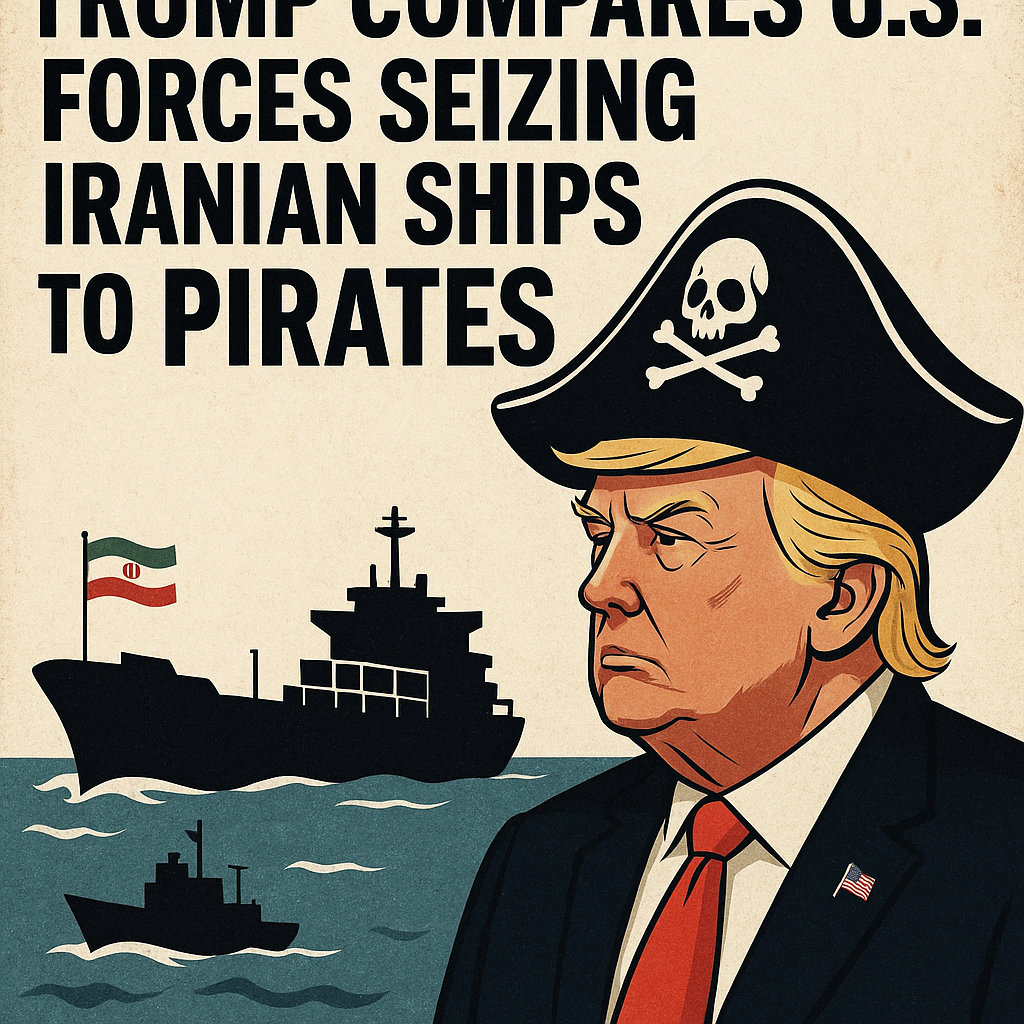
Trump Compares U.S. Forces Seizing Iranian Ships to Pirates

Trump Compares U.S. Forces Seizing Iranian Ships to Pirates
Former President Donald Trump’s recent comments comparing U.S. naval forces seizing Iranian ships to acts of piracy have sparked discussion and controversy. In a climate fraught with geopolitical tensions, Trump’s remarks raise questions about the United States’ military role and the perception of naval operations on the global stage.

Context Behind the Remarks
Trump’s comparison came in response to reports of U.S. forces detaining several Iranian vessels, which were allegedly involved in attempts to transport oil in violation of international sanctions. During an interview, Trump stated that these actions were akin to piracy, a characterization that many have found provocative.


Divergent Perspectives on U.S. Naval Actions
While Trump’s comments may appear extreme to some, they reflect a broader dissatisfaction among various groups regarding U.S. military interventions. Critics argue that equating detaining vessels in international waters with piracy oversimplifies the complex dynamics of maritime law and international relations. For instance, advocates for the Navy’s actions argue that these operations uphold international sanctions intended to curb Iran’s oil exports, thereby promoting regional stability.


Conversely, some see Trump’s language as an earnest reflection of fears surrounding U.S. militarization and overreach. Critics both within the U.S. and from other nations perceive the actions as a breach of sovereignty that undermines diplomatic solutions and raises the risk of confrontation. Iran itself has condemned the U.S. actions, labeling them as hostile—an assertion that could echo in the halls of international diplomacy.
Navigating Maritime Law and Military Ethics
It’s essential to unpack the intricacies of maritime law when discussing these issues. According to the United Nations Convention on the Law of the Sea, states have the right to enforce sanctions against other nations. This legal framework supports the U.S. Naval operations while simultaneously making it critical to examine the ethical implications of such actions.
Views from Different Quarters
1. Supporters of Governed Engagement: Those in favor of the U.S. actions argue that maritime security is vital for the stability of global oil supplies and regional peace. They assert that any transient U.S. military intervention aims to deter illegal activities rather than provoke conflict.
2. Caution from Analysts and Politicians: Alternatively, several political analysts and some members of Congress have expressed concerns over the potentially incendiary nature of Trump’s remarks. They highlight that likening military forces to pirates could undermine the legitimacy of U.S. operations and foster negative sentiments among allied nations.
3. Public Sentiment: Public opinion on this matter is notably divided. Some citizens are supportive of strong military action to protect U.S. interests, while others fear the consequences of aggressive stances that could lead to broader conflicts.
These contrasting views underline an ongoing debate about the role of the U.S. in international affairs, especially when it intersects with contentious issues like sanctions on Iran.
The Complex Landscape of U.S.-Iran Relations
Trump’s comments also tap into the historical complexities of U.S.-Iran relations, which have been fraught with mistrust and hostile exchanges for decades. The tension escalated following the United States’ withdrawal from the Iran nuclear deal in 2018, which has led to increased sanctions and, in turn, retaliatory actions from Iran, such as seizing foreign tankers.
As unilateral military actions continue, observers are compelled to consider the ramifications not only on U.S.-Iran relations but also on global maritime security and trade. Trump’s remarks may serve as a reflection of deep-seated anxieties about this evolving geopolitical landscape.
Conclusion: A Call for Thoughtful Dialogue
Trump’s use of the term “pirates” to describe U.S. military operations is a polarizing choice that emphasizes his inclination toward provocative rhetoric. However, it encapsulates a larger, more nuanced debate regarding U.S. military tactics and international engagement. The differing interpretations of such operations—including whether they should be framed as protective actions or acts of aggression—underscore the urgency for dialogue that addresses both security needs and the ethical implications of military intervention.
In a time when tensions are high, it becomes crucial to consider the impact of language on diplomacy and public perception. While the immediate takeaway may center on Trump’s controversial analogy, the long-term conversation must pivot toward constructive solutions that prioritize stability and peace over further escalation.















