
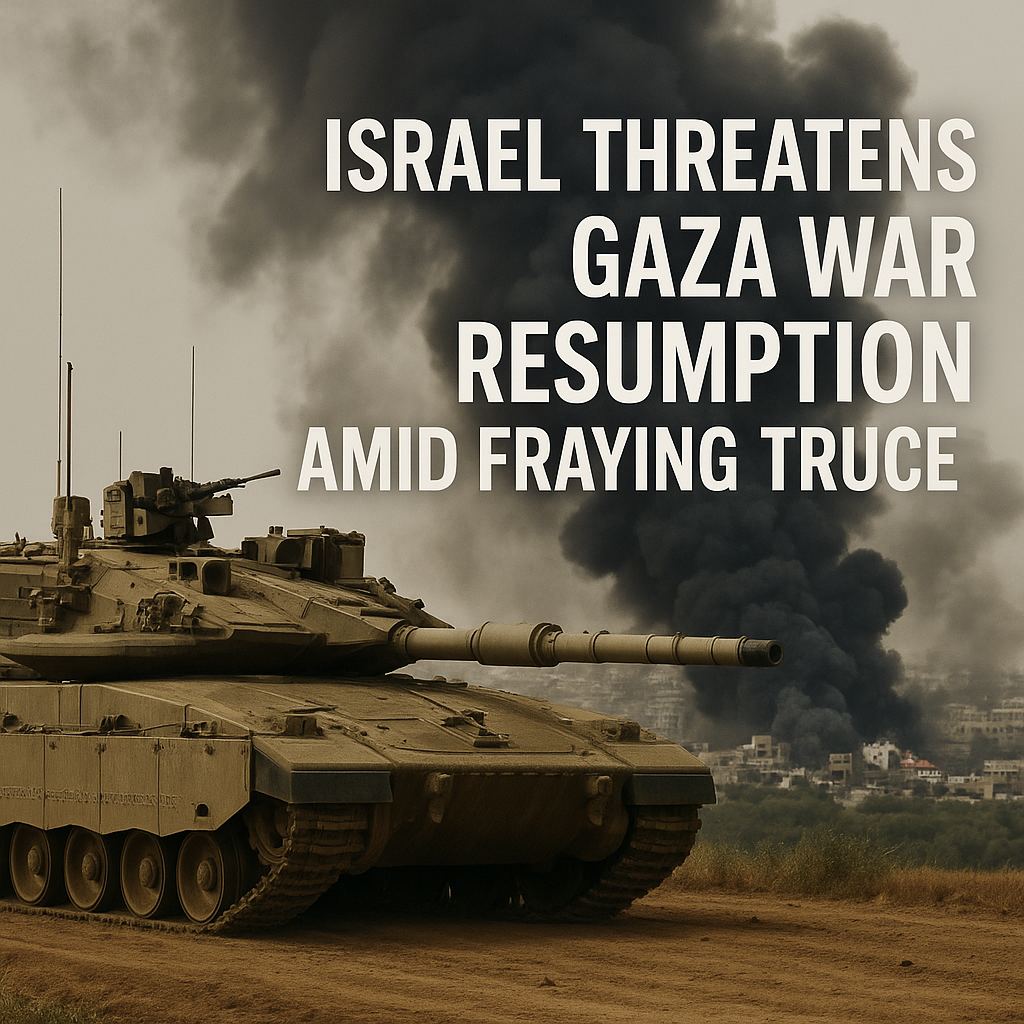
Israel Threatens Gaza War Resumption Amid Fraying Truce

Israel Threatens Gaza War Resumption Amid Fraying Truce
The ongoing tension between Israel and Gaza has reached a critical juncture, with increasingly strident warnings from Israeli officials about the potential resumption of military actions. As the fragile truce shows signs of disintegration, both sides stand on the precipice of renewed conflict, heightening fears for the region’s stability.

Growing Concerns Over the Truce
Israel’s government has expressed concerns that the current ceasefire, established to reduce hostilities, is no longer tenable. Officials claim that Hamas and other militant groups have used this window of opportunity to bolster their military capabilities, including stockpiling weapons and fortifying their positions. A senior Israeli military spokesman recently stated, “There will be no tolerance for any attempts to threaten our security,” hinting at a potential escalation should hostilities resume (Al Jazeera).


From the Palestinian perspective, there is significant frustration regarding what many perceive as an imbalance in the negotiations between Israel and Hamas. The truce has not only been a pause between conflicts but, according to some reports, has also revealed the severe humanitarian crises besetting Gaza, including shortages of essential goods and services due to an enduring blockade. Palestinian advocates argue that more attention should be focused on addressing these dire conditions rather than merely preparing for future military clashes.


Diverging Perspectives on Military Readiness
The Israeli defense strategy involves readiness for potential military operations, which officials argue is crucial to safeguarding the nation. Reports indicate that military drills and strategic planning are part of this approach to deter threats emanating from Gaza. Israeli Prime Minister Benjamin Netanyahu has repeatedly underscored, “We will not shy away from using force if necessary to ensure the safety of our citizens” (Sky News).
Conversely, Hamas leaders contend that they remain committed to resistance but have shown a willingness to explore diplomatic avenues to alleviate the humanitarian crisis in Gaza. Some analysts believe that Hamas is caught in a precarious balancing act: while they need to demonstrate military capability to their supporters, they also face mounting pressure from a beleaguered population longing for relief from the dire economic situation.
What Lies Ahead?
As both sides contemplate their next moves, uncertainties loom large. Some experts warn that a military escalation could exacerbate the humanitarian crisis already affecting millions in Gaza, leading to loss of civilian lives and increased destabilization in the region. Conversely, others argue that without a credible deterrent, militant groups may feel emboldened to launch assaults on Israeli citizens.
The international community also finds itself at a crossroads. With calls for renewed diplomatic efforts increasing, many stakeholders stress the necessity of addressing the fundamental issues behind the conflict, rather than simply trying to manage its symptoms. A unified approach involving humanitarian aid and political dialogue could pave the way toward lasting peace.
Conclusion: A Fragile Balance
In assessing the current situation, it becomes clear that the tension between Israel and Gaza remains fraught with complexities. While Israeli threats to resume military operations signal a grim potential for escalation, the plight of the Palestinian population and the ongoing humanitarian crisis cannot be ignored. The potential for renewed conflict underscores the urgent need for diplomatic solutions that respect the needs and rights of both sides.
As both nations grapple with their future, their decisions will undoubtedly influence the broader dynamics of stability in the Middle East. In the face of uncertainty, one thing remains clear: the path forward will demand thoughtful engagement and a commitment to finding common ground—before it is too late.















