
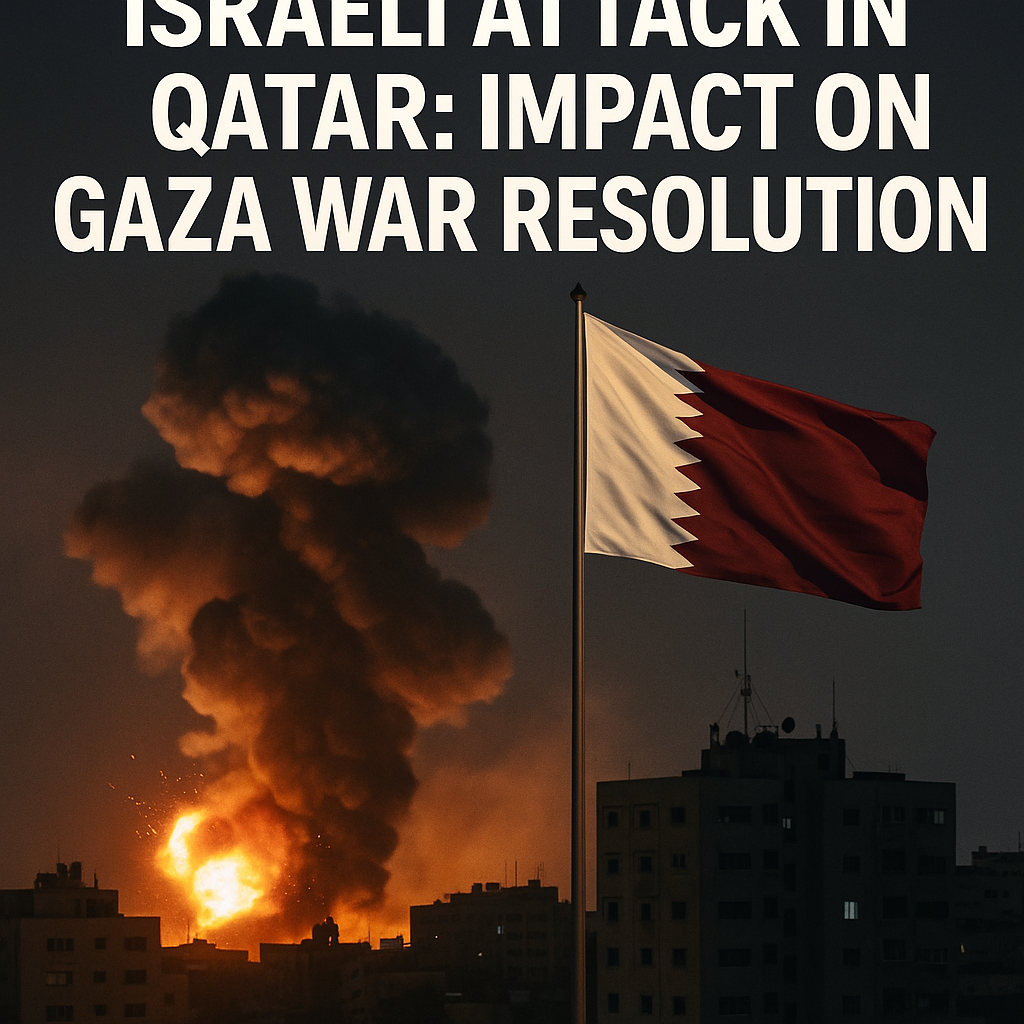
Israeli Attack in Qatar: Impact on Gaza War Resolution

Israeli Attack in Qatar: Impact on Gaza War Resolution
The recent Israeli attack in Qatar has ignited a wave of debate regarding its implications for the ongoing conflict in Gaza. As the international community grapples with the escalating tensions, understanding how this incident might sway the ongoing negotiations for peace is vital.

Context of the Attack
The attack in Qatar, as reported by multiple news sources, shocked observers given Qatar’s role as a mediator in the Israeli-Palestinian conflict. Qatar has been instrumental in trying to broker peace and provide humanitarian aid to Gaza. Reports suggest that the Israeli military action was a response to perceived threats linked to Hamas leaders residing in Doha.


Diverging Perspectives on the Attack
News outlets have voiced differing opinions on the motivations behind Israel’s decision and its potential ramifications for the Gaza conflict. Some analysts view this attack as a tactical move meant to assert Israel’s stance against Hamas, which it considers a terrorist organization. This perspective posits that by targeting Hamas leaders outside Gaza, Israel aims to demonstrate its resolve and deter further cross-border hostilities.


Conversely, other analysts argue that this escalation only complicates the peace process. According to Al Jazeera, many in the international community believe that military actions against leaders in a neutral country could alienate potential mediators like Qatar. This tension raises critical questions about the long-term strategies for both peace and retribution, further complicating an already intricate situation.
Impacts on Peace Negotiations
The implications of the Israeli attack extend far beyond immediate military concerns. For one, it has the potential to destabilize Qatar’s position as a mediator. Experts caution that if Qatar feels threatened due to its role in the conflict, it may withdraw from negotiating efforts altogether.
Potential Backlash
There is also a risk of backlash against Israel from neighboring countries and international organizations. Some political analysts predict that military operations viewed as unjust or overreaching can stimulate anger among the Arab nations, thereby complicating coalition building in any future ceasefire discussions.
Furthermore, public opinion in Gaza and broader Palestine may harden against Israeli negotiations, making it even more difficult to arrive at a resolution. The violence may incite protests or rebellious sentiments, complicating any steps toward peace.
Road Ahead: A Complex Path to Resolution
Navigating a resolution after such incidents requires an understanding that both sides hold deep-rooted grievances. While military actions serve short-term objectives, such as demonstrating strength, they seldom lead to long-lasting peace.
Negotiation experts propose that open channels for dialogue are essential for progress, even after violent incidents. Neutral mediators, particularly Qatar, may play a pivotal role if they can maintain their footing in the region despite adverse reactions.
The Role of International Community
The international community needs to weigh in more forcefully on the issue. Collaborative diplomatic efforts can help to de-escalate tensions and restore focus to long-standing issues between Israel and Palestine. However, to be effective, the approach must be consistent and represent the legitimate interests of both parties.
While uncertainties remain about the future trajectory of the conflict following the Israeli attack in Qatar, it reiterates the complexity of peace efforts. The stakes have never been higher, as any misstep could invite further violence and undermine years of diplomatic pursuits.
In conclusion, the Israeli attack in Qatar could have significant repercussions for the resolution of the Gaza war. It emphasizes not just the delicacy of peace negotiations but also the need for a cooperative effort from all international stakeholders. As tensions rise, so too does the necessity for nuanced, informed dialogue aimed at achieving a sustainable resolution.















