
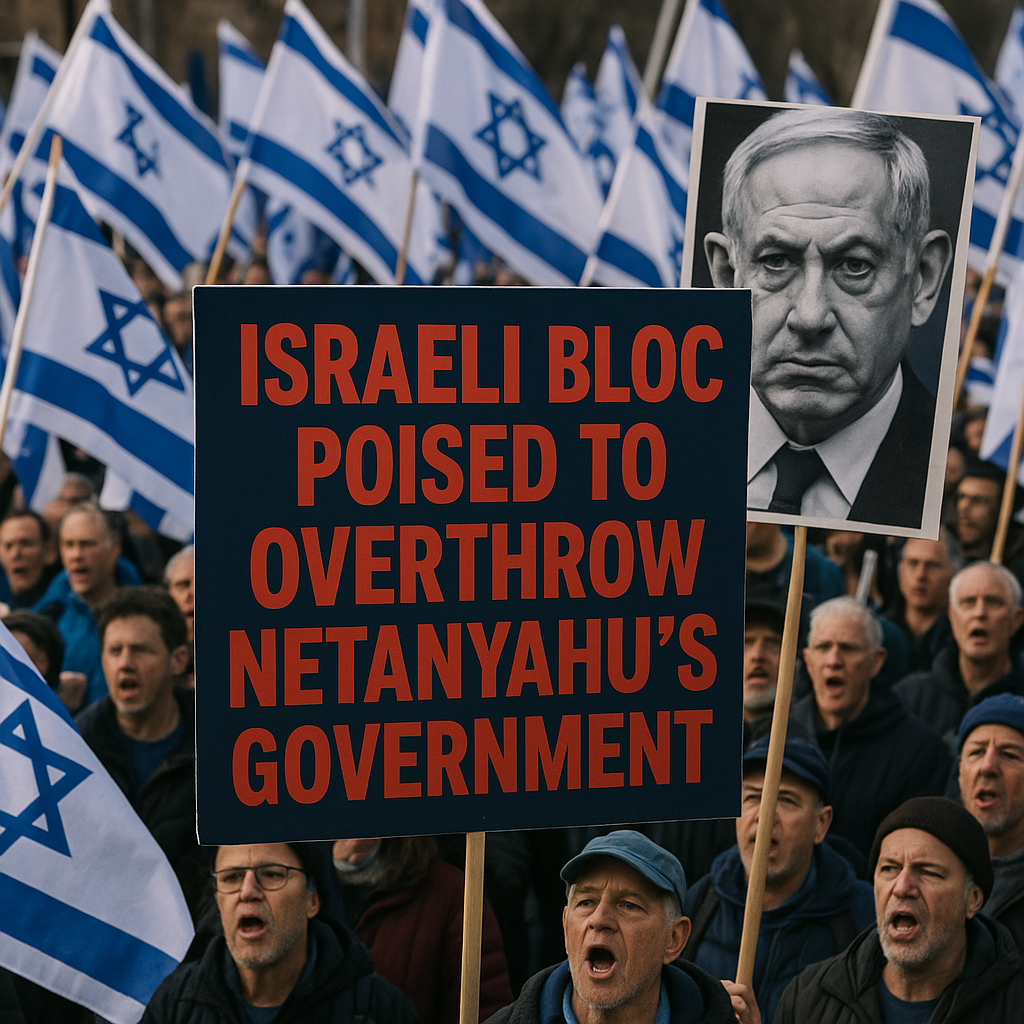
Israeli Bloc Poised to Overthrow Netanyahu’s Government

Israeli Bloc Poised to Overthrow Netanyahu’s Government
The current political landscape in Israel is charged with potential changes, particularly focused on the possibility of a coalition bloc rising to challenge Prime Minister Benjamin Netanyahu’s administration. As tensions mount, various factions are uniting in what could be a historic shift in Israeli governance.

The Political Landscape: Fractured Alliances
In recent months, the Israeli political arena has seen remarkable shifts. A growing coalition of opposition parties, primarily those positioned to the left of Netanyahu’s Likud party, has begun to coalesce in their shared objective: removing the long-standing prime minister from power. The alliance includes an array of parties, from centrist groups to those representing Arab-Israeli interests, reflecting a complex and often contentious array of ideologies.


The renewed cooperation among these factions is no small feat, considering their historical disagreements. Al Jazeera notes that this coalition is not merely a reaction to Netanyahu’s policies but a strategic effort to unify against a perceived authoritarian drift. This coalition’s ability to present a cohesive front is crucial, as it could significantly affect Netanyahu’s legislative capabilities and his overall governance.


However, dissent within the coalition exists. Some analysts warn that the ideological and policy differences among the member parties might undermine their combined strength. Political diversity can be a double-edged sword; while it enhances representational breadth, it may also lead to internal conflicts that would weaken the coalition at critical junctures.
Public Sentiment: Support and Opposition
Deepening public dissatisfaction with Netanyahu’s government has also contributed to the growing momentum behind the opposition bloc. Economic concerns, exacerbated by rising inflation and the ongoing ramifications of the COVID-19 pandemic, have left many voters disenchanted. Recent polls suggest that a significant portion of the electorate is eager for change, viewing the current administration as ineffective in addressing pressing socio-economic challenges.
Reports from Sky News highlight that civil unrest has been a catalyst for some of the coalition’s success. Weekly protests and demonstrations opposing Netanyahu’s governance practices have garnered widespread attention and support. This mobilization reflects a broad spectrum of Israeli society coming together, signaling a potential shift towards more active civic engagement in governance.
Yet, this movement faces challenges. Netanyahu’s supporters remain staunchly loyal, and their rhetoric continues to resonate with a significant segment of the population. Many still view him as a necessary bulwark against external threats. The moral and strategic narratives that underpin such support complicate the opposition’s narrative.
Future Outlook: Uncertain Terrain Ahead
As this ensemble of opposition parties prepares to strike, significant questions loom concerning its sustainability and the direction of Israeli politics. Will this coalition overcome its internal discord and effectively challenge Netanyahu’s long-established rule? Analysts express cautious optimism, though recognize that the path to success is fraught with complexities.
Ultimately, if the opposition bloc aims to effectively challenge Netanyahu, it must not only unite against him but also present a compelling narrative that resonates with the broader electorate. This entails addressing not just political grievances but also providing tangible solutions to the economic and social issues facing Israel today.
In conclusion, while the prospect of a coalition challenging Netanyahu is enticing for many in Israel, the landscape remains dynamic and unpredictable. Political alliances are delicate and can shift rapidly, leaving both supporters and detractors of the current government on their toes. As the situation evolves, it remains essential for observers to tune in to the changing narratives shaping this pivotal moment in Israeli history.















