
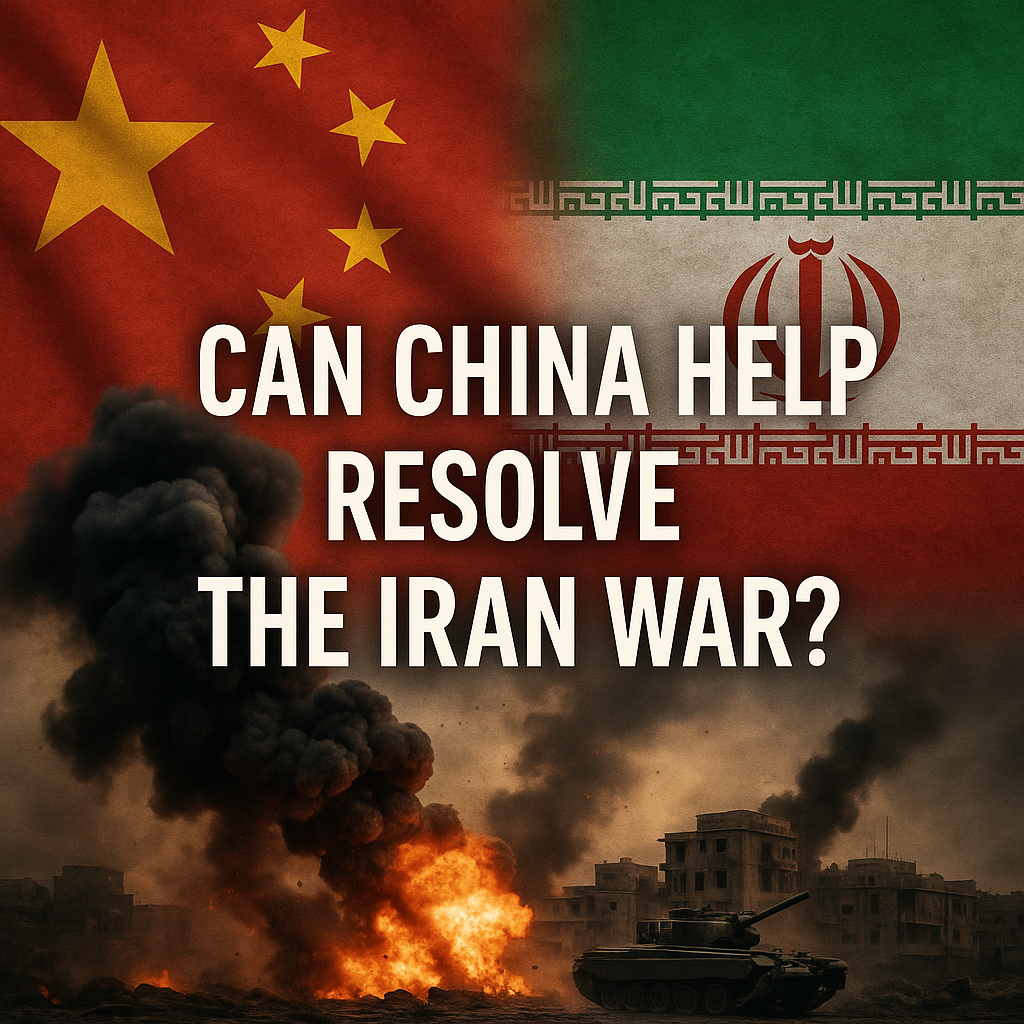
Can China Help Resolve the Iran War?

Can China Help Resolve the Iran War?
The prospect of China stepping in to help resolve the complex issues surrounding the Iran war has raised critical discussions among international analysts and political observers. With its growing influence in the Middle East, China’s potential role as a mediator warrants close examination.

The Context of the Iran Conflict
The ongoing conflict in Iran has deep-rooted historical, religious, and geopolitical dimensions. Many analysts point out that the strife is not merely internal but is interwoven with regional rivalries, particularly involving Saudi Arabia and Israel. According to recent discussions on platforms like Al Jazeera, protracted tensions have escalated into multifaceted conflicts that have devastated the region and cast long shadows on global stability.


Iran, having faced severe sanctions and ongoing military tensions, has often positioned itself against Western influences. On the other side, nations like Saudi Arabia have been firm in their opposition to Iranian policies, resulting in a polarized geopolitical landscape. The involvement of various international factions has complicating factors that extend beyond simple diplomatic conversations.


China’s Growing Role in the Middle East
China’s interest in the Middle East has intensified over the past decade, characterized by its Belt and Road Initiative (BRI) that seeks to enhance trade routes and economic cooperation. Notably, China has maintained a balanced approach; it has cultivated strong ties with both Iran and Saudi Arabia. As an economic powerhouse, China’s relationships in the region provide it an opportunity to act as a neutral intermediary.
Recent insights from RT highlight China’s unique position among the superpowers. Unlike the U.S., which historically aligns more often with Saudi interests, China’s policy of non-interference tends to resonate with many nations in the region. This means that while the U.S. may struggle to play a mediating role due to established alliances, China could be viewed as a more neutral player, potentially facilitating dialogue.
Divergent Views on China’s Mediation Potential
However, opinions are split regarding China’s capability to effectively mediate the Iran war. Proponents of China’s involvement argue that its non-aligned status enables it to encourage a dialogue between Iran and its adversaries. For instance, the willingness shown by China to partner with Iran on numerous economic projects signifies a vested interest in Iran’s stability, which could translate into diplomatic leverage.
Conversely, skeptics question whether China possesses the necessary diplomatic skills and political will. The intricate dynamics of the Iranian conflict may exceed what even China’s substantial economic leverage can tackle. Commentary on outlets like Sky News suggests that while China may wish to offer assistance, the deeply entrenched historical grievances among involved nations could complicate this effort. Their assertions emphasize that without a drastic change in regional sentiments, merely facilitating conversations might not yield substantial outcomes.
The Role of International Politics
In the broader scope of international politics, the context in which China operates significantly influences its potential role. The U.S. is likely to view China’s increased involvement with suspicion, particularly in a region it considers vital for its strategic interests. Should the U.S. perceive a weakening of its influence as a result of China’s actions, the geopolitical landscape could grow more contentious.
There is also the question of how neighboring countries perceive China’s intentions. Nations in the region have different views on whether they trust China to act fairly or whether it would prioritize its economic interests over regional stability. Misalignment in perceptions could thwart any efforts Beijing makes toward mediation.
Evaluating the Future: An Uncertain Path
In conclusion, the question of whether China can help resolve the Iran war remains complex and fraught with uncertainties. While China’s unique position offers potential opportunities for mediation, deep-rooted animosities and geopolitical rivalries present formidable obstacles. The success of any diplomatic overtures will likely hinge on shifts in regional dynamics and China’s ability to foster trust among conflicting parties.
As discussions around this topic continue, it’s clear that while China’s involvement could play a significant role in shaping the future, the intricate web of international relations will ultimately dictate the level of success achievable. In the meantime, the world watches fervently, hopeful for a semblance of peace in a region long beleaguered by conflict.















