
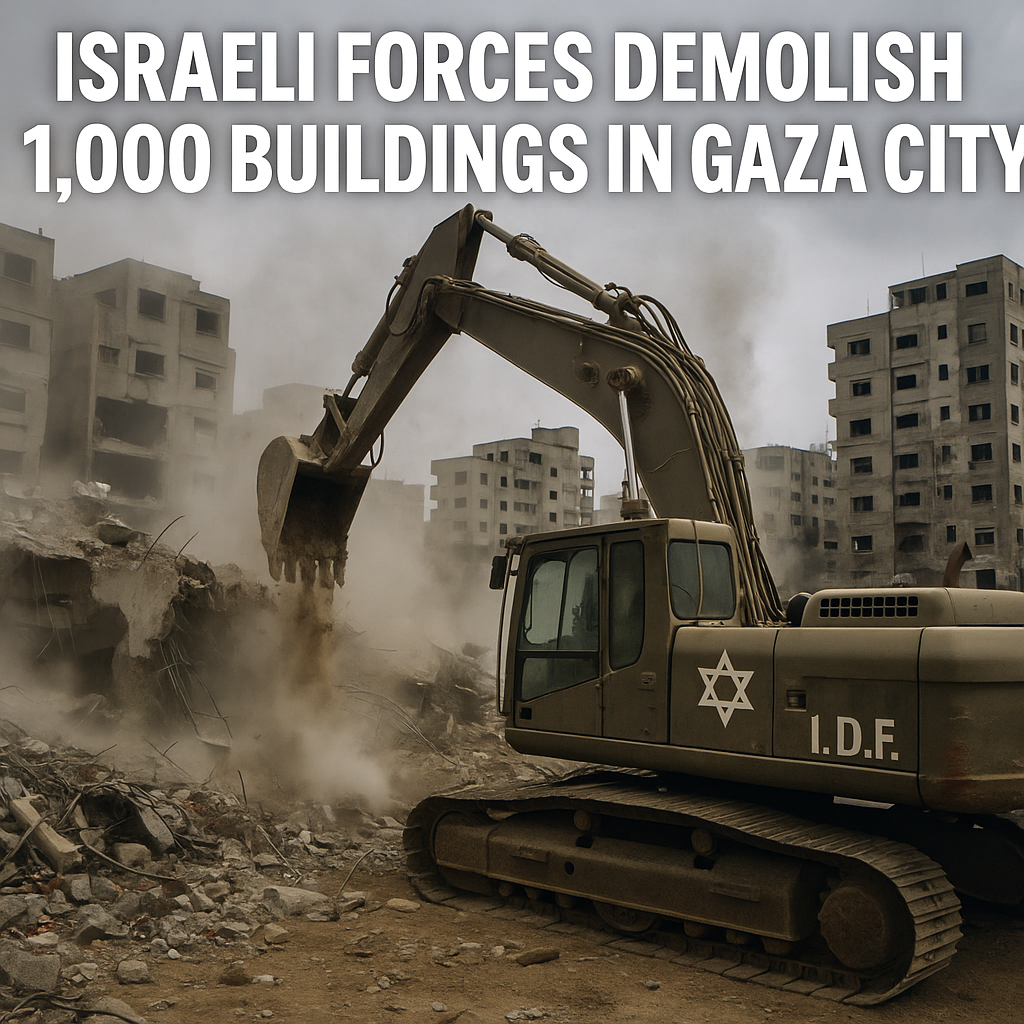
Israeli Forces Demolish 1,000 Buildings in Gaza City

Israeli Forces Demolish 1,000 Buildings in Gaza City
The recent demolishment of 1,000 buildings in Gaza City by Israeli forces has reignited a complex and deeply contentious debate about the ongoing conflict in the region. This act, framed by different parties as either a necessary military action or an unprovoked assault on civilian infrastructure, invites a closer examination of the underlying factors at play.

The Military Perspective: Justification and Strategy
From the viewpoint of the Israeli government, the demolitions form part of a broader military strategy aimed at dismantling militant capabilities within the Gaza Strip. Officials argue that the destruction of these structures is essential to protect Israeli citizens from rocket fire and other hostilities emanating from the territory. “We must ensure that we are taking necessary action to protect our people,” a spokesperson emphasized in a recent statement.


Supporters of this military operation claim that the government has long been constrained in its actions due to international scrutiny and the potential for civilian casualties. Israeli Defense Forces (IDF) has asserted that they meticulously target buildings that they believe are being used by militants for military purposes, including storage of weapons and as launch sites for attacks.


In light of ongoing hostilities, Israeli sources maintain that such demolitions should thus be seen as a measured response rather than an unprovoked strike. Additionally, they underscore that efforts are made to minimize collateral damage through prior warnings when possible.
Humanitarian Concerns: Civilian Impact and Destruction
Conversely, humanitarian groups and critics of the action are raising serious concerns about the humanitarian implications of such widespread destruction. Organizations like the United Nations Relief and Works Agency for Palestine Refugees (UNRWA) have issued statements condemning the demolitions. They indicate that the destruction of homes and critical infrastructure exacerbates an already dire humanitarian crisis in Gaza, where many depend on aid for basic needs.
Concerns are further underscored by reports of casualties during these demolitions. Some victims have been civilians who were caught in the crossfire or left homeless by the military actions. As one aid worker noted, “This heavy-handed approach only serves to inflame emotions and further complicate an already fragile situation.”
International response has also reflected a worrying trend, with calls for investigations into potential violations of international law, emphasizing the importance of protecting civilian lives in conflict zones.
Diverging Views and Uncertainties
As the situation evolves, the narratives surrounding the demolitions highlight the polarized perspectives within and outside the region. While Israel emphasizes self-defense and security, critics point to the humanitarian consequences, arguing that such actions will only perpetuate a cycle of violence and suffering.
Various NGOs have voiced their concerns that Israel’s strategies may inadvertently reinforce militant recruitment efforts by fueling grievances among the local populace. This fear is not unfounded considering historical precedents; similar actions in the past have stoked resentment and escalated violence.
At the same time, opinions remain sharply divided even within Israeli society, where some advocate for more aggressive military policies, while others, including peace activists, call for a greater emphasis on dialogue and diplomacy. The underlying question remains: How can security be achieved while ensuring that humanitarian principles are respected?
Conclusion: A Complex Path Forward
The demolishment of 1,000 buildings in Gaza City is more than a mere military operation; it encapsulates the broader complexities and dual narratives of an ongoing conflict. As both sides stake their claims, it becomes evident that the solution may not reside in military strategies alone but must also incorporate humanitarian considerations to foster long-term peace.
With diverse viewpoints coexisting, the international community also has a pivotal role to play. Balancing the measures of national security with humanitarian imperatives presents a formidable yet necessary challenge. Only through a concerted effort to address the underlying causes of conflict can there be hope for sustainable peace in the region.















