
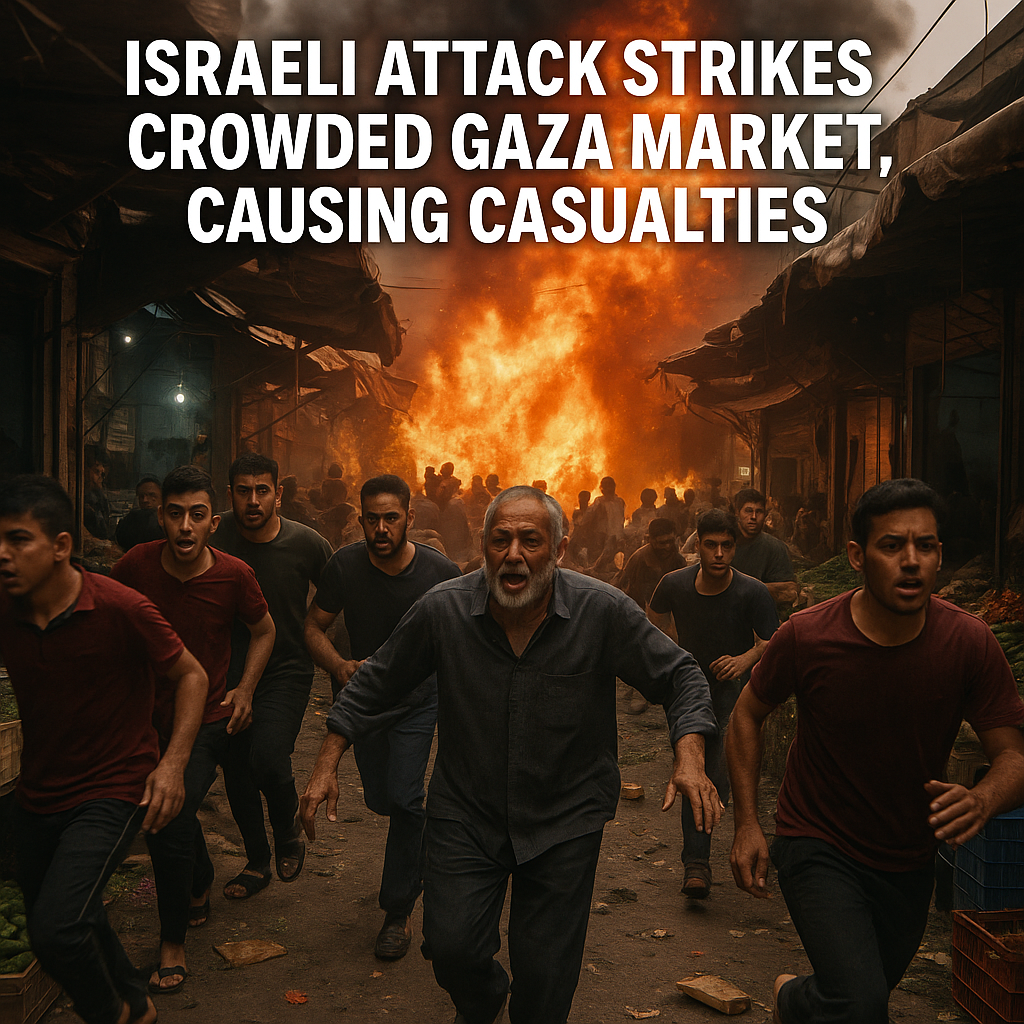
Israeli Attack Strikes Crowded Gaza Market, Causing Casualties

Israeli Attack Strikes Crowded Gaza Market, Causing Casualties
The recent Israeli attack that struck a crowded market in Gaza has sparked a wave of outrage and concern on global platforms. This tragic event, which resulted in numerous casualties, underscores the continuing volatility in the region and highlights the complexities surrounding the Israeli-Palestinian conflict.

Context of the Attack
On August 26, a targeted strike by Israeli forces hit a bustling marketplace in Gaza, claiming the lives of several civilians, including children. Various sources reported the chaos that ensued as people scrambled for safety while others tended to the injured. According to Al Jazeera, eyewitness accounts describe scenes of devastation, with shops destroyed and families torn apart.


Background to this situation reflects a long-standing history of escalation in the region, often characterized by retaliatory actions from both sides. While the Israeli military has stated that its operations are aimed at militant groups, the consequences for civilians can be catastrophic. As one source pointed out, the densely populated nature of Gaza complicates military strategies and increases the risk of collateral damage.


Diverse Perspectives on the Incident
The discourse surrounding this attack reveals a spectrum of opinions and sentiments. Many international human rights organizations have condemned the attack, positing that it constitutes a violation of international law. Sky News highlighted calls for accountability, with activists demanding an end to the cycle of violence that continues to take innocent lives.
Conversely, proponents of the Israeli government argue that their operations are essential for national security. As outlined by RT, the Israeli military maintains that these strikes target locations associated with Hamas and other militant groups responsible for launching attacks against Israel. This defensive narrative complicates the dialogue and illustrates the operational justification utilized by many countries operating in conflict zones.
Collateral Damage: A Heavy Price
In the wake of such attacks, the conversation often pivots to the notion of collateral damage. The human cost associated with military strikes is immeasurable, and it raises ethical questions about proportionality and necessity. Civilian casualties can lead to resentment, further fueling cycles of anger and violence.
In Gaza, where humanitarian conditions are already precarious, this incident exacerbates existing tensions. Reports from various NGOs indicate that the region is grappling with shortages of essential supplies, including medical aid. Many civilians, already in vulnerable situations, find themselves in dire circumstances following such attacks.
Weighing Evidence and Sentiments
As voices of outrage and defense emerge, it is crucial to parse through the information available. Al Jazeera reports that despite claims of targeting militant infrastructures, civilian areas have again borne the brunt of conflict. This raises questions about whether enough precautions are taken to minimize harm to civilians—an issue that resonates deeply with humanitarian advocates.
On the other hand, supporters of Israeli military action argue that, in the context of ongoing threats, such measures are unavoidable. This highlights a fundamental dispute about the balance between security and humanitarian impacts—the costs of which can manifest in lives lost and communities torn apart.
Concluding Thoughts
The attack on the Gaza market is not just a tragic event—it is emblematic of an enduring conflict fraught with complex challenges. As the narratives continue to unfold, it’s essential to approach the situation balanced and informed, recognizing the human costs involved and advocating for a peaceful dialogue.
While the justifications for military action will continue to vary significantly, the need for comprehensive humanitarian protections remains indisputable. Those affected by these conflicts are not mere statistics; they are individuals with families, aspirations, and rights. The world observes as the situation develops, hoping for a resolution that prioritizes peace and the preservation of human dignity.















