
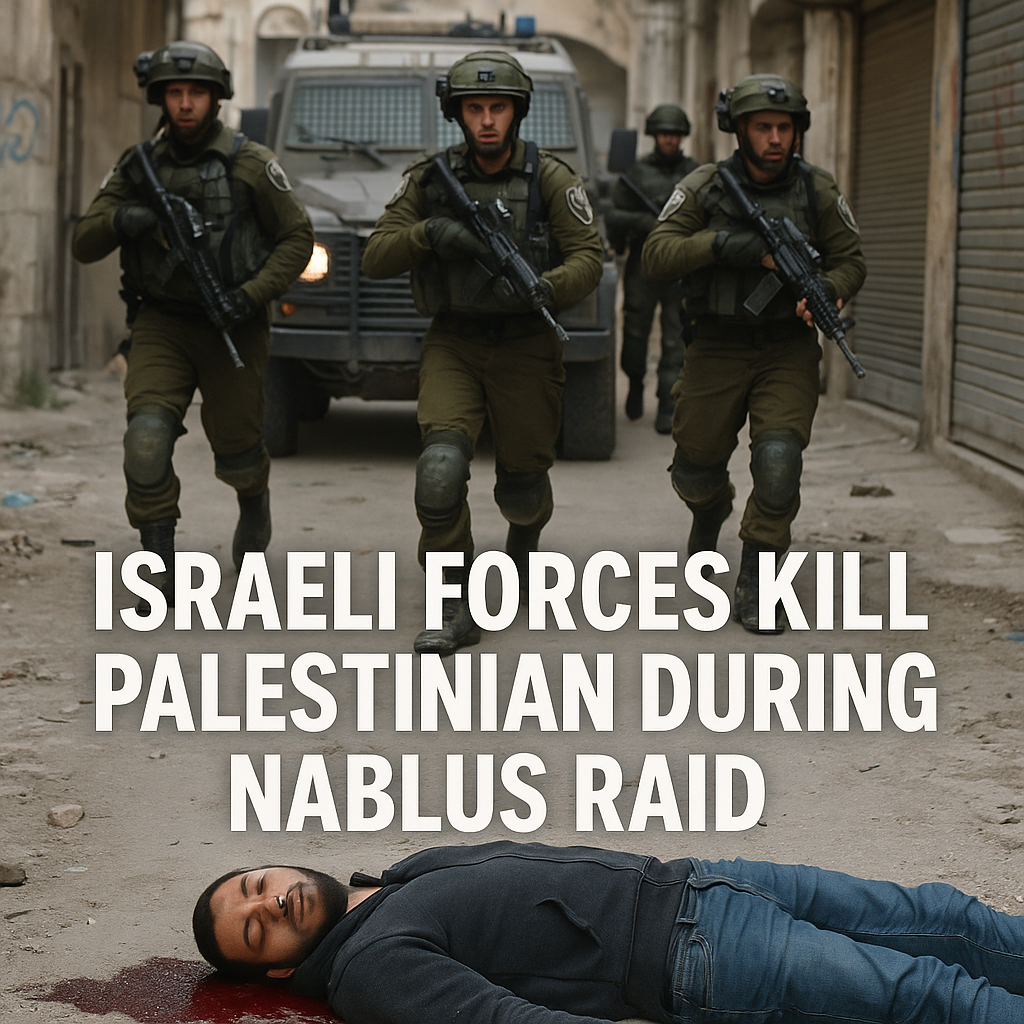
Israeli Forces Kill Palestinian During Nablus Raid

Tensions Escalate: Israeli Forces Kill Palestinian During Nablus Raid
The ongoing conflict between Israeli forces and Palestinian groups has once again erupted into violence, bringing to light the complexities of the situation in the region. Recently, an Israeli raid in Nablus resulted in the death of a Palestinian man, sparking widespread condemnation and escalating tensions. This incident underscores the complexities of the Israeli-Palestinian conflict, revealing deeply rooted grievances, differing narratives, and the persistent cycle of violence.

The Nablus Incident: A Closer Look
On May 3, Israeli forces conducted a raid in the city of Nablus, located in the occupied West Bank, leading to the tragic death of a 38-year-old Palestinian man. Reports from various sources indicate that the individual was caught in the crossfire during an operation aimed at apprehending wanted suspects linked to militant groups. Al Jazeera reported that as Israeli troops entered the area, clashes erupted between them and local residents, resulting in the deadly confrontation.


Witnesses described a chaotic scene, with gunfire ringing through the narrow streets of Nablus as Israeli forces sought to enforce order and counter perceived threats from Palestinian militants. The Palestinian Authority condemned the raid, labeling it an assassination and blaming Israel for the continued violence. This incident adds to a grim tally of casualties in the region, heightening fears of further unrest.


Different Narratives: Perspectives from Both Sides
The Israeli Stance
Israeli officials frequently argue that such raids are essential for national security, claiming they are necessary to thwart attacks from militant groups operating in the West Bank. Following the Nablus incident, an anonymous Israeli military official asserted, “We act in response to imminent threats, including the planning of attacks against our citizens.” This position reflects a broader context of security concerns that Israel has faced over the years.
Moreover, the Israeli government has emphasized its commitment to protecting its citizens, often framing military actions as preventive measures rather than aggression. They argue that the unfortunate loss of life is a consequence of the ongoing conflict, which has persisted for decades, rooted in deep-seated historical and political tensions.
Palestinian Response
Conversely, Palestinian perspectives on the Nablus raid paint a starkly different picture. Palestinian authorities and activists condemned the Israeli actions as brutal aggression targeting innocent civilians. They argue that military operations in densely populated areas not only threaten lives but contribute to a broader sense of oppression experienced by Palestinians.
Voices from human rights organizations have echoed concerns about the use of excessive force by Israeli security forces. Reports from these groups emphasize the necessity for accountability and call for de-escalation of military operations that disproportionately affect civilians. For Palestinians, the deaths of their compatriots represent not just loss but a struggle against systemic injustices that have persisted under occupation.
Weighing the Evidence
As tensions flared and protests erupted in the wake of the raid, various international figures called for restraint from both sides. The United Nations and other global organizations have urged for a thorough investigation into the incident, highlighting the need for transparency and accountability in military operations against civilians.
However, the debate remains divisive. While both sides cite security as a primary concern, a clear consensus on mitigating violence remains elusive. Civil society groups on both sides stress the need for negotiation and dialogue to address the underlying issues rather than resorting to military solutions that only perpetuate a cycle of retribution.
The Path Forward: A Search for Solutions
The recent events in Nablus underscore a persistent dilemma in achieving peace in the region. Both sides are weary from the ongoing violence, yet a common ground appears increasingly difficult to find. Calls for diplomatic engagement have intensified, with many advocating for renewed peace talks that take into account the grievances and aspirations of both Israelis and Palestinians.
Potential Steps Towards De-escalation
– International Mediation: Efforts from international bodies may pave the way for renewed discussions aimed at resolving long-standing grievances.
– Civilians-Focused Policies: Emphasizing policies that prioritize civilian safety could promote a more humane approach to the conflicts.
– Grassroots Initiatives: Various grassroots organizations are working to foster dialogue and understanding between communities, which may contribute to breaking the cycle of violence over time.
Collectively navigating the labyrinthine issues of security, justice, and mutual recognition may hold the key to a more peaceful coexistence.
Conclusion: A Complex Landscape
In conclusion, the tragic loss of a Palestinian life during the Nablus raid illustrates the deeply entrenched and multifaceted nature of the Israeli-Palestinian conflict. While some view military actions as necessary for security, others see them as part of a broader strategy of oppression. As the cycle of violence continues, it is vital for all stakeholders to engage in open dialogue and explore peaceful resolutions that acknowledge the dignity and rights of both peoples. Whether through mediation, dialogue, or grassroots initiatives, the future may hinge on a commitment to understanding and addressing the core issues that have marred this conflict for generations.















