
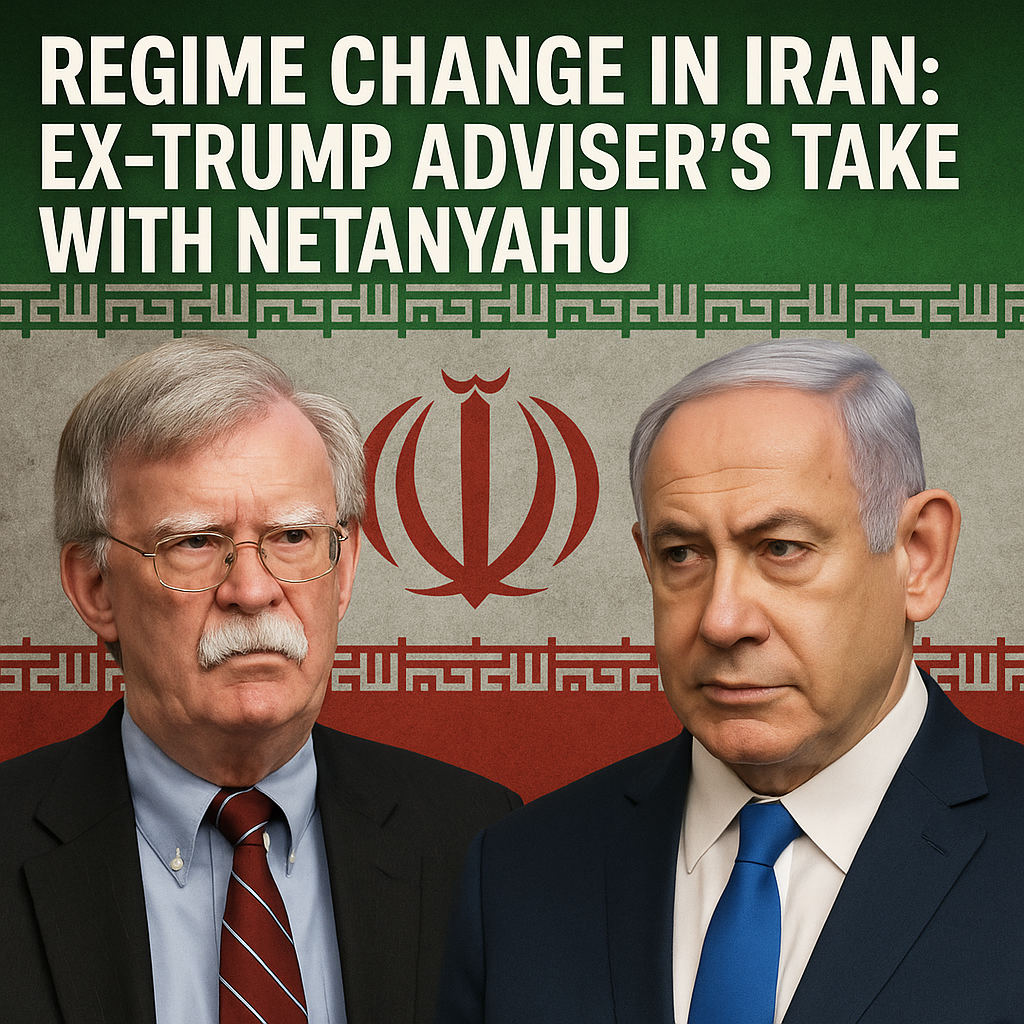
Regime Change in Iran: Ex-Trump Adviser’s Take with Netanyahu

Regime Change in Iran: Insights from Ex-Trump Advisers and Global Perspectives
The idea of regime change in Iran has resurfaced in recent discussions, notably with insights from former Trump administration officials and Israeli leaders. This discourse reflects the complex interplay of geopolitical interests, historical tensions, and the nuanced realities facing the Iranian populace.

Key Voices in the Discussion
One significant voice in this conversation is John Bolton, former National Security Adviser to Donald Trump. Bolton has been vocal about his belief that a regime change in Iran is not only desirable but feasible. He argues that the Iranian people are eager for change, citing ongoing protests and dissatisfaction with the current regime as indicators of potential instability. In a recent interview, Bolton emphasized that an effective strategy to encourage regime change should be coordinated with external powers, particularly Israel, asserting a strong alignment of interests between the two nations.


In contrast, other experts and analysts caution against overt interventions or abrupt regime changes citing historical precedents where such strategies have led to prolonged instability. Joseph Cirincione, from the Ploughshares Fund, critiques Bolton’s stance, suggesting that “there are unintended consequences to consider, especially in a region as volatile as the Middle East.” This underscores the complexities surrounding interference in Iran’s internal affairs.


Historical Context and Current Dynamics
Iran has been at the center of geopolitical struggles for decades, particularly since the 1979 Islamic Revolution that led to the establishment of the current theocratic regime. Western powers, especially the U.S., have grappled with how to address Iran’s nuclear ambitions and regional influence. The 2015 Iran nuclear deal underscored a moment of diplomatic engagement but has since unraveled, further polarizing views on Tehran’s role in international politics.
The recent surge of anti-government protests in Iran, triggered by economic hardships and political repression, has ignited discussions around the viability of regime change. Thousands of Iranians have taken to the streets, chanting for freedom and reform. This grassroots movement is seen by some, including Bolton, as a catalyst that could be leveraged for broader change. However, the stability and safety of the Iranian populace remain paramount concerns for others who advocate for a more cautious approach.
Experts like Gary Sick, a former National Security Council official, warn that although popular discontent exists, the Iranian government has historically proven resilient against external pressures. He notes, “While the will of the Iranian people is strong, the regime has deep-rooted structures of support that aren’t easily dismantled from outside.”
A Geostrategic Perspective
The possible ramifications of regime change in Iran extend beyond its borders. Israel, under Prime Minister Benjamin Netanyahu, views Iran as a significant threat due to its military ambitions and support for adversarial groups in the region. Netanyahu has echoed Bolton’s sentiments, emphasizing military preparedness and advocating for international collaboration to counteract Iran’s influence. This partnership raises parallels with historical alliances formed during the Cold War, where geopolitical strategies shaped the nature of interventions.
Yet, the complexities are layered. Analyst Fawaz Gerges emphasizes the risk of a military approach leading to regional conflict rather than peace. He notes that military interventions in the past have often resulted in chaos, and the potential fallout from regime change could provoke further instability across the Middle East.
Navigating the Future
The discourse around regime change in Iran highlights a fundamental division in strategy among policymakers and analysts. While some view it as an opportunity for liberation and modernization, others caution that such approaches can destabilize the region and further entrench repressive regimes.
As qualifications for intervention are debated, the voices of the Iranian people—deeply affected by these geopolitical maneuvers—must remain central to discussions of their future. Those advocating for regime change must account for the realities on the ground, recognizing the complexity of Iranian society and the multifaceted nature of its political landscape.
In conclusion, while there are compelling arguments for advocating regime change in Iran, the situation demands a nuanced understanding of both the internal societal dynamics and the broader geopolitical ramifications. Caring for the aspirations of the Iranian populace while weighing the consequences of potential intervention remains crucial for all stakeholders involved. The path ahead necessitates careful diplomacy, informed strategy, and, above all, an earnest commitment to peace and stability in a historically turbulent region.















