
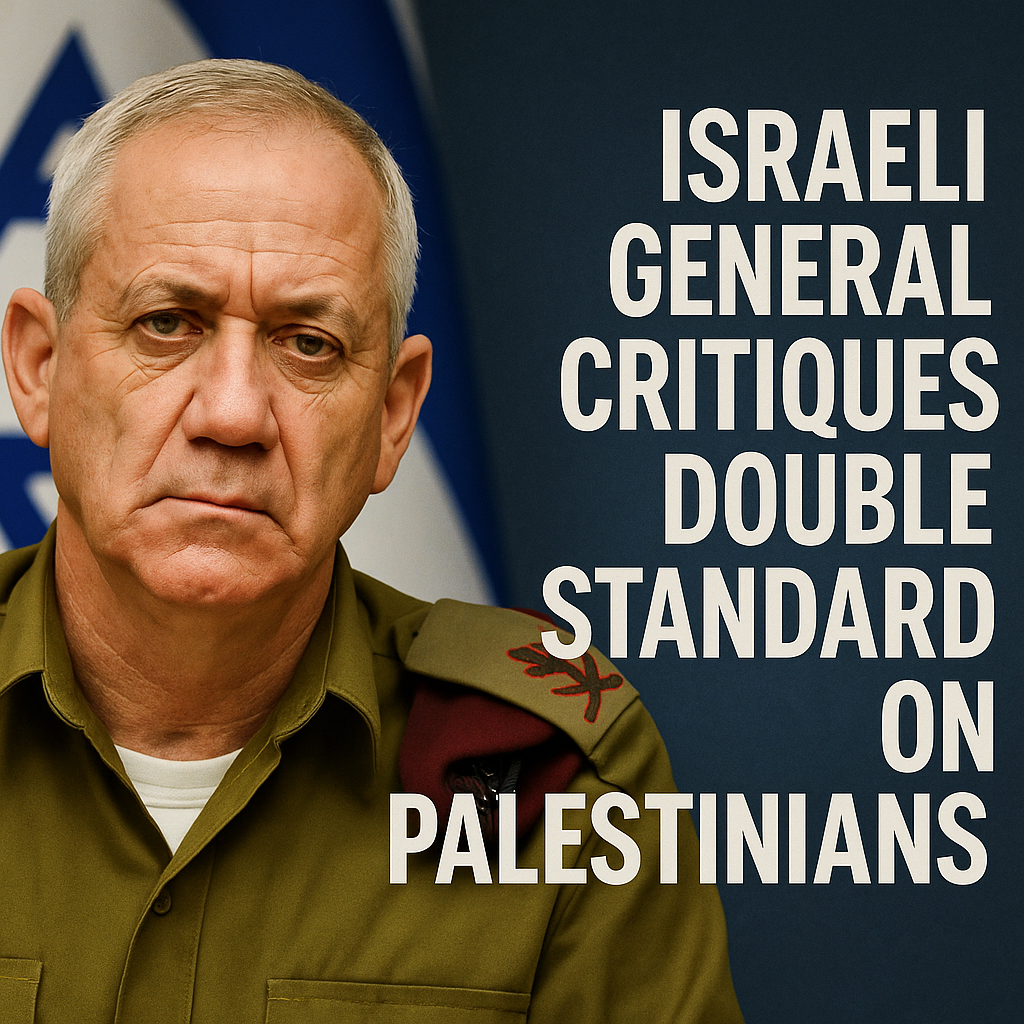
Israeli General Critiques Double Standard on Palestinians

Israeli General Critiques Double Standard on Palestinians
The complexities surrounding the Israeli-Palestinian conflict often reveal deep-seated biases, particularly around the treatment of different populations within the region. A recent statement from an Israeli general has brought the issue of double standards to the forefront, creating a ripple of reactions both within and outside Israel.

Background on the Controversy
In a candid interview that sparked intense debate, an unnamed Israeli general criticized what he perceives as a systemic double standard in the treatment of Palestinians compared to Israeli settlers. He pointed out that while Palestinian attacks often receive widespread condemnation, Israeli retaliatory measures are frequently framed as justified defense. This narrative shapes perceptions around the legitimacy of actions taken by both parties. In his remarks, he lamented, “The rules of engagement seem skewed. Palestinian lives don’t seem to carry the same weight as Israeli lives.”


This perspective highlights a growing frustration within segments of the Israeli defense community, where some feel that military operations against Palestinians are subjected to harsher scrutiny than measures taken against settlers who engage in violence. Such points of view are essential as they reflect a broader internal dialogue about morality, ethics, and justice within Israel itself.


Perspectives on Military and Civil Actions
In examining this critique of double standards, it’s crucial to parse out various viewpoints. Supporters of the general’s stance argue that a consistent narrative in media and politics undermines genuine efforts toward peace. They advocate for a balanced approach to justice, where both Israeli and Palestinian actions are weighed impartially.
Many commentators have echoed this sentiment, noting the disparity in international response. They argue that when Palestinian militants attack Israeli civilians, it elicits cohesive international condemnation. However, retaliatory measures by the Israeli Defense Forces against Palestinians often receive less uniform criticism, particularly when the circumstances involve collateral damage or civilian casualties.
On the other hand, opponents of this critique argue that the general’s remarks threaten to undermine Israel’s right to defend itself. They contend that the absence of critique over Palestinian actions would send the wrong message, enabling ongoing attacks and neglecting the security threat posed to Israeli residents. This side of the debate underscores a steadfast belief in Israel’s right to self-defense, emphasizing that distinctions within military responses are justified under existential threats.
The Implications of a Double Standard
This ongoing dialogue brings us to a critical juncture in understanding justice in the Israeli-Palestinian conflict. If double standards do exist, as the general suggests, what does that imply for potential resolutions?
The implications are manifold:
– Trust Deficit: The perceived double standard fosters a lack of trust among Palestinian communities regarding Israeli intentions. This distrust makes peace negotiations more challenging, as Palestinians may feel their rights and lives are undervalued in the eyes of the Israeli government and military.
– International Perception: Israel’s image on the global stage could be partly shaped by these narratives. If accusations of double standards gain traction, it may prompt a reevaluation of international alliances and support from various nations. This perception can influence diplomacy, aid, and international relations.
– Policy Change: Acknowledgment of such systemic biases may lead to policy modifications within the Israeli government itself. Some policymakers might begin to advocate for a more nuanced understanding of the conflict, focusing on equitable justice rather than the rigid dichotomy of settler versus Palestinian actions.
The Path Forward: A Call for Balanced Discourse
Moving forward, a balanced discourse around the Israeli-Palestinian conflict is critical. The acknowledgment of double standards, as voiced by the Israeli general, invites a broader conversation about how justice and human rights are perceived.
Both sides bear responsibility to engage in constructive dialogues that recognize the complexity of the situation. It is essential that any conversation regarding security, legitimacy, and justice considers all lives involved—encouraging mutual respect rather than branding narratives that demonize any group.
By fostering an environment where discussions about morality and justice can occur, it might be possible to bridge divides and work towards lasting peace, reflecting the value of both Israeli and Palestinian lives. Ultimately, the voices within Israel advocating for fairness in discourse could serve as a catalyst for change, laying groundwork for a more just and equitable resolution to the conflict.















