
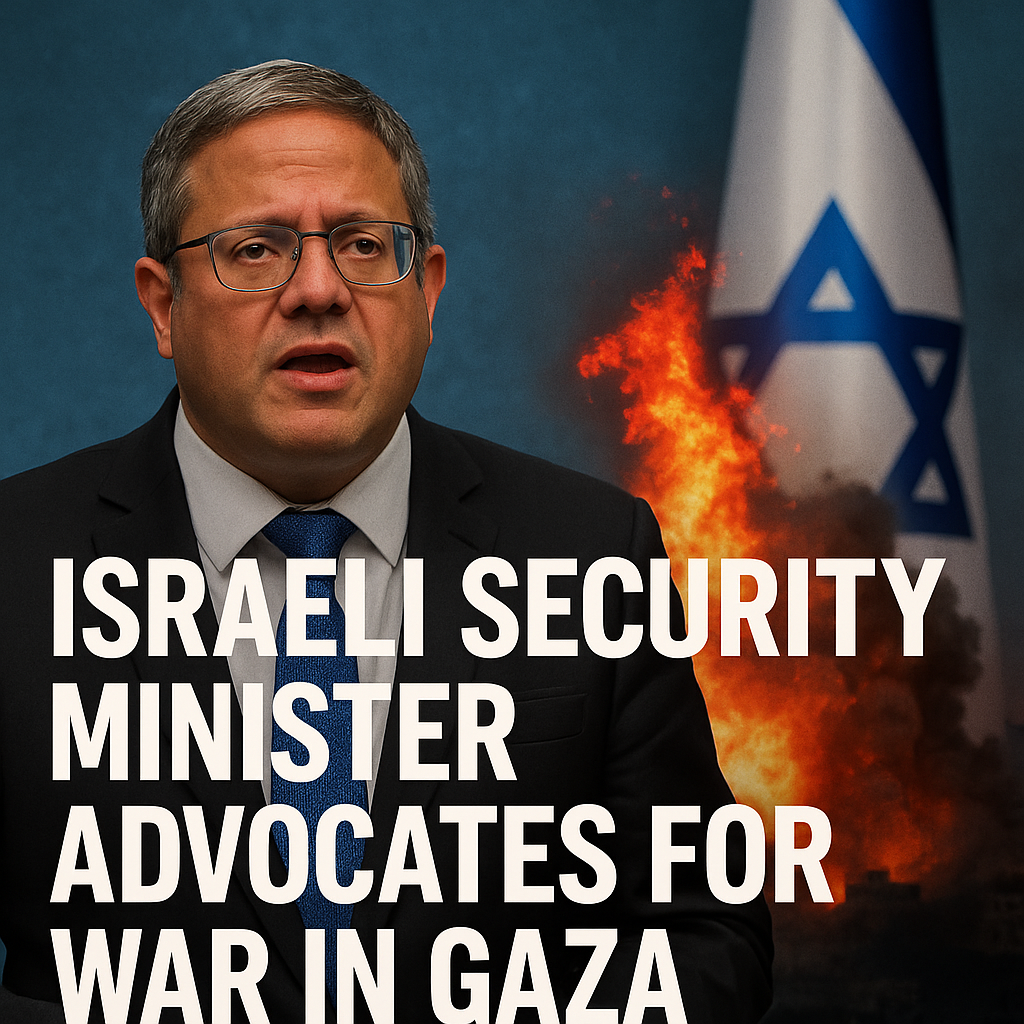
Israeli Security Minister Advocates for War in Gaza

Israeli Security Minister Advocates for War in Gaza: A Complex Perspective
The ongoing conflict in Gaza has once again been thrust into the spotlight following comments from Israel’s Security Minister advocating for a resumption of military operations. This statement has sparked a spectrum of reactions, highlighting the multifaceted nature of the Israeli-Palestinian conflict.

The Call for Military Action
In a recent address, Israeli Security Minister Itamar Ben-Gvir made headlines with his strong stance advocating for the reinitiation of military action against Gaza. His comments came amid escalating tensions following a series of attacks attributed to Hamas, which he characterized as a direct threat to Israeli security. According to Ben-Gvir, the time has come for “harsh action” to defend the nation’s borders and restore security for its citizens.


Supporters of Ben-Gvir’s position argue that a robust military response is necessary to deter future attacks and to maintain order in a region shaken by decades of tension. They emphasize that any government must take decisive measures to ensure its citizens’ safety. For instance, an article from Sky News highlights how many Israelis feel vulnerable and call for strong leadership to counteract perceived threats.


However, critics of this stance warn that an escalation into war could lead to a humanitarian crisis and further entrench the cycle of violence that has historically plagued the region. Commentary from Al Jazeera points out that military actions often result in civilian casualties and distressed populations, thereby breeding resentment and potential extremism.
Filling the Gaps: Diverse Perspectives
Humanitarian Concerns and Consequences
When looking at the broader implications of military intervention, it is crucial to acknowledge the humanitarian aspect. News reports have repeatedly illustrated that civilian casualties and displacement often accompany military operations in Gaza. RT emphasized the dire humanitarian conditions faced by Palestinians, evoking concern from various human rights organizations. They argue that a military approach only deepens the suffering and hampers the prospect for lasting peace.
This sentiment is echoed by many international observers who believe in the necessity of dialogue and diplomacy over military interventions. For example, Al Jazeera notes that numerous peace advocates argue for comprehensive negotiations instead of an escalation—which could lead to long-term resolution rather than immediate, short-term gains.
The Cycle of Violence and the Need for Resolution
The idea of a military solution raises another critical question: Does resorting to war actually resolve the core issues fueling the conflict? History has shown that each military action often leads to subsequent retaliations, creating a continuous cycle of violence. This perspective is underscored in numerous reports, suggesting that a focus on military might neglects the underlying political dynamics that perpetuate the conflict.
Ben-Gvir’s assertions, while galvanizing certain segments of Israeli society, also underscore a growing divide. Many Israelis are torn between the need for security and a genuine desire for peace. Public opinion, as captured in various surveys highlighted by Sky News, reveals a complex tapestry of views that question whether military action would lead to long-term safety or merely fracture society further.
Weighing Evidence and Emerging Opinions
As this situation unfolds, it is essential to balance the arguments for military action with the potential consequences. Comments from Israeli officials like Ben-Gvir reflect a desperation for security but may simultaneously resonate poorly on the international stage. The calls for war do not exist within a vacuum; they occur in the context of existing humanitarian crises and political complexities that require thoughtful consideration.
Furthermore, there is no singular path forward. The balance between maintaining national security and addressing humanitarian needs poses a dilemma for Israeli leadership. Observers from RT propose that any solution must involve multiple stakeholders, including international mediators and local communities, to pave a genuine path toward resolution without exacerbating tensions.
Conclusion: Navigating a Path Forward
The position taken by Israel’s Security Minister is emblematic of a broader struggle to define a path forward amid ongoing conflict. While the call for military action resonates with those feeling the pressures of insecurity, it also raises profound questions concerning the potential humanitarian impact and the cyclical nature of violence.
Across the landscape, varied opinions indicate that long-lasting peace will not be won through warfare but rather through dialogue, understanding, and diplomatic engagements. Ultimately, the choices made in the coming months could shape not only Israel’s future but also that of its neighbors, emphasizing the urgent need for thoughtful consideration of all perspectives involved.















