
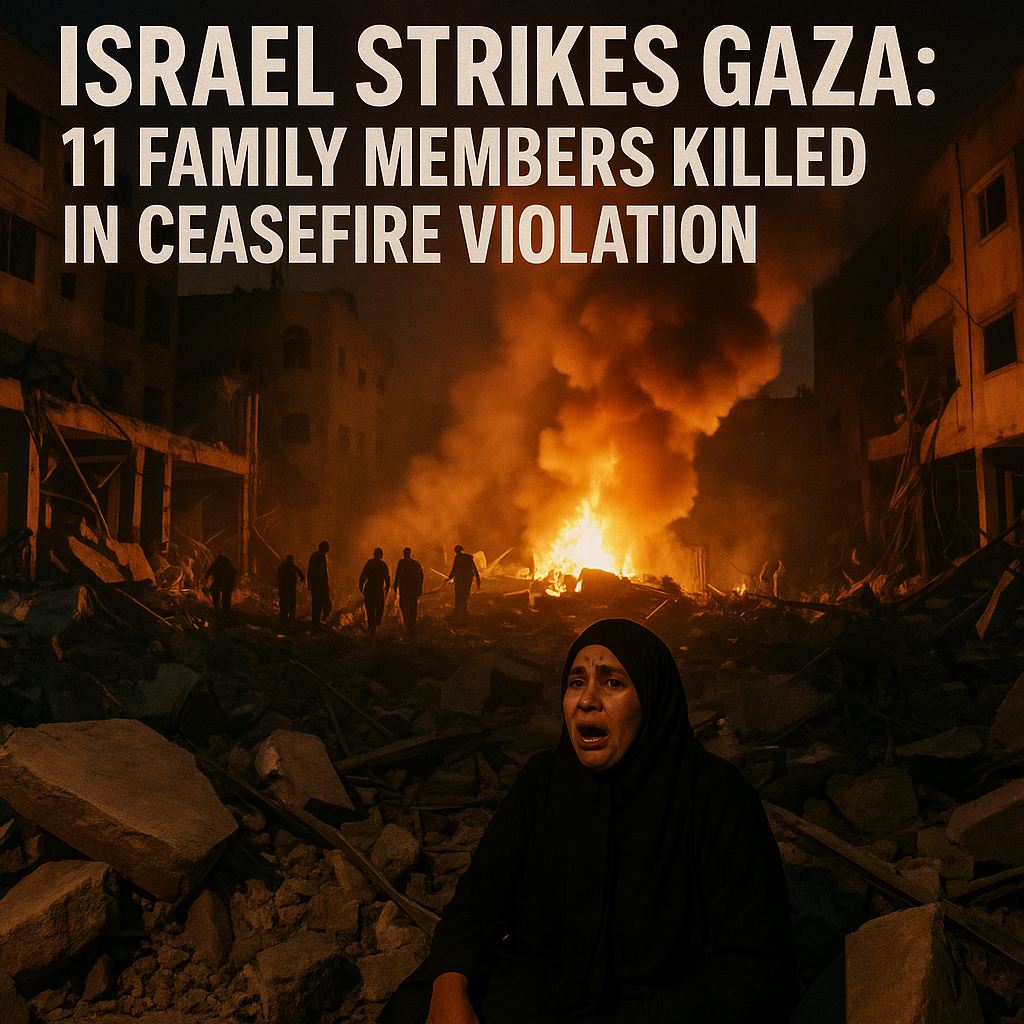
Israel Strikes Gaza: 11 Family Members Killed in Ceasefire Violation

The Ongoing Conflict: Understanding the Impact of Israel’s Strikes in Gaza
In recent developments, Israel struck Gaza, resulting in the tragic death of 11 family members amid the complications of a ceasefire agreement. This incident has reignited a complex dialogue about the ongoing conflict between Israel and Hamas, raising questions about the dynamics of military action, civilian safety, and international humanitarian laws.

A Tragic Casualty of War
The airstrikes in Gaza, which reportedly killed multiple family members in a single incident, highlight the dire humanitarian impact of military engagement in densely populated areas. According to various sources, including Al Jazeera, the strikes came as a significant violation of the ceasefire that had been tenuously holding since earlier negotiations. Eyewitness accounts describe scenes of devastation, where civilian neighborhoods have become battlegrounds, leading to heightened fears among residents.


While Israel asserts that its military actions are aimed at targeting Hamas, the governing body in Gaza, the collateral damage reflects the challenging nature of conducting military operations in such a confined space. Many observers are concerned that the loss of civilian life not only sparks immediate outrage but may also contribute to a long-term cycle of violence and resentment.


Reports from the ground suggest that many families are caught in the crossfire, illustrating the human cost of political and military decisions. “These are not just statistics; they are lives and families,” an aid worker declared, emphasizing the emotional toll these events take on local communities.
The Response from Various Stakeholders
Different news outlets present a range of perspectives regarding this tragic incident, reflecting the deeply polarized views on the conflict. For instance, RT offers a narrative emphasizing Israel’s right to defend itself against ongoing rocket attacks from Hamas. In these analyses, military action is framed as a necessary response to perceived threats, with calls for a robust approach to deter future attacks.
Conversely, Al Jazeera highlights the humanitarian crisis resulting from the airstrikes, focusing on the impacts on innocent civilians. Interviews with families who lost loved ones paint a picture of devastation and grief, prompting questions about the effectiveness of using military force in a densely populated area.
International reactions to the airstrikes have also varied. Some human rights organizations have called for a reassessment of military tactics used by Israel, urging both parties to adhere to international humanitarian laws that prioritize civilian safety. Others have maintained support for Israel’s actions, citing the need for a strong response to threats facing its civilian population.
Weighing Humanitarian Concerns Against Security Needs
The ongoing conflict underscores the fraught balance between military objectives and humanitarian imperatives. On one hand, military actions are often justified as necessary for national security and the protection of citizens. On the other hand, the loss of life in densely populated areas raises fundamental ethical questions about the proportionality and effectiveness of such actions.
Several experts in conflict resolution note that a sustainable peace will require more than military solutions. Addressing the underlying political issues that fuel the conflict, including territorial disputes and historical grievances, is essential for any long-lasting resolution. As the situation in Gaza remains critical, the urgent need for dialogue and negotiation becomes even clearer.
International bodies, including the United Nations, have called for immediate ceasefire negotiations, stressing that both sides must make concessions for the sake of the civilian population. Yet, the path to peace remains fraught with complexities, not least of which is the ongoing cycle of violence that can easily reignite tensions.
Conclusion: Moving Forward Amidst Tragedy
The deaths of innocent civilians in Gaza serve as a stark reminder of the human cost of conflict. As the cycle of violence continues, it is imperative for all stakeholders to reconsider their approaches to a resolution. Finding a balance between security needs and humanitarian responsibilities is not only a moral imperative but also a strategic necessity for achieving peace.
Ultimately, understanding the multifaceted nature of these incidents—where military actions intersect with civilian lives—will require introspection from both leaders and citizens alike. Open dialogue, respect for human rights, and a commitment to ending the violence are crucial steps toward a more peaceful coexistence in the region. For now, the shadows of grief and loss loom large, reminding us all of the urgent need for empathy and understanding in the face of continued conflict.















