
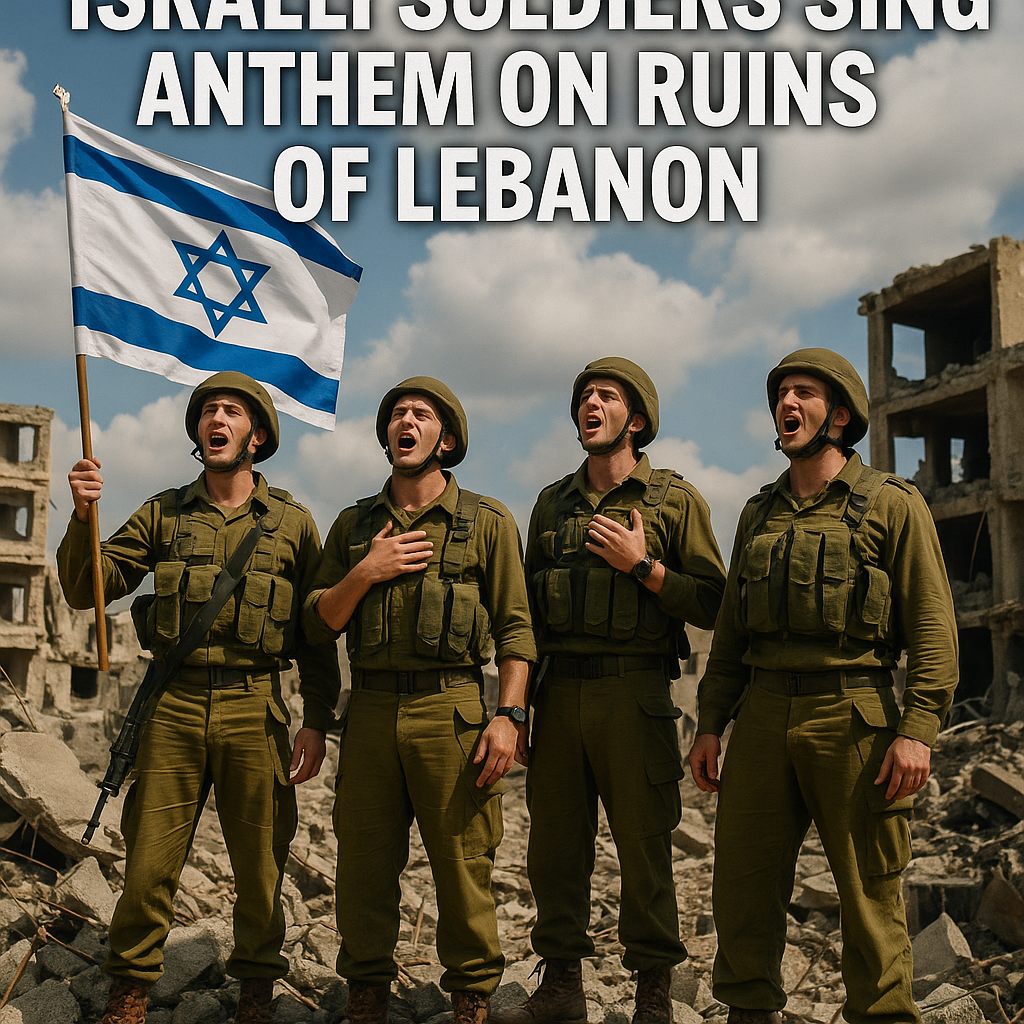
Israeli Soldiers Sing Anthem on Ruins of Lebanon

The Complex Implications of Israeli Soldiers Singing on the Ruins of Lebanon
Recently, a video surfaced showing Israeli soldiers singing their national anthem atop the ruins of a Lebanese town. This provocative moment has ignited discussions about nationalism, memory, and the deeply rooted tensions between these neighboring nations. Understanding the different perspectives surrounding this event reveals a multifaceted issue steeped in historical significance and contemporary conflict.

The Context of the Event
In the video, Israeli troops are seen celebrating with their national anthem in what appears to be a war-torn area of Lebanon. This display elicits strong emotions and diverging opinions from different commentators and analysts. On one hand, for many in Israel, the singing represents a powerful affirmation of national identity and resilience, especially in the context of ongoing security concerns. Proponents highlight that Israel is a nation still on alert due to conflicts and threats perceived from neighboring states.


Conversely, for many in Lebanon and the broader Arab world, the soldiers’ actions evoke feelings of sorrow and anger. The ruins symbolize not just physical destruction but also the loss of lives and homes. Critics argue that such displays can minimize the suffering of those affected by war and conflict, painting the Israeli perspective as dismissive of the ongoing humanitarian crises.


Nationalism vs. Humanitarian Perspectives
Nationalistic Sentiments
Supporters of the Israeli soldiers’ actions often claim that nationalism is necessary for survival. Israel, surrounded by nations with complicated histories of conflict, may see these moments as essential for unity and morale. Here, celebration amidst adversity can serve as a unifying force, allowing citizens to bond over shared identity and purpose. The resounding cadence of the anthem, performed in a devastated area, can be interpreted as an assertion of sovereignty and resilience.
Humanitarian Concerns
Yet, while many in Israel might view this performance as a symbol of national pride, critics emphasize the human toll of such gestures. The ruins of the Lebanese town tell stories not only of destruction but of lives forever changed. This sentiment resonates particularly in a region where memories of past conflicts linger. For witnesses or descendants of those affected, the singing can seem almost like a triumphalism that overlooks the pain of others.
Media outlets such as Al Jazeera present this polarizing incident as a flashpoint for larger issues concerning the Israeli-Palestinian conflict and regional tensions. It underlines a prevailing sentiment among some Lebanese and Palestinians that aggressive displays of nationalism can exacerbate already fraught relations and perpetuate cycles of violence.
The Mixed Reactions and Future Implications
The reactions to the video underscore the complex and often contentious nature of Israeli-Lebanese relations. Social media has been abuzz with opinions ranging from outrage to support. While the Israeli Defense Forces (IDF) and some nationalists may view this moment as an emblem of national resilience, critics await to see how such displays can compromise peace efforts.
Potential Pathways to Understanding
Moving forward, it’s crucial for both sides to navigate these differing perceptions with sensitivity. Opportunities for dialogue can be undermined by actions perceived as dismissive or celebratory of suffering.
– Engagement: Efforts aimed at fostering understanding and dialogue between Israeli and Lebanese communities could help bridge divides.
– Empathy: By acknowledging the pain associated with conflict, both sides may cultivate a more productive relationship.
– Balanced Narratives: Encouraging media representations that reflect the complexities of these interactions can contribute to a more nuanced public discourse.
In conclusion, the event of Israeli soldiers singing on the ruins of a Lebanese town serves as a poignant reminder of the difficulties inherent in expressing national pride amidst ongoing conflict. As varied reactions unfold, they prompt reflection on how to approach histories and identities that have long been marked by strife. Balancing nationalistic sentiments with humanitarian awareness can be challenging, but doing so is vital for fostering a pathway toward reconciliation and understanding. Recognizing the complexity of these narratives can illuminate potential paths forward in a region still grappling with its past.















