
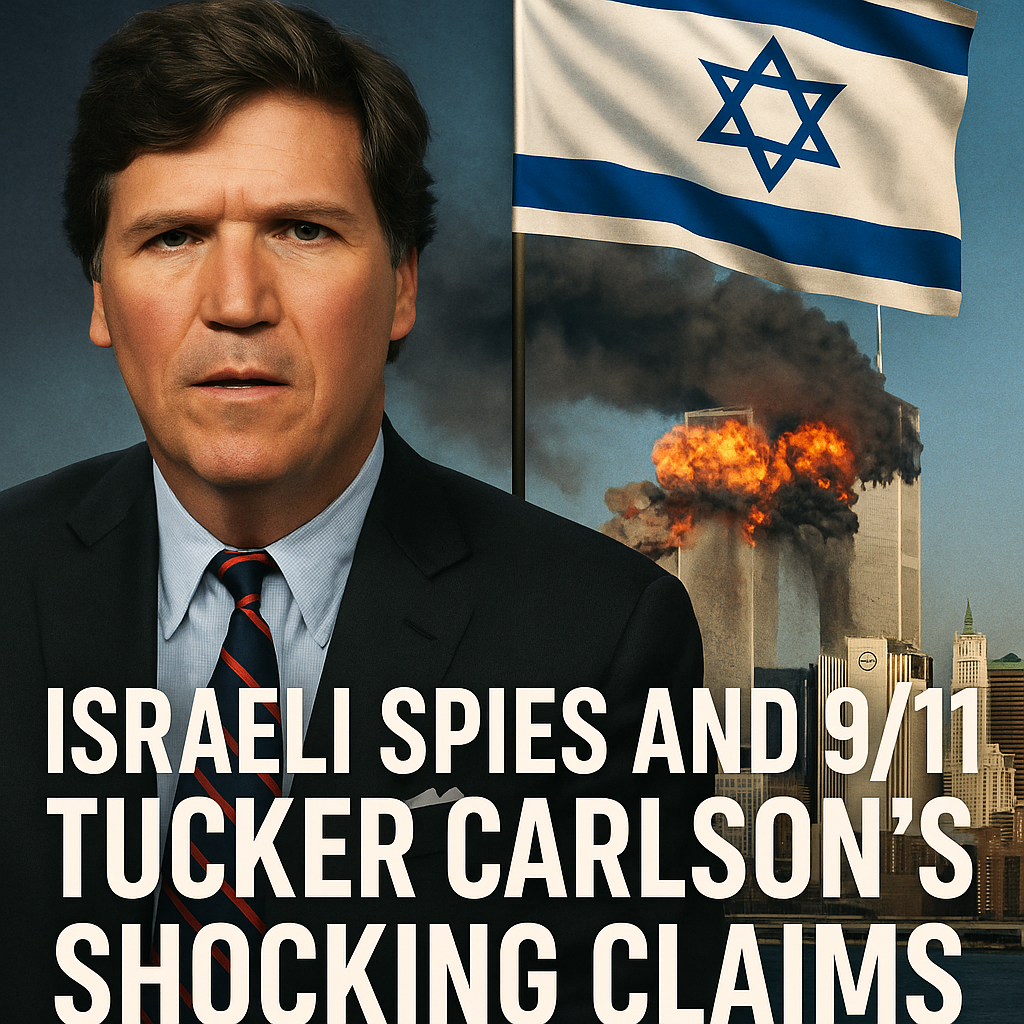
Israeli Spies and 9/11: Tucker Carlson’s Shocking Claims

Israeli Spies and 9/11: Tucker Carlson’s Shocking Claims
The events of September 11, 2001, cast a long shadow over global politics, and recent claims by media personality Tucker Carlson have reignited discussions around the complexities of intelligence and espionage. Carlson’s assertions suggest that Israeli spies may have played a role in the events leading up to the tragedy, a claim that has stirred controversy and debate across various media platforms.

Understanding the Context of Carlson’s Claims
Tucker Carlson has made headlines by suggesting that Israel was somehow in a position to influence the events of 9/11 through espionage efforts within the United States. According to Carlson, there is ample evidence indicating that Israeli operatives were surveilling the hijackers before the attacks occurred. He implies that a deeper inquiry into these allegations could challenge the established narrative surrounding 9/11.


These assertions are not entirely new; claims of foreign intelligence activities during the time leading up to the 9/11 attacks have circulated for years. However, Carlson’s high-profile platform lends these discussions a weight they may not have received otherwise. His defenses often draw on reports that suggest Israeli intelligence had prior knowledge of the attacks but did not act.


Diverse Perspectives on Intelligence and Espionage
Critics of Carlson, including various analysts and several media commentators, emphasize the need for a nuanced understanding of intelligence operations. According to a report from Al Jazeera, claims linking Israeli spies to 9/11 lack solid evidence and can perpetuate harmful stereotypes. The article suggests that while foreign intelligence agencies monitor suspected terrorists, such actions do not necessarily imply foreknowledge or complicity in attacks.
Conversely, supporters of Carlson argue that the connection between foreign operatives and events surrounding 9/11 warrants a closer look, emphasizing the need for transparency in intelligence matters. This viewpoint holds that claims should not be dismissed outright if they challenge prevailing narratives, particularly given the scale and impact of the September 11 attacks.
Navigating the Complex Landscape of Claims and Evidence
In the complex web of claims surrounding 9/11, it is important to highlight what is known and what remains speculative. For example, while some reports have indicated increased Israeli intelligence operations in the U.S. prior to the attacks, the absolute certainty about their intentions or actions remains elusive.
A Sky News report echoes this sentiment, stating that while intelligence-gathering is typical for any nation-state, suggesting that Israel played a direct role in the attacks complicates our understanding of international relations and the nature of espionage. The claim is both grave and serious, indicating a breach of trust on multiple levels, but substantiating it requires more than mere correlation.
Calls for Objectivity
As surprising as Carlson’s claims may be, the response illustrates the polarized environment surrounding discussions of intelligence and national security. On social media and various news platforms, opinions diverge wildly. Many suggest that investigating these claims is paramount to understanding the full picture of 9/11—whereas others caution against diving into conspiratorial thinking that distracts from established facts.
While Carlson stirs interest in a critical examination of intelligence operations, critics warn against potentially dangerous implications. Altering perceptions of Israel’s role without concrete evidence can potentially breed anti-Semitic sentiments, a point raised in several analytical pieces responding to Carlson’s broadcasts.
Conclusion: The Need for Responsible Discourse
The discourse surrounding Tucker Carlson’s claims underscores the need for careful, balanced dialogue about sensitive issues such as national security and intelligence operations. Given the weight of such allegations, it is vital that discussions remain grounded in verified evidence while allowing for exploration of complexities.
The intricacies of state-sponsored surveillance versus public safety, foreign intelligence gathering, and accountability complicate narratives but also provide fertile ground for informed discussions. As society navigates the fallout of Carlson’s provocative assertions, the onus remains on the media and the public to discuss these matters with care, promoting informed perspectives rather than unfounded theories.
In these tumultuous times, a commitment to rigorous fact-checking and clear communication becomes more critical than ever.















