
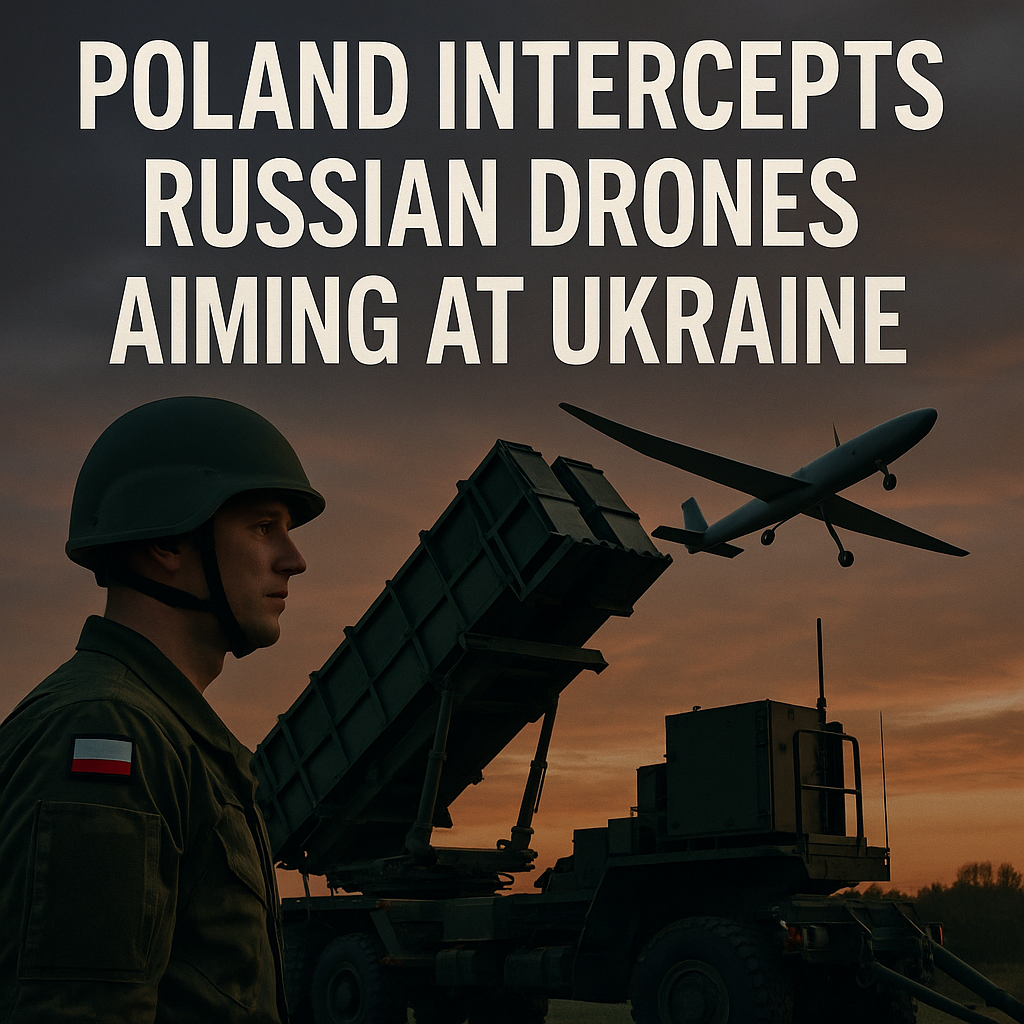
Poland Intercepts Russian Drones Aiming at Ukraine

Poland Intercepts Russian Drones Aiming at Ukraine
Recent developments in Eastern Europe have highlighted Poland’s growing involvement in securing its borders amid escalating tensions with Russia. In a significant incident, Polish military forces intercepted Russian drones reportedly en route back from a mission targeting Ukraine. This event not only underscores the precarious nature of security in the region but also raises questions about the broader implications for NATO and the dynamics of international support for Ukraine.

Rising Tensions in Eastern Europe
The interception of Russian drones by Polish forces follows ongoing military actions in Ukraine, where Russian troops have intensified their assaults. According to Al Jazeera, the intercepted drones were observed returning from performing strikes on Ukrainian infrastructure. The implications of this are clear: the conflict is spilling over borders, presenting a direct threat to neighboring countries such as Poland.


Poland’s Strategic Response
Poland’s prompt action in intercepting these drones is seen as a proactive move to protect its sovereignty and reinforce its commitment to NATO allies. Military analysts suggest that such encounters reflect a heightened state of alert among Baltic states and Eastern European countries, which are eager to deter any further Russian aggression.


Polish officials emphasized the importance of safeguarding national security. “We cannot underestimate the threat posed by these Russian actions,” a government spokesperson noted, highlighting Poland’s readiness to engage defensively. The move has drawn both domestic and international support, reinforcing Poland’s role as a critical player in the regional defense strategy.
The Broader Implications for NATO
This incident raises important questions about the efficacy of NATO’s collective defense policy and the alliance’s involvement in Eastern Europe. With the situation evolving rapidly, some analysts argue that a stronger NATO presence may be necessary to deter future incursions. As Poland acts to protect its airspace, discussions around increasing troop deployments in Eastern Europe are likely to dominate future NATO meetings.
In contrast, critics argue that NATO’s current strategic commitments may not be flexible enough to ensure timely responses in crises such as this. For instance, while Poland took initiative in intercepting the drones, concerns linger regarding the readiness of other NATO members to respond collectively in instances of cross-border tensions. Such disparities could inadvertently embolden aggressive actions by state actors if not addressed.
Perspectives on the Conflict and Its Aftermath
Opinions on Poland’s interception of drones diverge significantly. Supporters view these actions as a necessary stand against Russian expansionism, positing that any weakness displayed by NATO could lead to further destabilization in the region. Polish military analysts suggest that the country’s response not only serves its national interests but also represents a commitment to supporting Ukraine in its ongoing struggle.
Conversely, some experts caution against the escalation of military responses, arguing that sabre-rattling could provoke further conflict. Analysts from RT emphasize the need for diplomatic solutions, advocating for dialogue as opposed to increasing military confrontations. They argue that an arms race in the region would further complicate the existing humanitarian crisis in Ukraine.
Uncertainties in the Conflict Landscape
Despite these differing viewpoints, one notable uncertainty remains: the trajectory of Russia’s foreign policy and military strategy. While the interception of drones signals Poland’s readiness to respond, the future of regional security is difficult to predict. Will Russia increase its drone operations, or will this incident encourage diplomatic negotiations? The answer is unclear, and ongoing monitoring of the situation will be vital for all involved parties.
Furthermore, as Polish engagement heightens, the relationship between NATO allies could face new strains. Countries such as Hungary and Italy have previously voiced support for more cautious approaches toward Russia, contrasting sharply with Poland’s aggressive stance. Such discrepancies in policy could complicate NATO’s unified front against potential threats.
Conclusion
The interception of Russian drones by Poland signifies a critical moment in the evolving landscape of Eastern European security. It reflects Poland’s commitment to protecting its sovereignty and its role as a proactive member of NATO. While this action has garnered support from various fronts, it also pushes to the forefront the complexities and uncertainties of the conflict involving Ukraine and its neighbors. As tensions continue to simmer, the question remains how NATO will adapt its strategies to manage both current threats and future vulnerabilities.















