
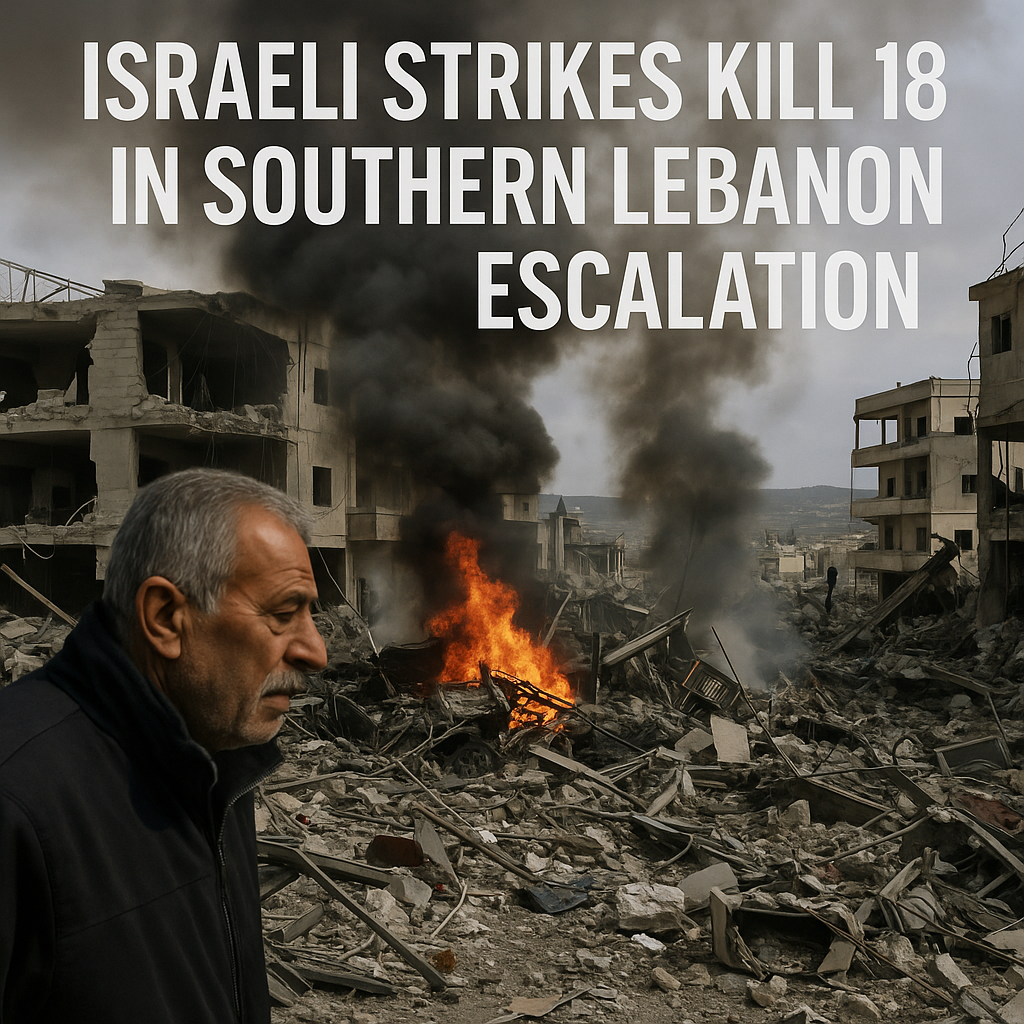
Israeli Strikes Kill 18 in Southern Lebanon Escalation

Israeli Strikes Kill 18 in Southern Lebanon Escalation
The recent Israeli strikes in southern Lebanon that resulted in the deaths of 18 individuals have heightened tensions in an already volatile region. This escalation is not an isolated incident but reflects a complex interplay of historical grievances, political motives, and international implications.

Understanding the Context of the Strikes
The Israeli Defense Forces (IDF) launched aerial assaults that, according to various reports, targeted locations purported to be associated with Hezbollah, a militant group operating in Lebanon. This context is critical; Hezbollah has often been at odds with Israel, and past confrontations have led to significant loss of life on both sides.


Perspectives from Varied Sources
Al Jazeera detailed the aftermath of these strikes, highlighting not only the immediate impacts—the tragic loss of lives and injuries—but also the broader implications for Lebanese civilians caught in the crossfire. The report underscores how these military actions often perpetuate a cycle of violence, engendering resentment among the civilian population toward Israel.


In contrast, RT News reported that the IDF justified these airstrikes as preemptive measures against threats posed by Hezbollah. Israeli officials stated that they perceived an imminent danger, thus legitimizing their military response. This justification paints a picture of proactive defense, although critics argue that it can lead to overreactions, endangering non-combatants in the process.
Analyzing Regional Reactions
The implications of these strikes extend beyond the immediate casualties, stirring reactions across the Middle East. Sky News provided insights into the broader geopolitical landscape, noting that nations like Iran and Syria have expressed strong disapproval of Israel’s military tactics. Iran, a supporter of Hezbollah, condemns Israel’s actions as aggression, while calling for solidarity with Lebanon.
Opposing views emerge from within Israel, where some citizens support the government’s strategy of military intervention as necessary for national defense. Yet, this perspective is counterbalanced by a growing faction advocating for diplomacy and peaceful solutions. According to reports, peace activists within Israel argue that such military actions only serve to radicalize groups like Hezbollah further, leading to more conflict instead of resolution.
The Complexity of Military Interventions
The debate surrounding military interventions in foreign territories is inherently nuanced. On one hand, defenders of Israel’s strikes argue that the nation has the right to protect its citizens against threats. Conversely, the consequences faced by innocents in Lebanon prompt international calls for restraint and dialogue.
The Potential for Escalation
As tensions rise, the risk of further military actions becomes increasingly concerning. With Hezbollah’s history of retaliating against perceived Israeli aggression, analysts warn of a potential spiraling conflict. This concern is compounded by the backdrop of ongoing regional instability, where interventions can inadvertently trigger broader confrontations involving other state and non-state actors.
Key Considerations:
– The balance between legitimate defense and disproportionate response.
– The humanitarian impact on civilian populations in conflict zones.
– The long-term implications of continued military actions on peace efforts.
Moving Toward Diplomacy
While immediate military responses may offer short-term security for Israel, the long-term stability of the region hinges on diplomatic efforts. It is essential for all parties involved to prioritize dialogue over conflict to address the underlying issues that fuel violence.
Prominent voices within the international community, including the United Nations, have consistently called for de-escalation and negotiation. However, the path to peace remains fraught with hurdles, as mistrust and deep-seated animosities complicate efforts for reconciliation.
Conclusion
The situation in southern Lebanon following the Israeli airstrikes highlights the intricate tapestry of conflict in the region. As these events unfold, the perspectives from diverse stakeholders demonstrate that simplistic narratives fail to capture the complexity of human experiences affected by war. Achieving lasting peace will not only require a cessation of hostilities but a committed exploration of understanding, justice, and coexistence amongst all parties involved. In a region marked by cycles of retaliation and suffering, dialogue remains the most potent tool for transformation.















