
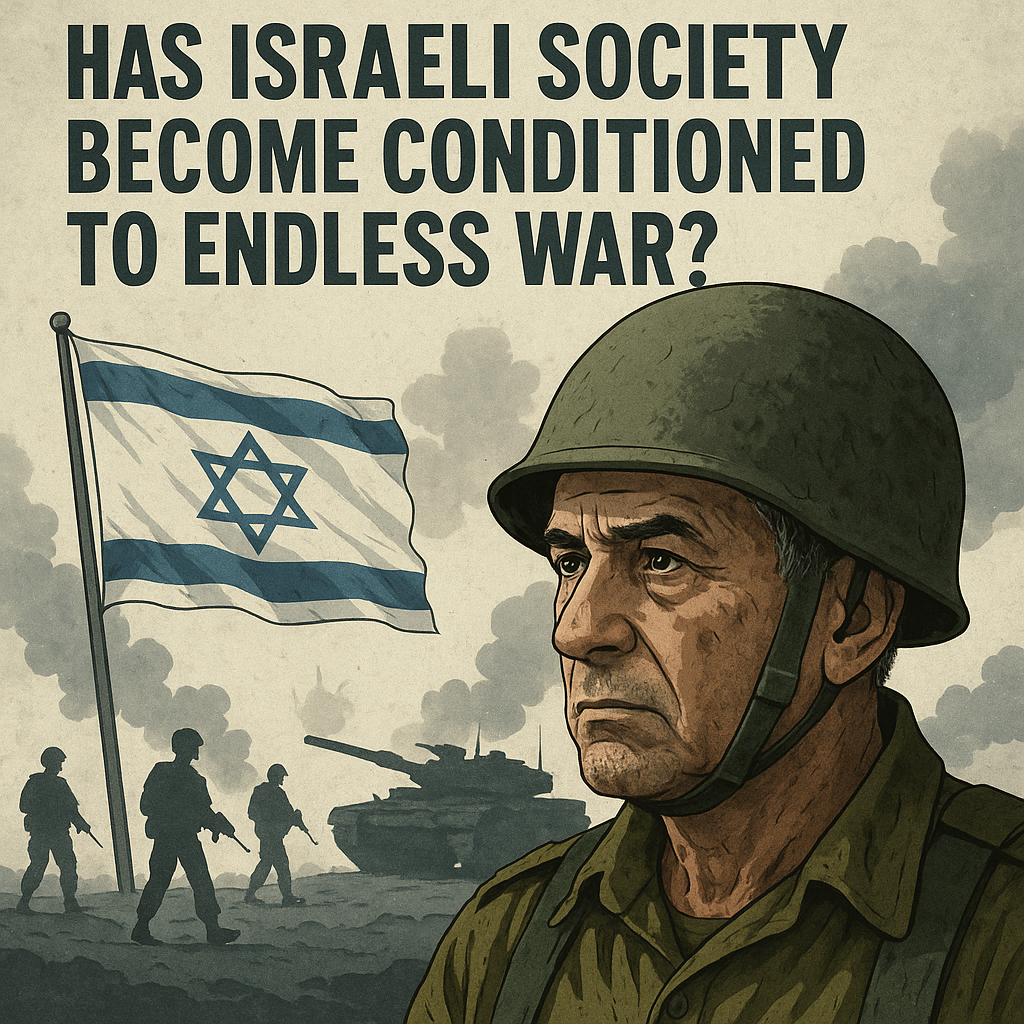
Has Israeli Society Become Conditioned to Endless War?

Has Israeli Society Become Conditioned to Endless War?
In recent years, the notion that Israeli society has become conditioned to endless war has gained significant traction, drawing attention from various quarters. This complex issue necessitates an exploration of the historical context, public sentiment, and potential pathways toward peace or continued conflict.

Historical Context and Public Sentiment
To understand whether Israeli society is truly conditioned to endless war, it is crucial to examine the historical backdrop of this ongoing conflict. Israel’s formation in 1948 was marked by hostilities that have persisted through numerous wars and escalations, leading many in the nation to view conflict not just as a possibility, but as a fundamental reality of existence.


Public Attitudes Towards Conflict


Recent surveys indicate varying perceptions among Israelis regarding their situation. According to reports from Al Jazeera, many Israelis feel a sense of normalization towards the frequent cycles of violence. This desensitization can be attributed not only to the repeated experiences of military engagement but also to the continuous media portrayal of these events.
Conversely, a segment of Israeli society expresses profound fatigue and disappointment over the ongoing state of conflict. Activists and peace advocates argue that a focus on security issues often overshadows significant social and economic concerns. This mixed sentiment raises questions about whether the populace has truly accepted their situation or if they are yearning for a change.
The Impact of Media and Education
Media Representation
The media plays a pivotal role in shaping public perception. Reports from outlets like RT indicate that the constant portrayal of warfare can lead to an acceptance of violence as a means to political ends. This narrative often appears in coverage of military operations, which frame them as necessary for national security rather than a political failure or an enduring humanitarian crisis.
Educational Influences
The educational curriculum in Israel also reflects and reinforces these perspectives. Many schools teach history from a viewpoint that emphasizes conflict, resulting in a generation of students who may internalize the inevitability of war. Critics argue that such education hinders the possibility for dialogue and reconciliation.
According to experts consulted by Sky News, altering this educational ethos could help reshape perceptions toward a peace-oriented approach, encouraging young Israelis to envision alternative futures.
Economic Factors
Interestingly, another layer of this discussion concerns economic implications. Wars and military engagements can strain national resources, leading to a paradox where citizens feel both defensive and economically disadvantaged. As noted in various analyses, increased military spending often detracts from investments in social services or infrastructure, further entrenching societal divisions.
Diverse Perspectives on Future Pathways
As Israeli society grapples with the implications of an ongoing conflict, experts present differing perspectives on the way forward. Some believe that the normalization of warfare has made citizens more resilient, allowing them to adapt to ongoing security threats. They argue that continuous military readiness has become a central aspect of Israeli identity, entwined with notions of patriotism.
However, a contrasting viewpoint advocates for a radical shift in both policy and mindset. Many peace activists argue that a sustained focus on dialogue and diplomacy is essential for breaking the cycle of violence. Prominent figures within this movement urge the government and society to explore avenues for peace that have historically been sidelined by political agendas focused on defense.
Calls for Change
Several organizations advocate for a transition in public discourse, emphasizing the need for inclusive conversations around issues like human rights and justice for all groups involved in this conflict. These varied calls reflect a society that, while somewhat conditioned to warfare, harbors a desire for transformation.
Conclusion: Navigating a Complex Reality
Ultimately, the question of whether Israeli society has become conditioned to endless war reveals a multifaceted landscape of historical realities, public sentiments, and divergent futures. The normalization of conflict presents formidable challenges that affect every aspect of life in Israel.
While many have indeed adapted to a reality colored by conflict, there remains a significant contingent still yearning for peace, justice, and a new narrative. To navigate this complex terrain, engaging in open dialogue and seeking innovative solutions will be vital in shaping a future that moves beyond the cycles of violence that have defined Israeli society for decades.















