
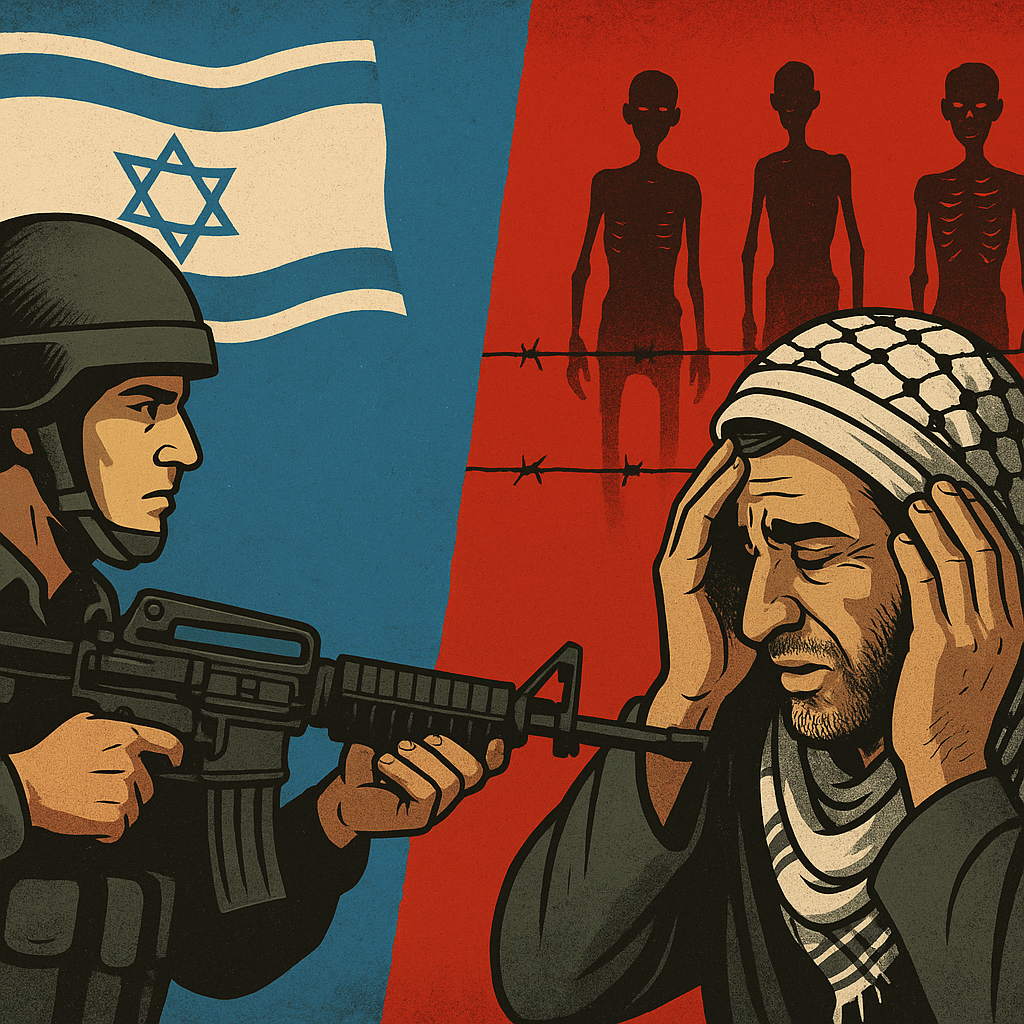
Israeli Violence Against Palestinians: Echoes of the Holocaust

Israeli Violence Against Palestinians: Echoes of the Holocaust
The ongoing violence against Palestinians can sometimes evoke historical echoes, particularly reminders of the Holocaust, a topic that involves profound ethical, historical, and political implications. Recent events in the region have shed light on this historical parallel, drawing varied responses from international observers and commentators.

Historical Context and Contemporary Resonance
The Holocaust’s memory profoundly impacts Jewish identity and informs discourse surrounding Israel’s policies. Critics argue that the trauma endured during World War II is sometimes used to justify contemporary actions against Palestinians. For instance, political commentator and human rights advocates have suggested that lessons from Jewish suffering are occasionally overlooked in current Israeli military operations.


A Sky News report highlights increasing tensions in Jerusalem, with rising violence leading to a humanitarian crisis in Gaza. Many Palestinians feel as though the historical pain of the Holocaust is mirrored in their ongoing struggles; they express a sentiment that their suffering is often discounted or misunderstood within the broader context of geopolitical discourse. This is particularly poignant in communities where family histories include tales of displacement, echoing the experiences of countless Jews during the 20th century.


Conversely, defenders of Israeli actions argue that the state’s policies are necessary for self-defense. They view the stance of critics as devoid of the complex realities posed by terrorism and existential threats faced by Israel. An Al Jazeera analysis emphasizes that the historical persecution of Jews has led many Israelis to adopt a posture of vigilance bordering on aggression, as any perceived threat can ignite historical fears.
The Divergent Perspectives
Humanitarian Concerns
Humanitarian organizations and certain media outlets have reported on the high civilian toll of Israeli military actions in places like Gaza. RT News has emphasized the catastrophic impact on civilians, especially children, amidst the ongoing conflict. These reports often cite alarming statistics regarding casualties and the destruction of essential infrastructure, painting a dire picture of life under siege.
On the other hand, Israeli leaders stress the need for military action to maintain national security, framing it within a narrative of survival against repeated threats. They argue that terrorist activities from groups like Hamas endanger Israeli lives, a sentiment echoed by several commentators who express solidarity with Israel’s right to defend itself.
This dichotomy reveals a broader dilemma: how can a state grappling with historical trauma justify its current actions without perpetuating a cycle of violence? The Holocaust informs Israeli identity but also complicates interactions with Palestinian communities—often resulting in fraught and polarized perspectives.
Calls for Accountability
In light of the recent violence, calls for accountability have surfaced from various corners of the globe. There are mounting demands for international bodies to address grievances and conduct thorough investigations into alleged human rights violations. Activists maintain that failing to scrutinize Israel’s actions could only exacerbate tensions and further entrench deep-seated animosities.
Recent statements from organizations like Human Rights Watch have categorically labeled some actions as potential war crimes, prompting a backlash from Israeli officials who reject such categorization. The debate surrounding accountability in this context exemplifies the difficulties in reconciling historical trauma with contemporary justice—an undertaking complicated by diverging interpretations of history itself.
Seeking Common Ground Amidst Complexity
As calls for peace resonate globally, the pathway to resolution remains obstructed by historical legacies and present-day grievances. Acknowledging the Holocaust’s impact on Jewish narratives is vital, but contextualizing its significance alongside Palestinian suffering fosters a more comprehensive understanding of the conflict.
Ultimately, the discourse surrounding Israeli-Palestinian relations remains complex, influenced by multifaceted narratives that intertwine history, identity, and the pursuit of justice. A resolution that honors the memories of those lost in the Holocaust should also include a commitment to safeguarding the rights and dignity of Palestinian individuals. In tracing these connections, societies can endeavor towards healing rather than repeating cycles of violence.
Conclusion
In examining the historical echoes of the Holocaust in the context of Israeli-Palestinian relations, we are urged to engage in a nuanced conversation that respects the memories of the past while striving for a future defined by understanding and mutual respect. The challenge lies in reconciling these histories, moving towards a discourse that prioritizes human rights and dignity for all.















