
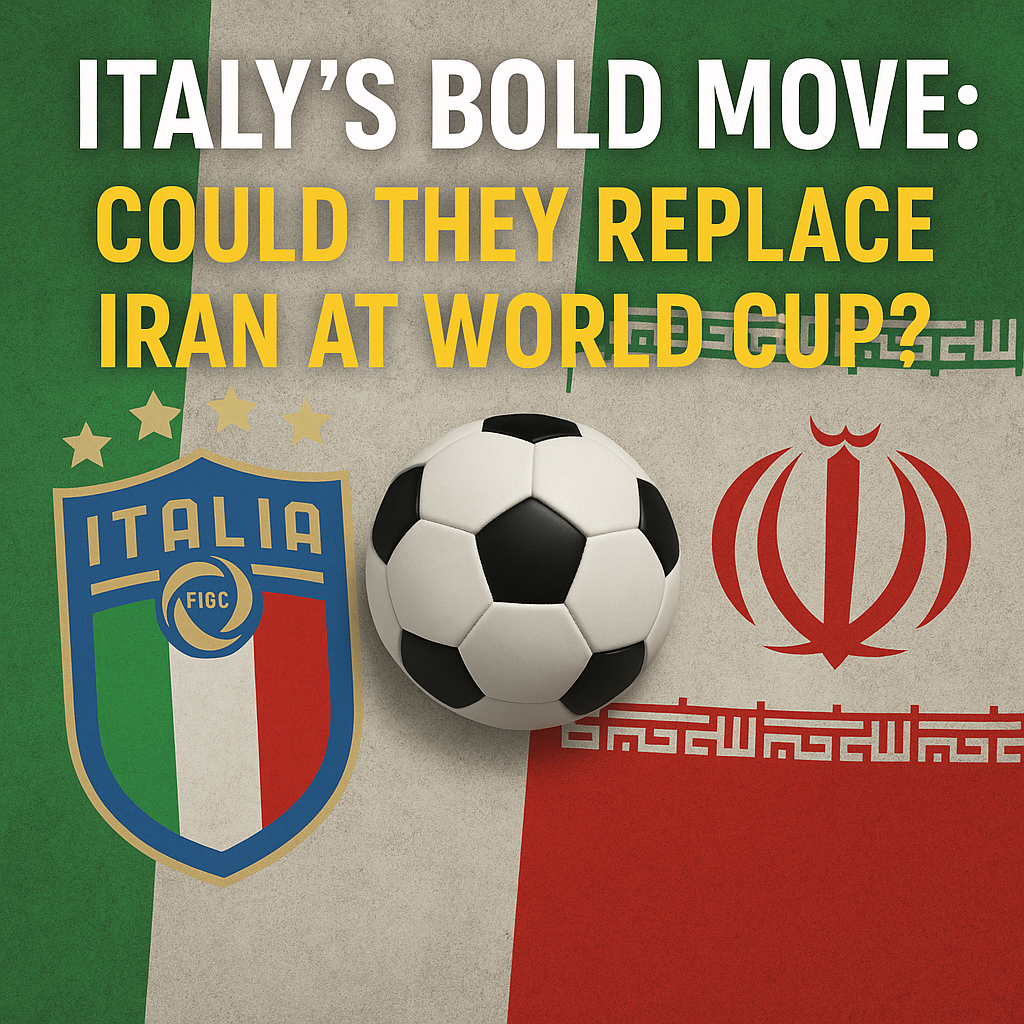
Italy’s Bold Move: Could They Replace Iran at World Cup?

Italy’s Bold Move: Could They Replace Iran at the World Cup?
Italy’s national football team, one of the most storied in history, finds itself at the center of speculation regarding a potential replacement for Iran at the upcoming World Cup. As the tournament approaches, circumstances surrounding the Iranian squad have raised questions about their participation, prompting discussions about Italy stepping in. This article explores the nuances behind this proposal, bringing together diverse perspectives on a complex issue.

The Controversy Surrounding Iran’s Participation
The controversy surrounding Iran’s attendance at the World Cup stems from political tensions and widespread civil unrest within the country. Reports indicate that human rights violations continue to be a pressing issue, leading to calls for international bodies to reconsider Iran’s participation in major global events. This has ignited debates on whether Italy, as a former champion and prominent football nation, could step into this contentious scenario.


Support for Italy’s Possible Entry
Supporters of Italy’s potential involvement have pointed to the nation’s rich football culture and historical pedigree. Italy has four World Cup titles and boasts a passionate fanbase ready to rally behind their team. The argument posits that replacing Iran at the World Cup could serve as a symbolic stance against oppression and human rights violations.


Al Jazeera recently highlighted public sentiment in Italy, indicating that many citizens are supportive of the idea. Some fans have expressed their belief that national teams should reflect the values of their countries, with Italy standing as a beacon of democracy and human rights.
The Counterargument: Standing by the Status Quo
However, not everyone is on board with the idea of replacing Iran. Giorgia Meloni’s government has categorically ruled out this possibility, emphasizing a commitment to the principles of sportsmanship and the idea that teams should compete based on merit rather than external pressures. Critics argue that stepping in for Iran would politicize the sporting event, which should ideally remain neutral ground.
RT News reported that Meloni’s administration not only supports the current state of affairs but also advocates for Iran’s right to compete, suggesting that allowing this could foster dialogue and provide opportunities for change in Iranian society. This stance reflects a significant division in public opinion—between those who view sports as a political platform and those who insist on maintaining a strict separation.
Balancing Ethics and Sportsmanship
As the debates progress, the question of ethics in sports continues to loom large. Proponents of Italy’s entry argue that international sporting events can serve as catalysts for political change. They assert that denying the Iranian team a place could send a message about human rights. However, this argument is met with trepidation by those who emphasize that sports should remain a celebration of human achievement, free from the burdens of political intrigue.
Experts point out that the ramifications of such decisions can be profound. Allowing Italy to replace Iran could set a precedent for future interventions in sports based on political climates. David Goldblatt, a respected sports historian, suggests that while the intentions may be noble, the outcomes are unpredictable. He argues that instead of focusing on who is playing, society should consider how to use platforms like the World Cup to foster dialogue and understanding.
Community Reaction: A Divided sentiment
Voicing their opinions via social media and public forums, fans and advocates reflect the division in sentiment surrounding the issue. Some fans are enthusiastic about the prospect of Italy stepping in, seeing it as an opportunity for redemption following their failure to qualify for the last World Cup. Conversely, others feel strongly about keeping the integrity of the tournament intact, arguing that the decision should lie solely in the sporting domain.
Furthermore, the varying sentiments can be translated into conflicting narratives seen in different media outlets. While some portray the idea of replacing Iran as an ethical move, others frame it as nationalistic sentiment that could inadvertently politicize a mostly unifying event.
Conclusion: The Road Ahead
As Italy continues to engage with this debate, the future remains uncertain. The government’s stance against replacing Iran may reflect a broader commitment to uphold the values and integrity that football represents. Yet, the public’s desire for Italy to reclaim a spotlight on the world stage cannot be ignored.
In navigating the complexities of this sensitive subject, both supporters and critics of the potential move highlight the delicate balance between ethics and sportsmanship. In the end, while the allure of replacing Iran at the World Cup may resonate with many, it is essential to ponder what such a decision would ultimately mean for the teams, their nations, and the sport itself.
As the tournament nears, the dialogue will likely evolve, leaving fans and commentators on the edge of their seats, waiting to see which direction Italy will choose.















