Italy’s PM Denies Begging Trump for Photo: A Deep Dive

Italy’s PM Denies Begging Trump for Photo: A Deep Dive
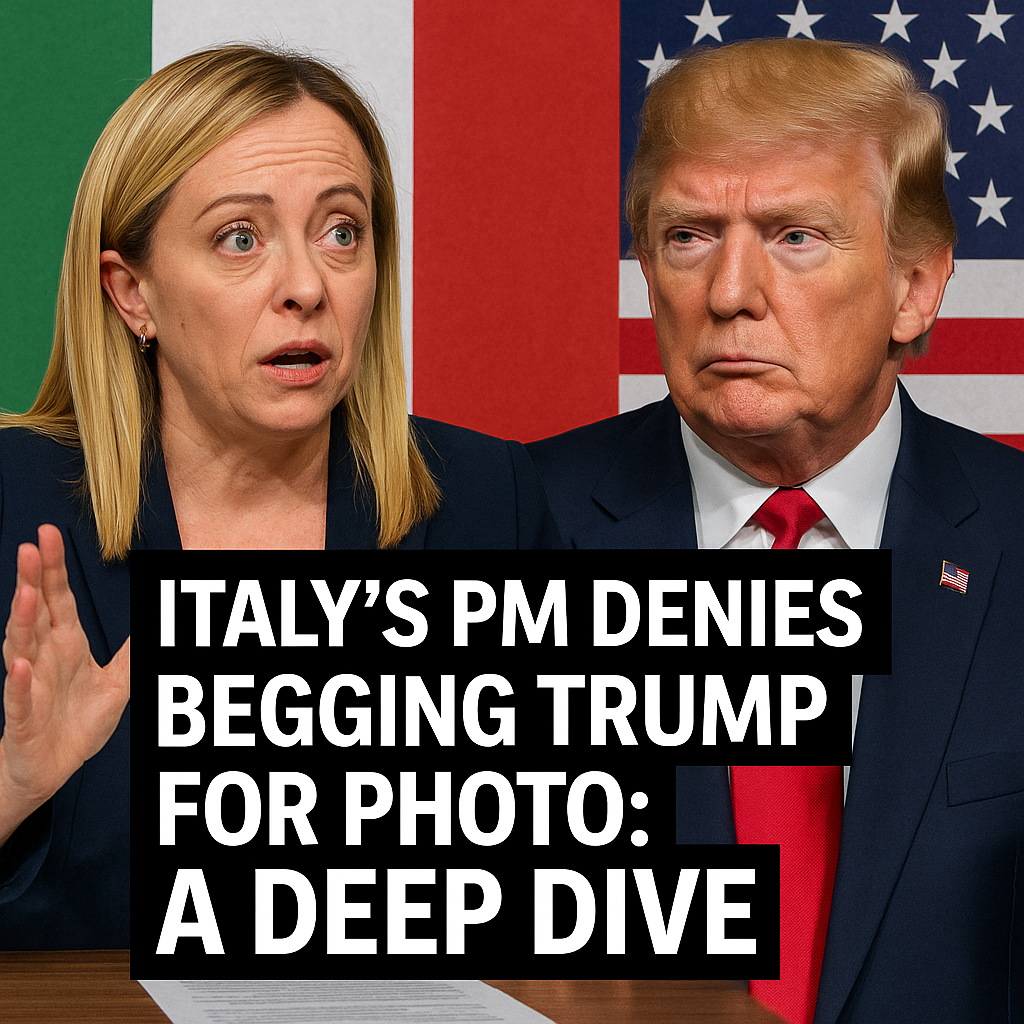
In a world where political narratives can be shaped by seemingly trivial events, the recent controversy surrounding Italy’s Prime Minister Giorgia Meloni and former President Donald Trump highlights the complexities of international diplomacy and media interpretation. The Italian leader has publicly refuted claims made by Trump that she “begged” him for a photograph during a recent encounter, bringing forth not only questions about the incident itself but also the dynamics of political optics in today’s interconnected arena.

The Incident at the Heart of the Controversy
The controversy erupted after Trump stated that Meloni appeared desperate for a photograph with him, a claim that raised eyebrows across international headlines. According to reports, Meloni met Trump during a recent summit, where she asserts the meeting was substantive and focused on matters of global importance rather than personal snapshots. In her response, she expressed astonishment over Trump’s remarks, characterizing them as misleading and indicative of a larger pattern where public figures’ comments can be twisted to serve specific narratives.


From a broader perspective, this is not merely an issue of truthfulness but rather a reflection of how personal interactions between world leaders are subjected to media zeal. Various sources reported Meloni’s disapproval of the portrayal, emphasizing that her role as a head of state entails engaging in serious discussions rather than participating in celebrity culture. In a world where image and perception hold substantial weight, Meloni’s stance attempts to distance herself from the frivolity that Trump’s comments insinuate.


Shifting Perspectives: The Role of Media and Public Perception
Analyzing the differing perspectives surrounding the incident reveals a stark divide in how political narratives are constructed. Trump’s supporters may view his comments as humorous and indicative of his character, leveraging media appearances to maintain his public persona. On the other hand, critics argue that such remarks detract from the seriousness of international diplomacy and ensure Meloni remains a target of unnecessary mockery.
From a journalistic perspective, the choices made in highlighting this incident raise questions about what constitutes newsworthy material. Should the focus be on serious bilateral discussions, or is there merit in showcasing the lighter, more personal interactions that punctuate these relationships? The answer varies depending on the audience, revealing the diverse spectrum of expectations placed on political journalism.
Moreover, the Italian media landscape has reacted to the narrative in different ways. Some outlets have emphasized the importance of Meloni’s denial and the serious tone of her government’s approach, while others have focused on the sensational aspects of the story, illustrating how differing editorial decisions can shape public opinion. The ongoing fluctuation of sentiments showcases the fragility of political reputation in the fast-paced media environment.
The Implications of Political Image-Making
The incident also underscores the broader implications of image-making in politics. In an age where social media amplifies every utterance, leaders are increasingly aware that their words can influence public perception and international relations. Both supporters and detractors of Meloni and Trump will be watching closely, with implications for their political narratives extending beyond this single event.
Political analysts note that the interactions between leaders serve as indicators of their relationship, which can have tangible effects on policy and collaboration. As Meloni navigates her role on the global stage, her challenge will be to maintain a balance between addressing domestic expectations and managing international perceptions amidst such distractions.
Conclusion: Navigating the Grey Areas of Diplomacy
The discourse surrounding Meloni’s denial of begging for a photo with Trump epitomizes the complexities of modern political interaction. As we analyze this controversy, it becomes clear that while the public often gravitates towards sensational stories, the underlying implications of these interactions can carry significant weight in shaping diplomatic relations.
Moving forward, it remains essential for both political figures and the media to engage in responsible discourse that reflects the seriousness of their roles. While the allure of celebrity culture is ever-present, true leadership requires a commitment to authenticity and a focus on the pressing matters that govern our world today. Whether or not Meloni’s quick denial will shift the narrative remains to be seen, yet it serves as a poignant reminder of the intricate dance between image and substance in contemporary politics.