
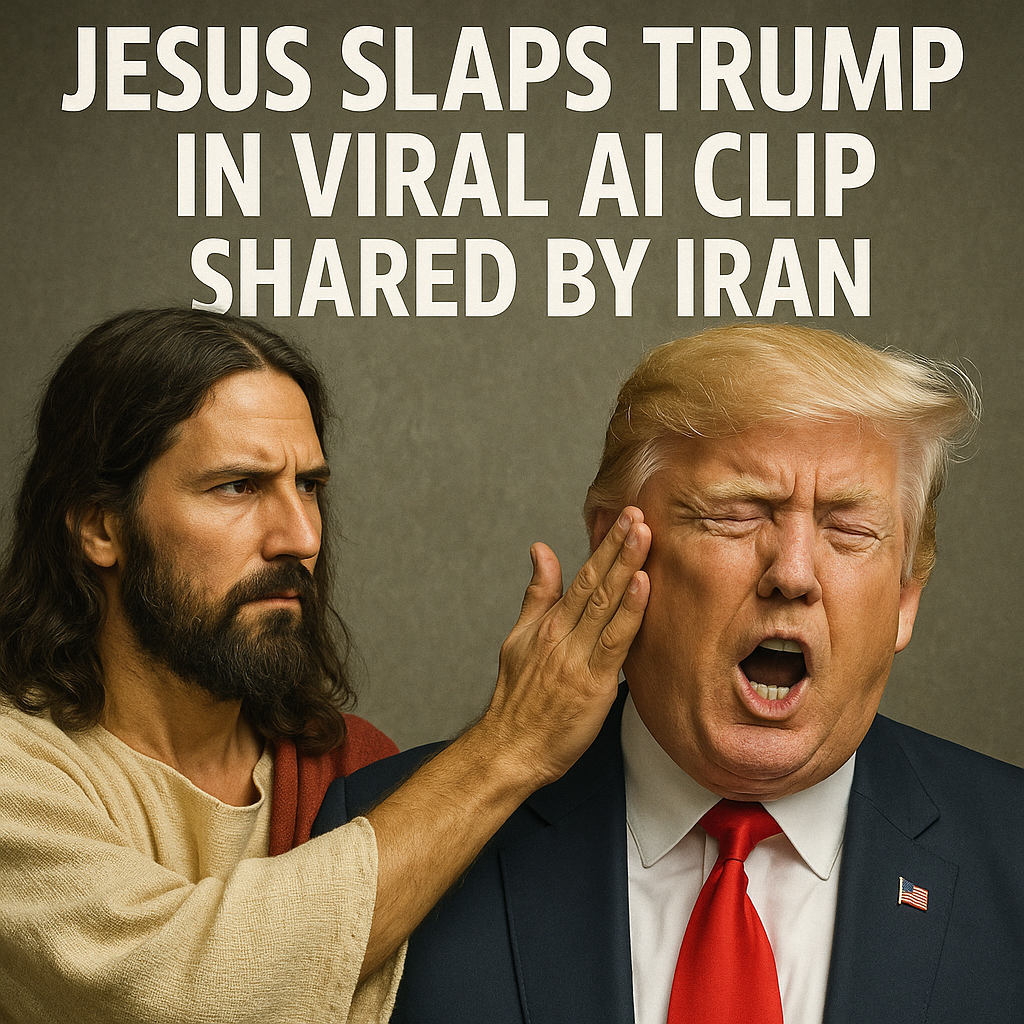
Jesus Slaps Trump in Viral AI Clip Shared by Iran

Jesus Slaps Trump in Viral AI Clip Shared by Iran
The intersection of politics and technology has taken an unexpected turn with the recent viral clip of Jesus supposedly slapping former President Donald Trump, shared prominently by Iranian media. This unique blend of art, religion, and political commentary has sparked conversations and varied reactions across the globe about the implications of utilizing AI for such creative expressions.

An Overview of the AI-Generated Clip
The AI-generated clip depicts a digital recreation of a biblical scene where Jesus delivers a slap to Trump. This striking visual has not only captured the attention of a wide audience but has also raised questions regarding the intersection of satire and technology. Shared primarily by Iranian outlets, the clip appears to be a form of social commentary aimed at critiquing Trump’s policies and leadership during his presidency.


The Cultural Significance
In a socio-political landscape where satire has often been a tool for expression, this clip presents a fascinating example of how AI can enable modern interpretations. Supporters of the clip argue that it cleverly juxtaposes religious imagery with contemporary political figures, providing a potent visual message about morality and leadership.


Conversely, critics question the appropriateness of using religious figures in political satire. They argue that such representations can lead to misinterpretation or even offense, particularly among believers. This line of discussion touches upon the broader implications of freedom of expression versus the potential for blasphemy, particularly within various cultural contexts.
Reactions and Interpretations
The reactions to the clip have been vastly polarized. On one hand, proponents view it as a humorous yet poignant commentary on Trump’s controversial stances. A spokesperson for the Iranian media outlet that shared the video highlighted that it serves as a “necessary critique of leadership that lacks ethical grounding.” This sentiment aligns with a broader trend in various cultures that utilize humor as a means of challenging power dynamics.
On the other hand, some voices have expressed concern over the manner in which AI is employed in satire. A perspective from a theology expert suggests that while art and satire have historically critiqued authority, the use of AI can commodify serious themes to the point of trivialization. This concern is echoed in discussions about the ethical implications of using technology to generate content that can be provocative or misunderstood.
Global Perspectives
Internationally, the clip has found supporters and detractors alike. In the Western media, it has been discussed in the context of free speech and the evolving landscape of digital expression. Outlets like Al Jazeera mention that the implications of AI-generated content can lead to deeper questions about source credibility and authenticity. With the rapid proliferation of deepfakes and similar technologies, many are beginning to scrutinize what constitutes genuine representation in the digital age.
In contrast, reactions from Iranian and other Middle Eastern perspectives tend to view the clip as a cultural critique of American politics. For many, it symbolizes a historic clash of values and beliefs, with such artistic expressions challenging Western hegemony in media representation.
Ethical Dilemmas of AI in Art
The Jesus-slapping-Trump clip brings forth ethical dilemmas surrounding the use of AI in generating religious or politically charged imagery. While technology can serve to democratize artistic expression, it can also dilate the boundaries of what is ethically acceptable. The uniqueness of each cultural context means that the reception and interpretations will vary greatly, even among the same digital art forms.
Navigating A Complex Landscape
With AI increasingly becoming a tool for expression, it is essential for creators and consumers alike to navigate this complex landscape with awareness and sensitivity. Conversations about the appropriateness of AI-generated representations can foster richer discussions around cultural understanding and respect, a necessity in an interconnected world.
The integration of AI in the artistic realm invites questions regarding authenticity, ownership, and responsibility. How do creators balance the freedom to express political and religious sentiments with the potential for offense? This delicate balance requires ongoing dialogue among stakeholders, including artists, technologists, and audiences.
Conclusion
The viral video of Jesus slapping Trump serves as a thought-provoking instance of how AI can intersect with social commentary, culture, and technology. While some see it as a humorous critique of political figures, others caution against trivializing sacred imagery.
As society continues to grapple with both the promises and challenges of AI, the need for compassionate dialogue and ethical considerations becomes increasingly vital. This digital artifact is not merely a form of entertainment; it is a reflection of our times—complex, multifaceted, and deeply engaging.
As we move forward, the challenge lies in fostering a space where creativity and conscience can coexist, prompting us to reflect on the nuances of our beliefs and how we express them in an ever-evolving digital landscape.















