
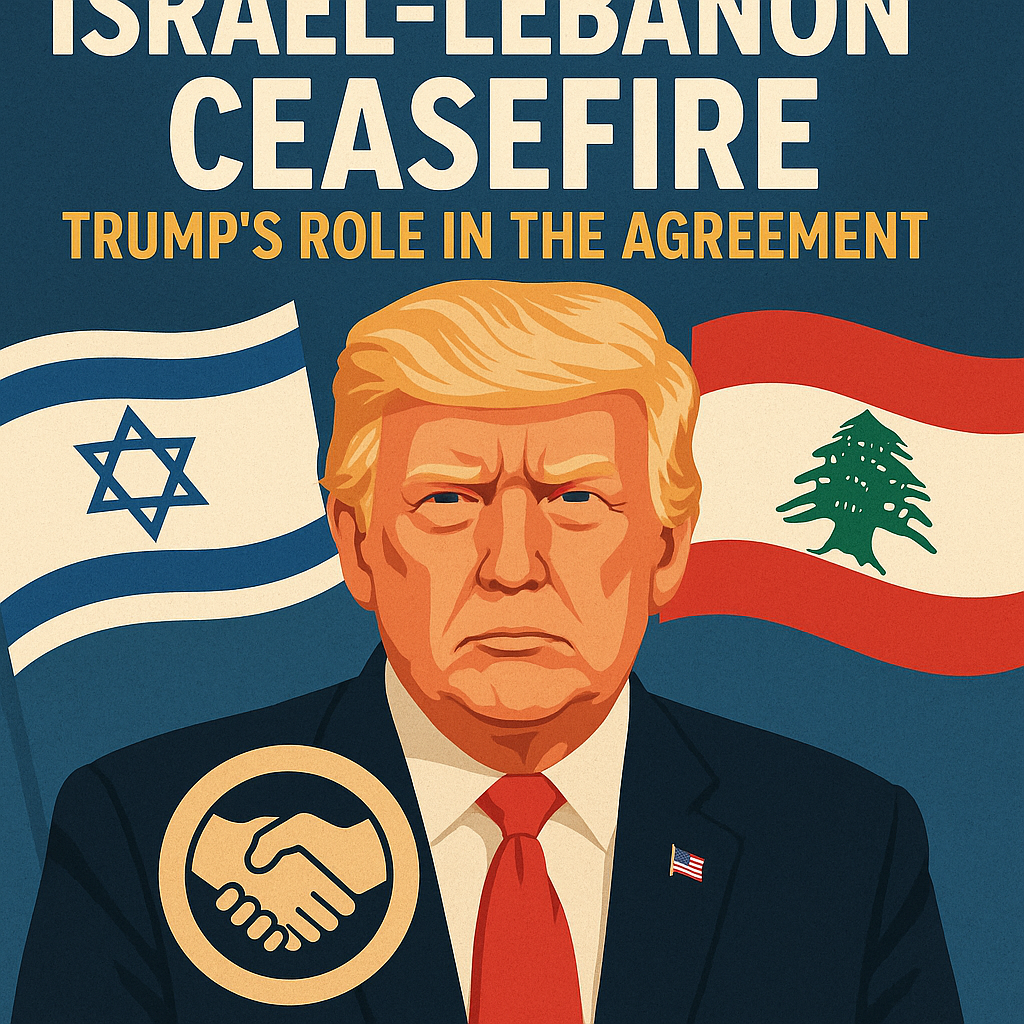
Israel Lebanon Ceasefire: Trump’s Role in the Agreement

Israel Lebanon Ceasefire: Trump’s Role in the Agreement
The recent ceasefire agreement between Israel and Lebanon has introduced a significant shift in the regional landscape, sparking discussions around the influence of various stakeholders, including former U.S. President Donald Trump. While the immediate benefits of the ceasefire have been lauded as crucial for regional stability, the role of Trump and his administration’s previous policies in shaping these dynamics warrants closer examination.

Background of the Ceasefire Agreement
The ceasefire was organized amid escalating tensions along the Israel-Lebanon border, resulting from military clashes that endangered civilian lives and disrupted the uneasy peace prevailing in the region. Various stakeholders had vested interests in the cessation of hostilities, predominantly a need for humanitarian relief and political stability.


– Humanitarian Considerations: According to reports from Al Jazeera, the destruction caused by recent conflicts has raised urgent humanitarian concerns, leading to collective efforts for peace.
– Economic Factors: Analysts note that the agreement is also financially motivated, with both nations looking to stabilize their economies that have suffered from ongoing violence.


Trump’s Influence on the Dynamics
Historical Context and Policies
Donald Trump’s administration marked a significant time for U.S.-Middle East relations, particularly with his endorsement of various agreements normalizing relations between Israel and Arab states. The Abraham Accords, established in 2020, laid a foundation that some analysts believe created conditions conducive for a ceasefire with Lebanon.
– Support for Israel: Trump’s unwavering support for Israel, which included moving the U.S. embassy to Jerusalem, solidified Israel’s stance in the region. Some observers argue that this assertive pro-Israel policy might have emboldened Israel during its military engagements, complicating Lebanese responses.
– Engagement with Regional Players: Trump’s administration focused on destabilizing adversaries while strengthening allies, potentially demonstrating a playbook that Lebanon and Israel could draw from in negotiations.
Current Reactions to Trump’s Role
Responses to Trump’s influence on the recent ceasefire are mixed. Proponents from conservative circles argue that his policies paved the way for dialogue and reconciliation, pointing to the broader acceptance of Israeli legitimacy in the region as a crucial element in the truce. However, criticisms abound, particularly from those who argue that such aggressive tactics have had long-lasting ramifications that contribute to cycles of violence rather than genuine peace.
– Support for the Agreement: In a special interview with RT News, analysts opined that Trump’s legacy in facilitating discussions via backchannels remains relevant, despite his current political absence.
– Critique of Policies: Detractors, including various humanitarian organizations, state that Trump’s previous policies exacerbated tensions, making the prospect of dialogue increasingly fragile.
The Uncertain Future: Is Real Peace Possible?
The ceasefire agreement has garnered applause internationally as a hopeful step towards peace. Yet many uncertainties loom on the horizon:
– Internal Divisions: Lebanon’s political landscape is historically fragmented, with various factions having differing views on engagement with Israel. The impact of Trump’s past actions might not unify these factions but could further polarize them.
– Regional Stability: The ceasefire may only provide a temporary halt to hostilities, with analysts warning of potential backlashes or provocations that could reignite violence.
Conclusion: A Complex Landscape Ahead
As both Israel and Lebanon navigate the aftermath of this ceasefire, the nexus of Trump’s influence and regional politics will remain under scrutiny. Implementing lasting peace will require not only careful diplomacy from current leaders but also an understanding of historical shadows cast by past administrations, including Trump’s.
The multidimensional nature of this conflict reflects the intricate interplay of alliances, grievances, and the urgent need for humanitarian considerations. While there is hope that this agreement may herald a new era of dialogue, the path to stable long-term peace remains fraught with complexities and challenges. The world watches, perhaps with cautious optimism, but also with the awareness that the legacy of one administration does not erase the conflicts of the past.















