
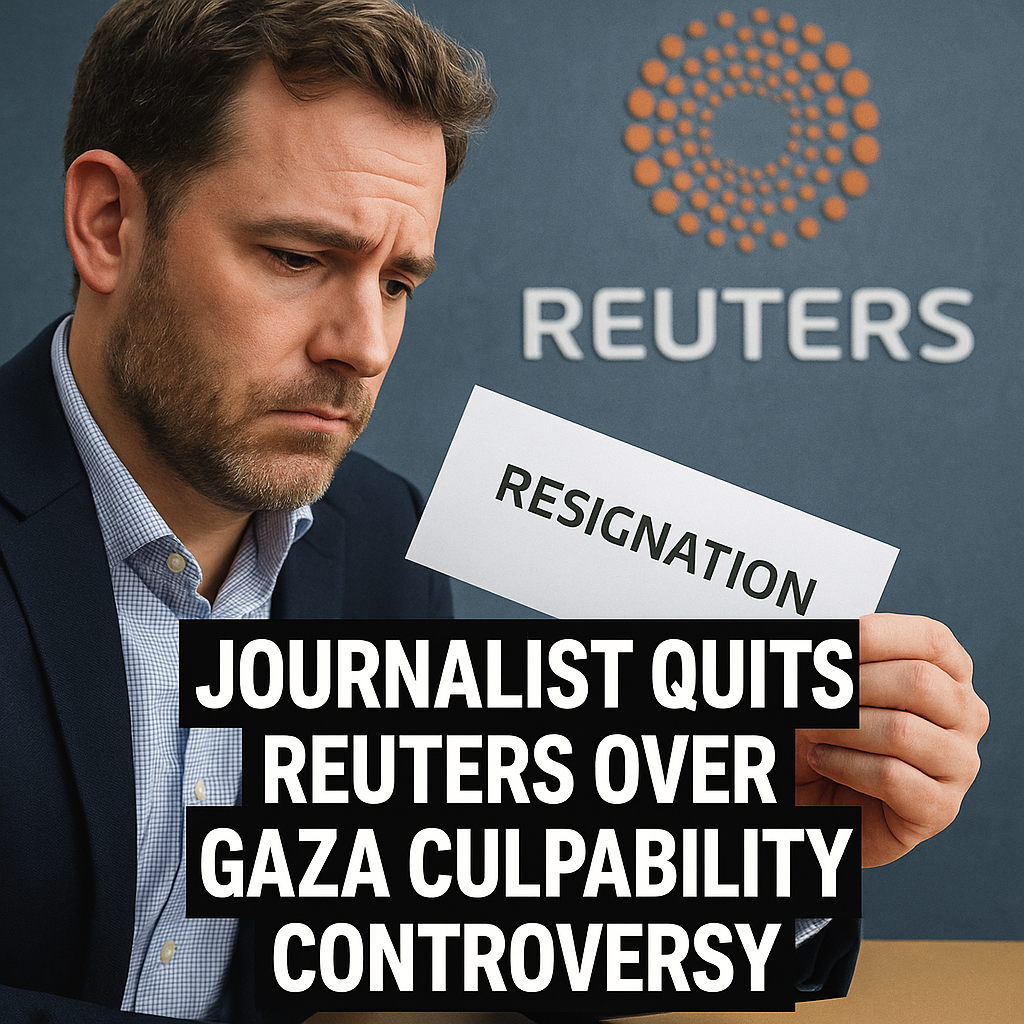
Journalist Quits Reuters Over Gaza Culpability Controversy

Journalist Quits Reuters Over Gaza Culpability Controversy
The recent resignation of a journalist from Reuters has sparked widespread debate over media responsibility and the complexities inherent in reporting conflict zones, particularly in the context of the ongoing situation in Gaza. This incident not only raises questions about journalistic integrity but also illuminates broader issues concerning the narratives surrounding geopolitical conflicts.

The Controversy: A Journalist’s Departure
The reporter, whose resignation has garnered attention, cited ethical concerns regarding how the situation in Gaza was being covered. According to multiple sources, the journalist expressed dissatisfaction with the portrayal of events, particularly the framing of culpability and the narratives emerging from both sides of the conflict. This perspective aligns with critiques raised by various media watchdogs and advocates for responsible journalism.


In a statement, the resigned journalist highlighted the challenge of maintaining neutrality in a highly polarized environment, where the stakes are incredibly high for those directly affected. The withdrawal has prompted discussions about the role of media organizations in ensuring that coverage remains fair and balanced, especially in regions marked by conflict.


Diverging Viewpoints on Media Responsibility
The resignation has not gone unnoticed in the broader media landscape. Opinion pieces and analyses from sources including Al Jazeera and RT emphasize different facets of the controversy. Some argue that media outlets must navigate their reporting delicately to avoid exacerbating tensions or misrepresenting facts. For instance, Al Jazeera noted that the responsibility of journalists is to provide a platform for all perspectives, which can be increasingly complicated in entrenched conflicts.
Conversely, RT points out that the media must also take accountability for the narratives they perpetuate. They assert that critical reflection is essential for journalists to avoid becoming unwitting participants in propaganda wars. This sentiment is echoed across various observations that suggest a need for more transparency about the methodologies employed in reporting these sensitive topics.
The Importance of Ethical Reporting
As this controversy unfolds, it highlights the necessity of ethical reporting standards. The journalist’s decision to step down embodies a principled stance that resonates with many within the industry—valuing integrity over the pressures of commercial interests or audience expectations.
Several core principles emerge from discussions around ethical reporting in conflict zones:
1. Accuracy: Ensuring that details are precise and verified is critical. Misinformation can have dire consequences, especially in volatile areas.
2. Balance: Providing a voice to multiple stakeholders helps to create a well-rounded narrative, but it requires discernment to avoid false equivalence.
3. Sensitivity: Human stories should be told with compassion, recognizing the lived experiences behind the headlines, especially in tragic contexts like Gaza.
In light of these principles, the debate pertaining to the resigned journalist’s claims suggests a broader discourse on how the media can and should handle narratives of culpability. Balancing sensationalism with responsible reporting is especially crucial in modern journalism, where reader engagement often weighs heavily on news delivery.
A Complex Path Forward
While some media outlets strive for comprehensive reporting, the complexities involved mean that compromises can occur. This is evident in the varying perspectives on newsroom practices, with some defending stringent editorial guidelines against external pressures, while others criticize perceived biases or oversight in critical reporting.
The journalist’s resignation is emblematic of broader systemic challenges faced by media organizations that operate within a politically charged landscape. The conversation surrounding their departure should not be viewed solely as a singular instance but rather as a catalyst for a more comprehensive examination of media ethics.
As the world increasingly relies on digital platforms for news, the responsibility of journalists and their employers to provide balanced narratives is paramount. Acknowledging the multifaceted nature of conflict reporting requires ongoing dialogue within the industry, as well as with the audiences they serve.
In conclusion, the resignation of the Reuters journalist serves as a stark reminder of the complexities inherent in covering contentious geopolitical conflicts. As various viewpoints continue to emerge, it is crucial for media organizations to reflect on their principles and practices, ensuring that the pursuit of truth does not fall prey to the pressures of narrative simplification or sensationalism. The call for ethical journalism is more pressing than ever, urging institutions to recommit to delivering accurate, balanced, and humane reporting.















