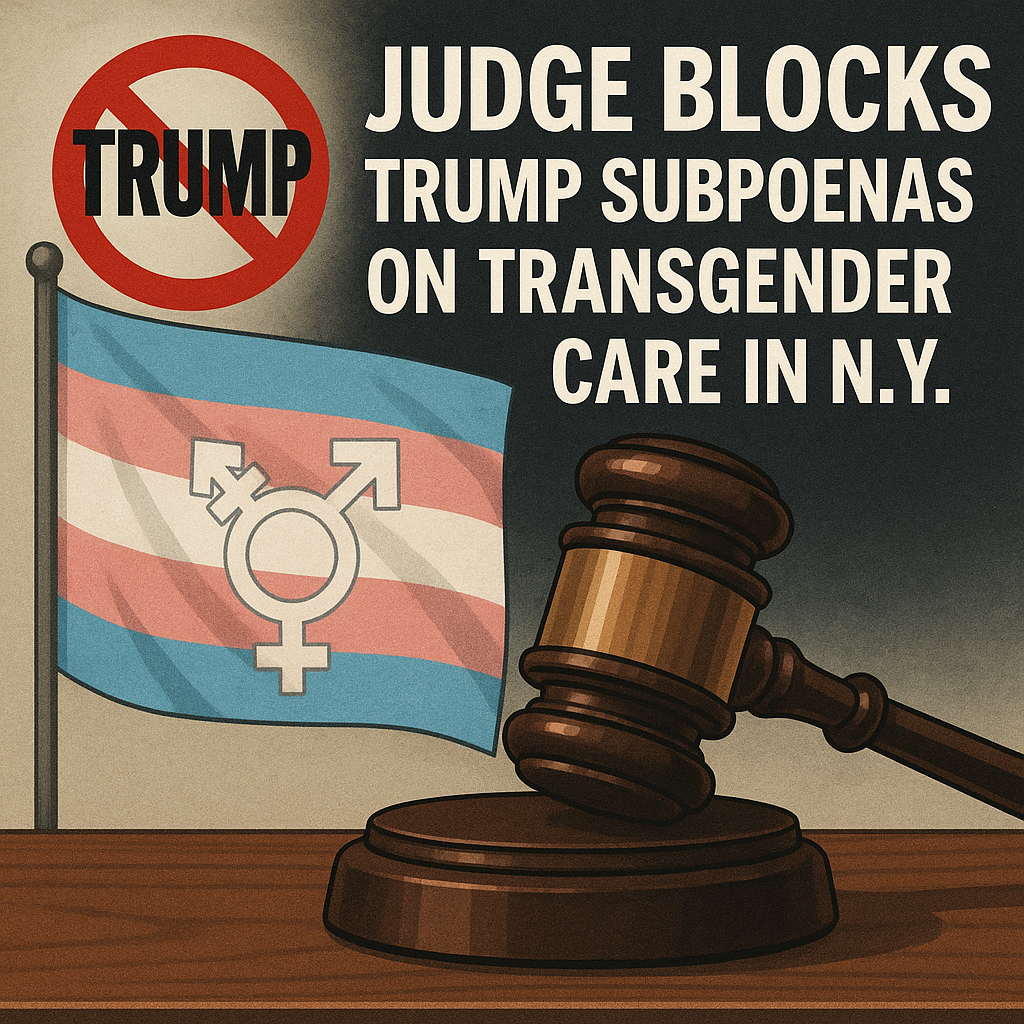
Judge Blocks Trump Subpoenas on Transgender Care in NY

In a significant legal development, a judge recently blocked subpoenas issued by former President Donald Trump concerning transgender care practices in New York hospitals. This decision draws attention to the ongoing debate around the provision of gender-affirming care and the rights of healthcare facilities to operate without undue interference from political figures.

Legal Context and Implications
The subpoenas were part of a broader investigation initiated by the Trump administration, which aimed to scrutinize the healthcare services offered to transgender patients. The legal maneuver prompted a swift backlash from various advocacy groups and members of the medical community, who argued that such investigations threaten both patient privacy and the autonomy of healthcare providers.


In his ruling, the judge emphasized that the inquiry could chill the provision of necessary medical services and that the subpoenas lacked a substantial legal basis. This aligns with a growing consensus among legal experts who point out potential First Amendment and privacy concerns surrounding political probes into healthcare practices—especially those related to marginalized groups.


Diverse Perspectives on Transgender Healthcare
Opponents of the subpoenas view this ruling as a crucial victory for medical ethics and patient rights. “This decision reaffirms that medical decisions should be made by patients and their healthcare providers, free from political interference,” stated a representative from a prominent LGBTQ+ advocacy organization. The intent behind Trump’s subpoenas was perceived as an attempt to undermine existing healthcare protocols that embrace diversity in gender identities, potentially stigmatizing transgender individuals seeking care.
Conversely, supporters of the former president argue that the subpoenas were necessary to ensure accountability in how state resources were being utilized for transgender care. They contend that transparency is essential, particularly when taxpayer dollars are involved. In this light, the investigation could be viewed as an effort to scrutinize an area of healthcare that has seen rapid changes and increased funding in recent years.
The Broader Impact of the Ruling
The judge’s decision has broader implications beyond the immediate legal context. It signals a potential shift in how transgender healthcare issues are addressed both politically and socially. Advocates for transgender rights view this ruling as part of a larger trend toward reducing governmental overreach in personal healthcare matters. The importance of such decisions cannot be understated; they not only protect individual rights but also set precedents for future cases involving healthcare autonomy and the intersection of law and medical ethics.
Additionally, as transgender rights continue to face challenge in various states—often under the guise of protecting youth or promoting “traditional” values—this case serves as a reminder of the ongoing struggle for equality and respect for diverse identities. The legal system’s ability to safeguard these rights is crucial for the health and wellbeing of marginalized populations.
Conclusion: Navigating a Complex Landscape
The blocking of Trump’s subpoenas is but one chapter in a much larger dialogue about transgender healthcare and the role of politics in medicine. While this ruling protects current practices, it does not resolve the underlying tensions that exist within societal views on gender identity and healthcare. As policymakers, advocates, and healthcare providers continue to navigate this complex landscape, the need for respectful and informed discourse remains paramount.
Future discussions around healthcare policy will likely need to address not only the legal ramifications of such inquiries but also the ethical considerations that underpin them. The balance between accountability and personal rights is delicate, and as both sides of the debate continue to articulate their positions, the ultimate goal should remain clear: ensuring equitable, dignified, and high-quality healthcare for all individuals, regardless of gender identity.