
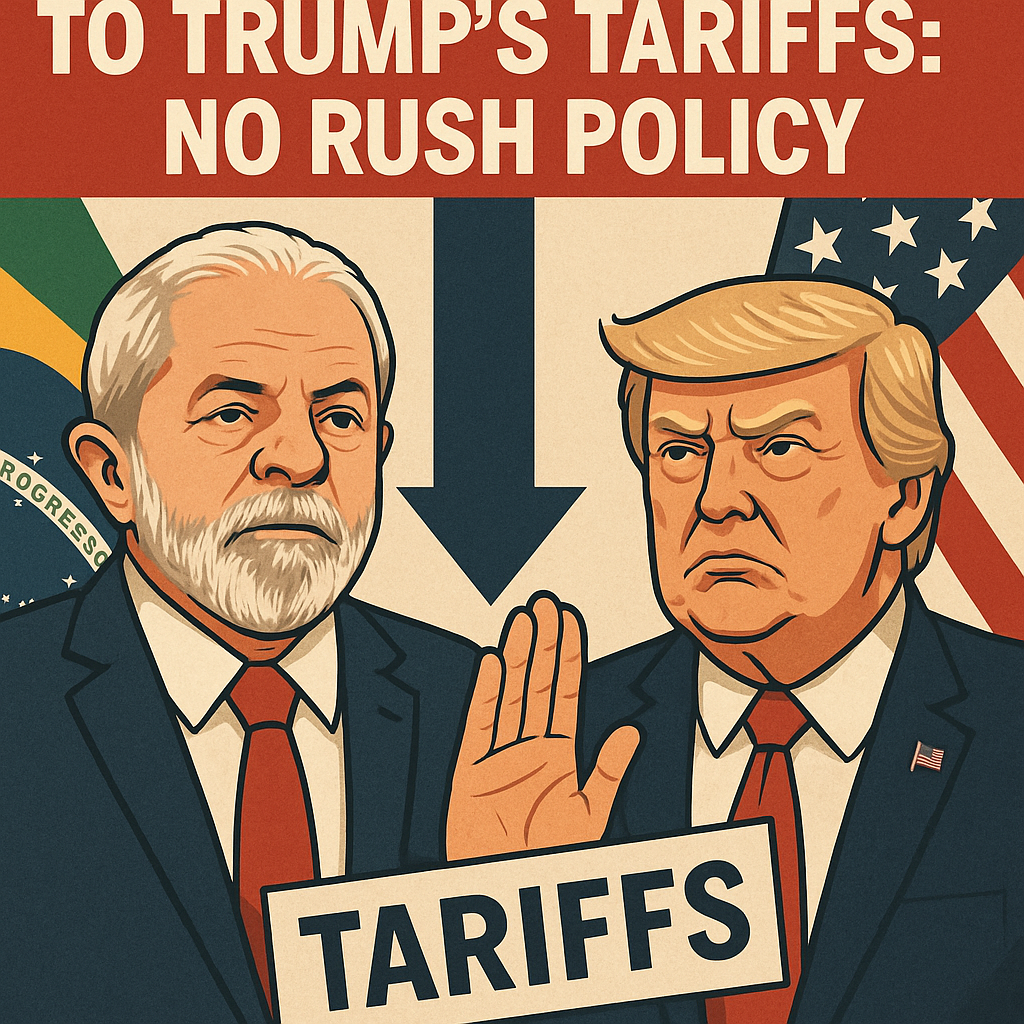
Lula’s Countermeasures to Trump’s Tariffs: No Rush Policy

Lula’s Countermeasures to Trump’s Tariffs: A Balanced Approach
In the complex world of international trade, Brazil’s President Lula has adopted a “no rush” policy in response to tariffs imposed by former President Donald Trump. While such tariffs have stirred tension in global markets, Lula’s cautious strategy could navigate Brazil through turbulent economic waters while setting a prudent precedent for international diplomacy.

The Context of Lula’s Decision
Lula’s administration is faced with the daunting task of managing trade relationships inherited from Trump’s presidency. The tariffs, primarily targeted at certain Brazilian exports, have implications not just for individual sectors, but also for the broader economic landscape of Brazil. Many analysts suggest that while the initial reaction might prompt swift countermeasures, Lula’s strategic pause reflects a deeper understanding of the potential consequences.


According to Al Jazeera, Lula emphasized that he is “in no rush” to implement responses that could escalate tensions further. By adopting a deliberative approach, he aims to gather more information and engage in constructive dialogue with key stakeholders. This stance highlights a significant shift from the often combative rhetoric seen in previous administrations and suggests a move towards diplomacy rather than retaliation.


Evaluating the Economic Implications
1. Sector-Specific Concerns: Tariffs can adversely affect specific sectors—such as agriculture and manufacturing—that rely heavily on exports. Lula’s consideration to approach the situation with caution stems from an understanding that any knee-jerk response could lead to increased hardships for Brazilian farmers and businesses already grappling with global supply chain issues.
2. Long-term Strategy: Lula’s “no rush” stance allows for a more calculated response that could involve forming alliances with other nations similarly affected by U.S. tariffs. A more collaborative strategy might work to counterbalance the unilateral approaches often associated with trade policies.
3. Potential for Trade Agreements: By fostering a more measured dialogue, Lula opens the door to renegotiating existing trade agreements and potentially creating new ones that could cushion Brazil against future economic shocks.
Diverse Perspectives on Countermeasures
Despite the apparent reasoning behind Lula’s approach, opinions on the effectiveness of this policy are varied. Some analysts assert that a more immediate response is necessary to deter further action from the United States, arguing that delaying may signal weakness. Conversely, others argue that Lula’s patience could pave the way for more beneficial long-term agreements.
Perspectives Favoring Immediate Action
Some commentators from Sky News have voiced concerns that Lula’s hesitation could embolden Trump or future administrations to impose even more restrictive tariffs. They emphasize that being proactive is essential to defend domestic industries and signal to international markets that Brazil will not back down in the face of economic pressure.
Quotes from industry experts stress that “timeliness matters in diplomacy,” specifically within the high-stakes environment of global trade. For industries, particularly those that are directly targeted such as agriculture and steel, a lack of action may risk losing competitive advantages in a marketplace that is increasingly influenced by geopolitical maneuvering.
Highlighting the Value of Caution
On the other hand, some perspectives, particularly those highlighted in reports from RT, champion Lula’s cautious approach as a form of strategic wisdom. They point out that trade wars can escalate quickly and lead to unintended consequences, including broader economic losses. Historically, countries that react with immediate countermeasures often end up hurting their own economies more than their intended targets.
Moreover, Lula’s strategy underscores a key point of contention in international relations: the importance of diplomacy over confrontation. In this view, fostering conversations with the U.S. could lead to resolutions that serve both Brazilian interests and those of American constituents, promoting trade without engendering hostility.
Conclusion: A Strategic Balancing Act
As Lula navigates the intricacies of international trade and tariffs, his “no rush” policy reveals a commitment to careful, diplomatic negotiations over impulsive retaliatory measures. While differing viewpoints abound regarding the efficacy of immediate versus measured responses, Lula’s current strategy evinces a broader understanding of modern economic diplomacy.
The landscape of global trade is ever-evolving, and as such, Brazil must weigh its decisions against potential risks and rewards thoughtfully. Whether Lula’s approach will result in fruitful negotiations or whether it could be perceived as inertia remains to be seen. Thus, while he embraces a strategy devoid of haste, Brazil’s position on the world stage will depend on balancing timely action with the long-term vision essential for sustainable economic health.















