
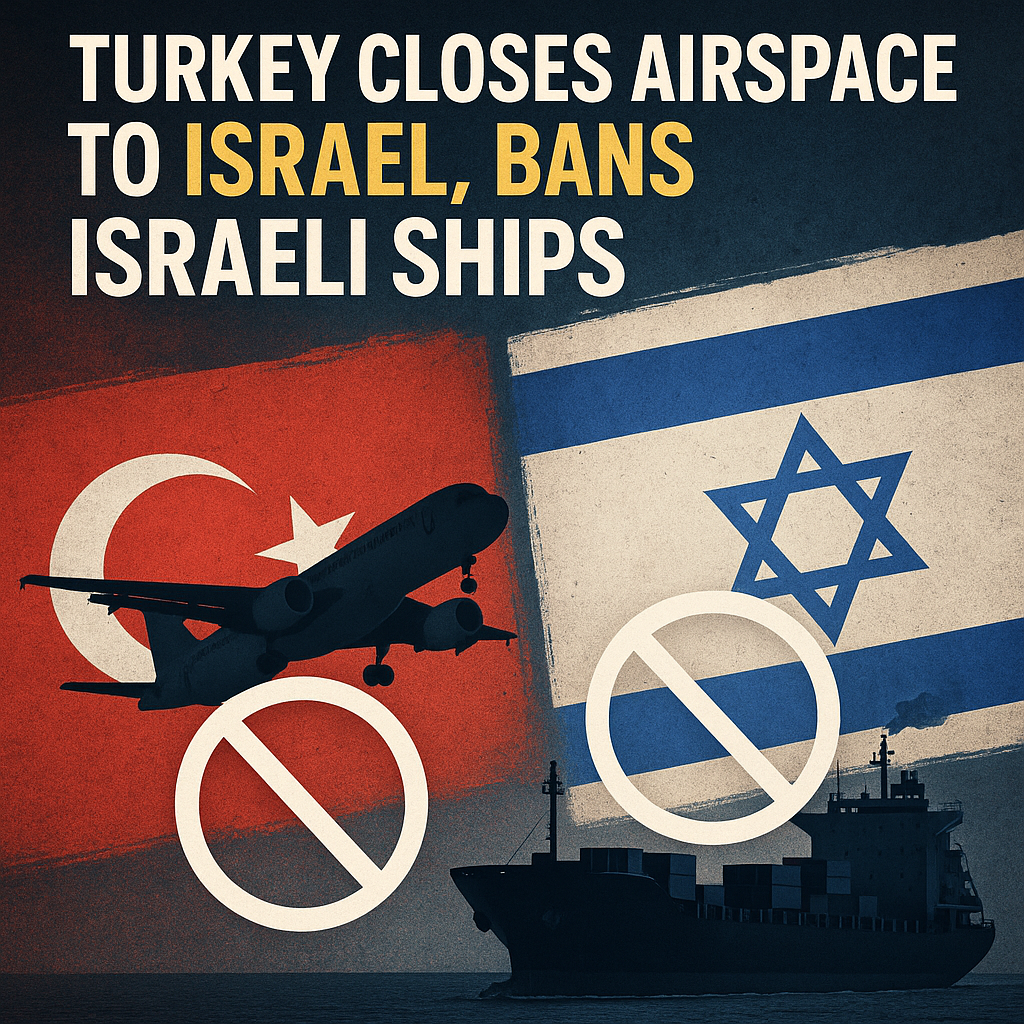
Turkey Closes Airspace to Israel, Bans Israeli Ships

Turkey Closes Airspace to Israel: An Escalating Diplomatic Rift
Turkey has recently taken a bold and unexpected step by closing its airspace to Israel and banning Israeli ships from its waters. This move stems from a broader reaction to the ongoing conflict in Gaza and reflects Turkey’s changing foreign policy landscape. As tensions escalate in the Middle East, it’s essential to examine the implications of this decision from multiple angles.

Context of the Closure
Turkey’s decision to restrict air and maritime access comes amidst a backdrop of increased hostilities in Gaza, which has reignited international condemnation and calls for ceasefire. According to Al Jazeera, President Recep Tayyip Erdoğan’s administration has voiced significant disapproval of Israeli actions in Gaza, depicting them as acts of aggression against civilians. This position is consistent with Turkey’s long-standing support for Palestinian rights, and Erdoğan has been vocal about his disappointment with global responses to the conflict.


The complexities of the Israel-Turkey relationship add layers to this development. Historically, diplomacy between the two nations has been fraught with tensions, particularly following the 2010 Mavi Marmara incident, when Israeli forces boarded a flotilla destined for Gaza, resulting in the deaths of Turkish activists. Since then, diplomatic relations have been fragile, though there have been efforts to normalize them, especially in economic terms. However, recent events in Gaza have reignited old grievances and pushed Ankara to take a firmer stance against Israel.


Global Reactions and Perspectives
The international community’s response to Turkey’s actions has been varied. On one hand, some analysts argue that Turkey’s decision underscores a growing dissatisfaction with Israel’s military tactics and serves as a rallying point for Muslim-majority nations to unite in support of Palestinian sovereignty. In the context of the recent conflict, Turkey’s move might inspire other countries to adopt similar stances, potentially isolating Israel diplomatically.
On the other hand, critics suggest that Turkey’s airspace closure could lead to further isolation for Ankara itself. Reports from RT indicate that some countries view Turkey’s actions as counterproductive, potentially jeopardizing its own relationships with nations that maintain close ties to Israel, including NATO allies. The risk of economic repercussions and a weakening of Turkey’s influence in the region cannot be ignored.
Analyzing the Consequences
The immediate fallout from the airspace closure and maritime ban may lead to significant economic repercussions, especially considering Turkey’s reliance on tourism and trade. Israel is not only a strategic partner for trade but also a key player in the technology and tourism sectors. In 2022, reports indicated a gradual improvement in Israel-Turkey relations, with increased dialogues and mutual visits by officials. The recent suspension of these interactions could reverse the limited progress achieved over the years.
From a domestic perspective, Erdoğan’s decision might resonate well with certain segments of the Turkish population, who support a strong stance on issues affecting Palestinians. This could bolster his standing among conservative voters ahead of the next elections. However, it might also alienate more moderate voters who may favor diplomatic approaches over confrontational tactics.
Looking Ahead: A Shifting Landscape
As the situation unfolds, several questions arise regarding Turkey’s long-term foreign policy strategy. Will this decision exacerbate regional instability, or will it serve as a catalyst for renewed diplomatic engagement among stakeholders in the Israeli-Palestinian conflict? Furthermore, how will other nations react to Turkey’s position, especially those in the Arab world?
It’s crucial for observers to recognize the complexity inherent in this situation. Turkey’s recent actions could either catalyze broader support for Palestinian advocacy or lead to further diplomatic isolation. Given the current geopolitical climate, both outcomes remain plausible.
Conclusion
Turkey’s closure of airspace to Israel and the ban on Israeli ships signals a significant shift in its foreign policy, shaped by the ongoing Gaza conflict. While it provides a powerful statement of solidarity with the Palestinian cause, the implications of this decision are vast, affecting not only bilateral relations between Turkey and Israel but also the broader dynamics of Middle Eastern diplomacy. As events unfold, the international community should closely monitor the situation, understanding that the path forward will be fraught with challenges and complexities.















