
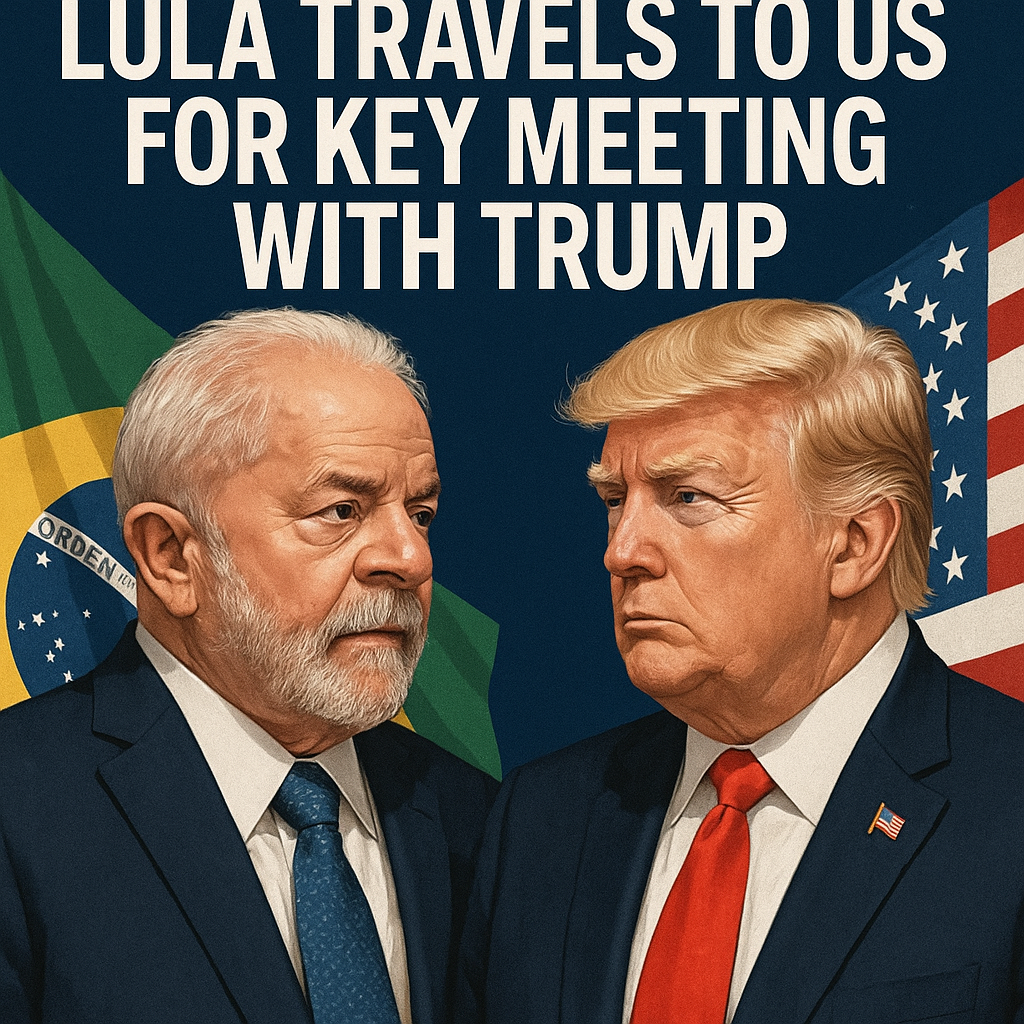
Lula Travels to US for Key Meeting with Trump

Lula Travels to the US for Key Meeting with Trump
Brazilian President Luiz Inácio Lula da Silva is scheduled to visit the United States for an important meeting with former President Donald Trump, marking a significant moment in U.S.-Brazil relations. As both leaders gear up for what many consider a pivotal discussion, the implications of this meeting are being scrutinized across various fronts.

Historical Context of U.S.-Brazil Relations
The relationship between the United States and Brazil has evolved significantly over the decades. Historically, both countries have shared mutual interests, particularly in areas like trade, climate change, and security. However, this relationship has often been strained due to differing political ideologies and policies.


Lula’s rise to power in Brazil has not only reinvigorated leftist politics in the country but has also shifted the dynamics of international relations in Latin America. His previous tenure as president (2003-2010) was marked by efforts to elevate Brazil’s global standing. In contrast, Trump’s presidency (2017-2021) is remembered for prioritizing America First policies, leading to tensions that have echoed into the rhetoric of both nations today.


Divergent Perspectives on the Upcoming Meeting
As Lula prepares for his meeting with Trump, there are varied viewpoints on what this interaction could signify for both countries. Analysts anticipate that the discussions may focus on urgent global issues such as trade agreements, environmental policy, and collaboration against rising authoritarianism.
1. Economic Opportunities: Supporters of the meeting argue that both leaders could find common ground in trade. Lula’s administration has prioritized economic growth and stability, and partnerships with the U.S. could be vital. Al Jazeera suggests that Lula might seek to bolster trade ties, especially in areas like agriculture and technology. This could prove beneficial for both nations, given Brazil’s agricultural capacity and the U.S.’s technological advancements.
2. Political Ramifications: On the other hand, critics question whether this meeting might serve to advance Trump’s political ambitions rather than benefit Brazil. Some analysts caution that Trump might leverage this opportunity to bolster his narrative against President Biden, framing Lula’s visit as a validation of his own views or policies. There’s also concern that Lula could inadvertently support Trump’s populist rhetoric, which may not align with Lula’s progressive agenda back home.
Environmental Concerns: A Sticking Point
One area that may cause friction between the two leaders is their approach to environmental issues. Lula has been a vocal advocate for addressing climate change and restoring the Amazon rainforest, which is often referred to as the “lungs of the Earth.” Conversely, Trump’s environmental policies during his presidency were often criticized for favoring economic growth at the expense of environmental protection.
– Common Ground on Climate Initiatives?: Despite their contrasting approaches, there may be a potential for dialogue. Some sources speculate that Lula could present an agenda focused on sustainable development and that this may resonate with certain factions within the U.S. that are increasingly prioritizing environmental issues.
– A Risky Balancing Act: However, reaching consensus will be challenging. Trump’s past decisions to withdraw from international climate agreements pose significant hurdles for any collaborative initiatives. Lula’s challenge will be balancing Brazil’s environmental needs while also navigating the complexities of working with a leader who has frequently downplayed climate concerns.
The Road Ahead
While Lula’s trip to meet with Trump promises to be multifaceted—filled with both opportunities for collaboration and challenges—its outcomes remain uncertain. The meeting represents not just a dialogue between two leaders but a window into how international politics is shifting in a world that increasingly verifies multipolarity.
While supporters hope the discussions could lead to fruitful collaborations, detractors remain wary of potential misalignments in values and priorities. Thus, while the exact implications of this meeting are difficult to ascertain, it undeniably holds the promise of shaping future U.S.-Brazil relations.
As both leaders prepare, the world watches closely, interested in how this encounter may affect not only bilateral relations but also broader geopolitical dynamics. The outcomes of this pivotal meeting could very well set the tone for future interactions between nations grappling with a complex global landscape.















